

Allergy Medication Dose Converter
Cetirizine vs Levocetirizine Converter
Convert between standard doses of cetirizine (Zyrtec) and levocetirizine (Xyzal) with drowsiness comparison.
Dose Conversion Results
Enter a dose to see the equivalent conversion.
Which is Better for You?
If you experience drowsiness with cetirizine, levocetirizine may be a better choice. It has a lower drowsiness rate (6% vs 14% for cetirizine) and requires half the dose.
"Levocetirizine is more targeted - it's the active part of cetirizine, so you need half the dose for the same allergy relief."
What’s the real difference between Zyrtec and Xyzal?
If you’ve ever taken an allergy pill and felt like you needed a nap by noon, you’re not alone. Cetirizine (Zyrtec) and levocetirizine (Xyzal) are both common choices for runny noses, itchy eyes, and hives. They work similarly. They’re both taken once a day. But one of them leaves more people feeling foggy - and that’s the key difference. Cetirizine is a racemic mixture. That means it’s made of two mirror-image molecules: one active (levocetirizine) and one mostly inactive (dextrocetirizine). Think of it like two keys that look almost identical - one fits the lock perfectly, the other barely turns. Levocetirizine is just the good key. It’s the purified, active part of cetirizine. That’s why you take half the dose: 2.5 mg of levocetirizine works about the same as 5 mg of cetirizine.Why does sedation matter?
You don’t want to feel sleepy when you’re driving, working, or picking up your kids. That’s why the sedation difference between these two drugs isn’t just a footnote - it’s a deciding factor for many people. Studies show cetirizine causes drowsiness in about 14% of users at the standard 10 mg dose. That number drops to around 6% with levocetirizine at 5 mg. That’s not a huge gap, but for someone who’s sensitive, it’s enough to notice. One 2008 study in healthy volunteers found that levocetirizine blocked histamine just as well as cetirizine - but with less brain penetration. Less brain penetration means less drowsiness. The FDA labels for both drugs say they’re "non-sedating," but that’s a technical term. It doesn’t mean zero sleepiness. It means less than older antihistamines like diphenhydramine (Benadryl). Still, if you’ve ever had to cancel a meeting because you couldn’t keep your eyes open after taking Zyrtec, you know it’s real.How do they compare in real life?
Real-world feedback tells a clear story. On Drugs.com, users rated levocetirizine higher for side effects: 6.7 out of 10, compared to 5.8 for cetirizine. On Reddit, people say things like, "I switched from Zyrtec to Xyzal and suddenly I could focus at work," or, "Xyzal doesn’t make me feel like I’ve had one too many glasses of wine." But it’s not universal. Some people swear by Zyrtec. One WebMD reviewer wrote, "I’ve tried both. Zyrtec works better for me, and I don’t get sleepy." That’s important. Everyone’s body reacts differently. Genetics, liver function, and even what you eat can change how you respond.Effectiveness: Is one better?
Both drugs are effective. For allergic rhinitis and chronic hives, they’re equally good at reducing symptoms. A 2009 study in children with year-round allergies found cetirizine had a slight edge in symptom relief. But other studies, including the one from 2008, show they’re nearly identical. The truth? If you’re not sleepy on cetirizine, there’s no reason to switch. But if you’re struggling with drowsiness, levocetirizine is a smart next step - especially since you can get the same relief with half the dose.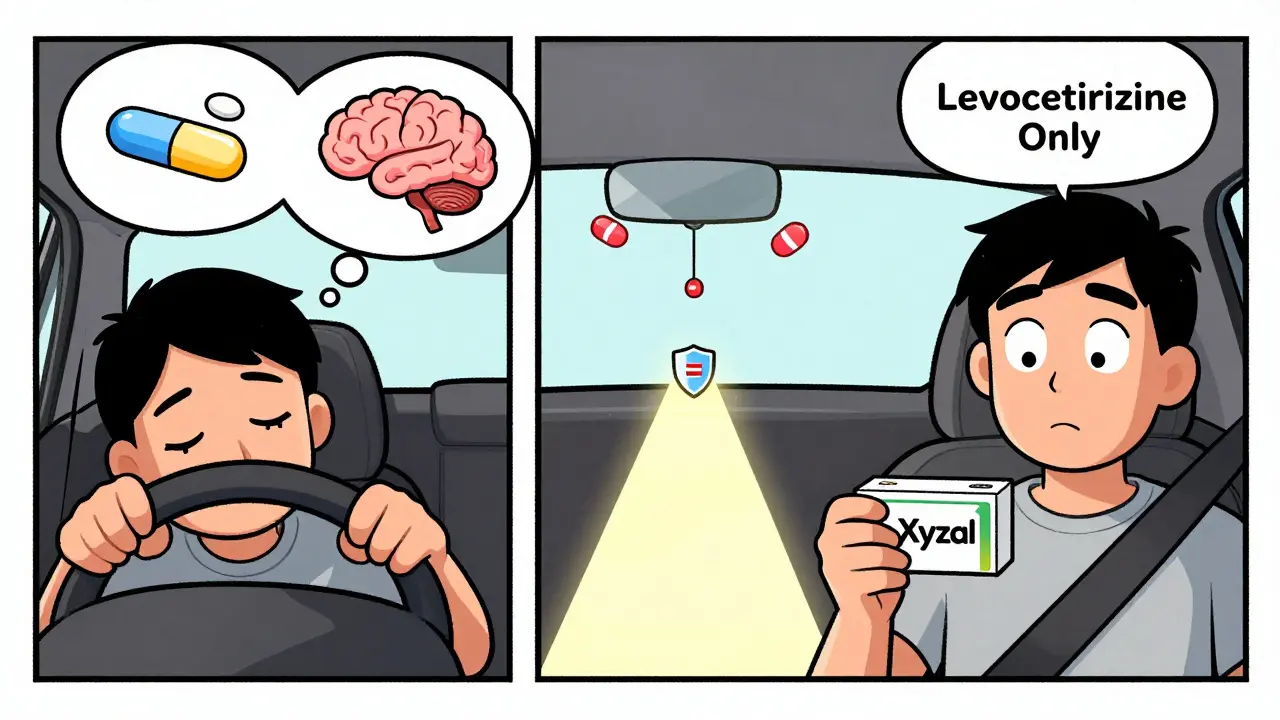
Dosing: What should you take?
Don’t confuse the doses. 5 mg of cetirizine = 2.5 mg of levocetirizine. 10 mg of cetirizine = 5 mg of levocetirizine. Most adults start with: - Cetirizine: 5-10 mg once daily - Levocetirizine: 2.5-5 mg once daily Kids under 6 usually get lower doses based on weight. Always check the label or ask your pharmacist. Neither drug is approved for children under 2 without a doctor’s direction.Cost and availability
Cetirizine is cheaper. A 30-day supply of 10 mg tablets runs about $13. Levocetirizine (5 mg) is closer to $14.50. That’s not a big gap - but if you’re paying out of pocket, every dollar counts. Both are available over-the-counter in the U.S. since 2007 (cetirizine) and 2017 (levocetirizine). You’ll find them next to the cold medicine aisle, no prescription needed.Side effects: What else should you watch for?
Besides drowsiness, both drugs can cause: - Dry mouth - Headache - Sore throat - Fatigue - Nausea Serious side effects are rare. But if you have kidney problems, your doctor may lower your dose. Both drugs are cleared by the kidneys. If your kidney function is reduced, the medicine can build up and increase side effects. Neither drug interacts badly with most foods or alcohol, but mixing them with other sedatives - like sleep aids or painkillers with tramadol - can make you extra sleepy. Use caution.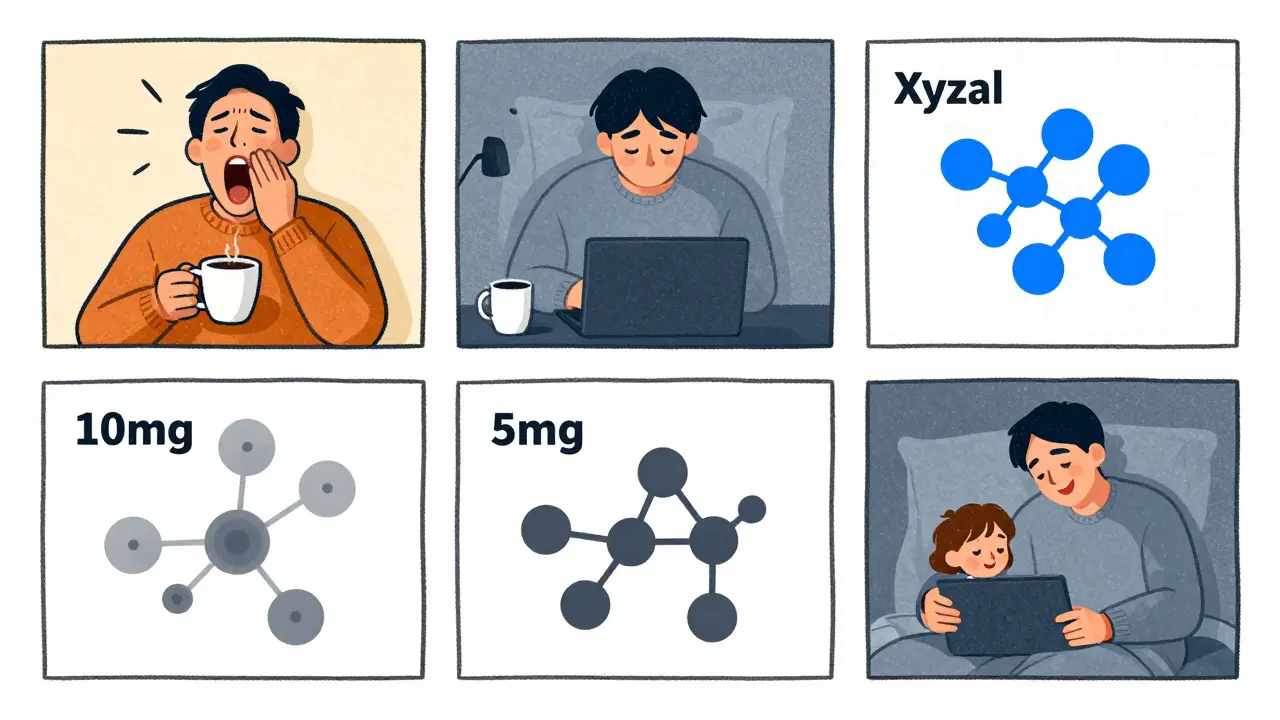
Who should pick which?
Cetirizine is the better choice if: - You’re on a tight budget - You don’t get drowsy from it - You’re treating a child (it’s more commonly prescribed for kids) - You want the most widely tested option Levocetirizine is better if: - You get sleepy on cetirizine - You need to stay alert for work, driving, or school - You’ve tried other antihistamines and they didn’t work well - You’re willing to pay a little more for slightly fewer side effectsWhat if neither works?
If you’re still sneezing, itching, or congested after trying both, you’re not alone. About 1 in 5 people don’t respond fully to either drug. That’s when you might need to try: - Loratadine (Claritin) - Fexofenadine (Allegra) - A nasal steroid spray like fluticasone - Or a combination pill like levocetirizine with montelukast (a newer option)What’s next for these drugs?
Researchers are looking at personalized dosing. Soon, we might test your genes to see how fast you break down antihistamines - and then pick the right drug and dose for you. For now, the best advice is simple: try one for two weeks. If you’re still tired, switch to the other. Track your symptoms and sleepiness. You’ll learn what your body needs.Bottom line
Cetirizine and levocetirizine are both safe, effective, and widely used. The main difference? Sedation. Levocetirizine is less likely to make you drowsy - and you take half the dose to get the same results. If drowsiness is a problem for you, it’s worth trying. If you’re fine on cetirizine, stick with it. There’s no need to pay more unless you need the upgrade.Is levocetirizine stronger than cetirizine?
No, levocetirizine isn’t stronger - it’s more targeted. It’s the active part of cetirizine, so you need half the dose (2.5 mg vs. 5 mg) to get the same allergy relief. It’s not more powerful; it’s cleaner.
Can I take cetirizine and levocetirizine together?
No. They’re essentially the same drug. Taking both together increases your risk of side effects like drowsiness, dry mouth, or dizziness without giving you extra benefit. Stick to one or the other.
Which one is better for kids?
Cetirizine is more commonly used in children because it’s been studied longer and is available in liquid form with clear dosing guidelines. Levocetirizine is approved for kids over 6 months, but cetirizine is still the first choice for most pediatricians.
Do these drugs cause weight gain?
Weight gain isn’t a common side effect of either drug. Some people report increased appetite, but studies haven’t shown a direct link to weight gain. If you notice unexplained weight changes, talk to your doctor - it could be related to other factors like diet or hormones.
How long does it take for each to start working?
Both start working within 1 hour. Peak effects happen around 1-2 hours after taking them. You’ll usually feel relief from sneezing and itching within the first day, and full control after 3-5 days of regular use.
Can I take these if I have high blood pressure?
Yes. Neither cetirizine nor levocetirizine raises blood pressure. Unlike some decongestants, they don’t contain pseudoephedrine. They’re safe for people with hypertension, as long as kidney function is normal.
Do I need to take them every day?
You don’t have to, but it helps. For seasonal allergies, taking them daily during pollen season gives better control than taking them only when symptoms appear. For chronic hives, daily use is usually recommended.
Is one better for nighttime use?
Cetirizine might be slightly more sedating, so some people prefer it at night. But if you’re sensitive to drowsiness, even nighttime use can leave you feeling groggy the next day. Levocetirizine is a better choice if you want relief without next-day fog.
15 Comments

srishti Jain
January 2, 2026 at 15:53 PM
Zyrtec makes me feel like a zombie. Xyzal? Barely notice it. Done.

Nadia Spira
January 4, 2026 at 05:25 AM
The entire premise is flawed. You're conflating pharmacokinetics with clinical relevance. The 8% difference in sedation is statistically insignificant in real-world populations. This is pharmaceutical marketing dressed as science.

henry mateo
January 5, 2026 at 09:58 AM
i tried both and honestly i dont notice much diff but i do get dry mouth with both. maybe its just me? idk. i just take what my dr gave me and dont overthink it lol

Kunal Karakoti
January 5, 2026 at 13:13 PM
It's fascinating how we anthropomorphize molecules. The 'good key' and 'bad key' metaphor is poetic, but in reality, both enantiomers interact with receptors in complex, non-binary ways. The sedation difference may be less about brain penetration and more about off-target effects on H3 receptors. We simplify for convenience, but the truth is messier.

Glendon Cone
January 5, 2026 at 13:29 PM
I used to take Zyrtec every day and felt like I was walking through molasses. Switched to Xyzal and it’s like I got my brain back. Also, no more weird dreams. 🌙✨ Totally worth the extra dollar.

Henry Ward
January 5, 2026 at 23:44 PM
People who say they 'don't get sleepy' on Zyrtec are either lying or have a liver that processes drugs like a supercomputer. Everyone gets drowsy. You're just in denial. The fact that you're still using it proves you're not thinking critically.

Kelly Gerrard
January 7, 2026 at 08:22 AM
While I appreciate the effort to clarify pharmacological distinctions, the clinical data does not support the conclusion that levocetirizine is meaningfully superior in sedation profile. The FDA’s definition of non-sedating applies equally to both compounds. The perceived benefit is likely a placebo effect amplified by marketing

Aayush Khandelwal
January 7, 2026 at 21:33 PM
Bro, cetirizine is like a street fighter - raw, unfiltered, messy. Levocetirizine? That’s the UFC champion with perfect form. Same fight, different elegance. And yeah, the price gap? Worth it if you’re not sleeping through your Zoom calls. 🤘

Sandeep Mishra
January 9, 2026 at 06:38 AM
If you're new to antihistamines, start with cetirizine. It's cheaper, well-studied, and if it works, great. If you're tired all day, then upgrade. Don't rush. Your body will tell you what it needs. Listen more than you spend.

Joseph Corry
January 10, 2026 at 23:12 PM
The notion that this is a 'smart next step' is laughable. You're paying 10% more for a molecule that's been isolated through expensive chiral synthesis - a process that benefits shareholders far more than patients. The data doesn't justify the premium. This is capitalism disguised as medical progress.

Colin L
January 11, 2026 at 08:12 AM
I’ve been on both for over a decade now, and I’ve kept detailed logs - sleep quality, cognitive performance, even my wife’s observations - and I can tell you with absolute certainty that the difference is negligible. The 6% vs 14% figure? That’s from a 2008 study with 60 healthy volunteers. Real-world users? We’re talking about people with comorbidities, sleep apnea, anxiety, caffeine dependence - none of that is accounted for. And yet, here we are, turning this into a lifestyle choice. It’s absurd.

kelly tracy
January 12, 2026 at 22:45 PM
So you're telling me I'm supposed to pay more for the same drug just because someone decided to sell the left-handed version? And now I'm a failure if I still use Zyrtec? This is why I hate modern medicine. Everything's a product now. I'm not a lab rat.

Cheyenne Sims
January 13, 2026 at 20:07 PM
The FDA has not approved levocetirizine as superior. The manufacturer’s marketing materials are misleading. You are being manipulated by corporate advertising. Cetirizine is the standard. Stick with the proven, regulated, and cost-effective option. Do not be swayed by emotional testimonials.

Hayley Ash
January 15, 2026 at 19:35 PM
Oh wow, you actually wrote a whole article about this? I thought it was just two pills that make you not sneeze. Who knew we needed a thesis on chirality and histamine receptors? Next up: comparing the existential weight of ibuprofen vs naproxen

Shae Chapman
January 1, 2026 at 04:39 AM
I switched to Xyzal last year and my productivity went through the roof 🙌 No more afternoon naps after lunch. My boss even asked if I was on vacation. 😅