

When you’re pregnant, every pill, supplement, or over-the-counter remedy feels like a potential risk. You want to protect your baby, but you also need to manage your own health-whether it’s asthma, depression, diabetes, or high blood pressure. The truth? Medication use during pregnancy is more common-and more complicated-than most people realize. Around 70 to 90% of pregnant women take at least one medication. Half take four or more. And yet, for most of those drugs, we simply don’t have solid data on whether they’re safe.
Why the Old System Failed
Years ago, the FDA used letters to rate pregnancy drug safety: A, B, C, D, X. It seemed simple. But it wasn’t. Letter C didn’t mean "moderate risk." It meant "there’s not enough human data, but animal studies showed problems." Many women and even some doctors misread these letters as a clear danger scale. As a result, women stopped life-saving medications-like antidepressants or seizure drugs-because they thought "C" meant "avoid at all costs." That led to worse outcomes: uncontrolled seizures, severe depression, or dangerously high blood pressure. In 2015, the FDA scrapped the letter system. It was outdated, misleading, and dangerous. In its place came the Pregnancy and Lactation Labeling Rule (PLLR). Now, drug labels don’t use letters. Instead, they have clear, narrative sections: Pregnancy, Lactation, and Females and Males of Reproductive Potential. These sections explain what’s known, what’s not known, and the risks of not treating the condition. For example, a label might say: "In human studies, exposure to this drug was not linked to birth defects, but data is limited to 300 pregnancies. Animal studies showed fetal loss at high doses. Untreated maternal depression increases risk of preterm birth."What’s Actually Known About Pregnancy Medication Risks
Here’s the hard truth: only 5 to 10% of FDA-approved drugs between 2003 and 2012 had enough human data to make a clear safety call. Most drugs were never tested in pregnant women during clinical trials. Why? Ethical concerns. Legal liability. And the simple fact that pregnancy is too complex to control in a lab setting. That’s why safety alerts matter. They’re not warnings based on guesswork. They’re built from real-world data collected through pregnancy exposure registries. The FDA currently tracks 38 active registries. These are voluntary programs where women who take certain medications during pregnancy agree to share their health information-through doctor visits, lab results, and follow-ups after birth. These registries have helped identify real dangers. For example, valproate (used for epilepsy and bipolar disorder) was found to increase the risk of neural tube defects from 0.1% to 1-2%. That’s a 10- to 20-fold increase. The FDA issued a Class I safety alert in 2022-its highest level-warning against its use in pregnancy unless no other option exists. On the flip side, many medications once feared turned out to be safe. SSRIs like sertraline and citalopram, once thought to cause heart defects, now have data showing no significant increase in major birth defects. In fact, stopping these medications often leads to worse outcomes: relapse of depression, increased stress hormones, and higher rates of preterm delivery.Regulations Differ Between the U.S. and Europe
The U.S. and Europe approach this differently. In the U.S., the focus is on clear labeling. In Europe, the European Medicines Agency (EMA) goes further. For high-risk drugs like lenalidomide (used in multiple myeloma), they require strict pregnancy prevention programs. That means: mandatory pregnancy tests before starting treatment, two forms of contraception, monthly check-ins, and even patient education materials signed by the patient. If you’re prescribed this drug and you’re sexually active, you can’t just get a prescription-you have to complete a full risk acknowledgment process. But Europe’s system isn’t flawless. A 2022 audit found that 41% of drug companies in EU countries failed to meet basic pregnancy monitoring requirements. Meanwhile, in the U.S., only 22% of companies required to run pregnancy registries actually do so. Both systems are under-resourced. And both rely on doctors and patients to report outcomes-which doesn’t always happen.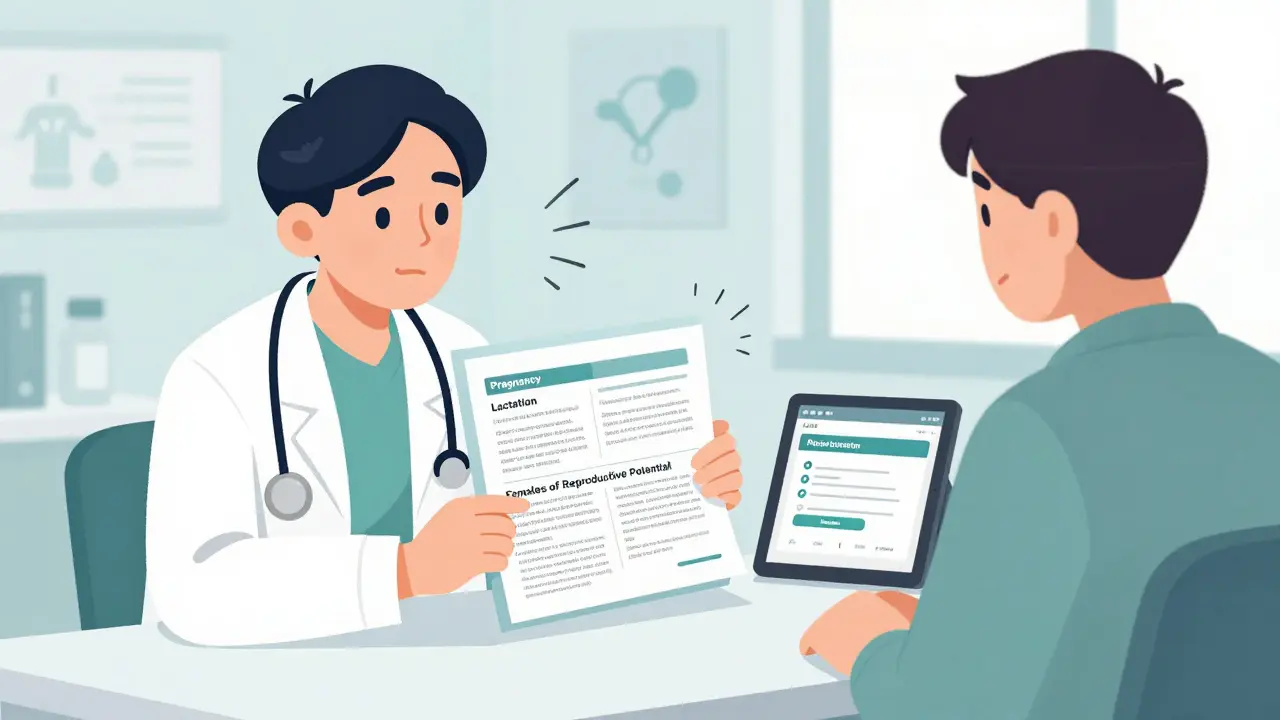
What You Should Do If You’re Pregnant or Planning to Be
Don’t panic. Don’t stop your meds without talking to your doctor. But do take action:- Bring a full list of everything you take: prescriptions, OTC painkillers, herbal teas, vitamins, CBD oil. Even "natural" isn’t always safe.
- Ask your doctor to review each item at your first prenatal visit. ACOG recommends a full medication reconciliation-it takes about 22 minutes, but it can prevent serious harm.
- Check the drug label. Look for the "Pregnancy" section. Don’t rely on Google or Reddit. Official labels are updated based on new data.
- Don’t stop antidepressants, thyroid meds, or blood pressure drugs without guidance. The risk of untreated illness often outweighs the unknown risk of the drug.
- Take 800 mcg of folic acid daily, starting before conception and continuing through at least 12 weeks. It cuts the risk of neural tube defects by up to 70%.
Medications to Avoid During Pregnancy
Some drugs have clear, serious risks:- Isotretinoin (Accutane): Used for severe acne. Causes severe birth defects in 20-35% of exposed pregnancies. Requires a strict FDA-mandated program to prescribe.
- Valproate: For epilepsy and bipolar disorder. Increases risk of autism, cognitive delays, and neural tube defects.
- Mycophenolate mofetil: An immunosuppressant. Causes miscarriage and multiple birth defects. Requires pregnancy testing before each refill.
- ACE inhibitors and ARBs: Blood pressure drugs. Can cause kidney failure and low amniotic fluid in the fetus, especially in the second and third trimesters.
- Warfarin: Blood thinner. Can cause fetal bleeding and bone abnormalities. Low molecular weight heparin is safer during pregnancy.
What’s Being Done to Fix the Gaps
The system is broken-but it’s getting better. In January 2024, the NIH launched PREGNET, a $25 million national project to connect 45 major medical centers and track 100,000 pregnancies. This will finally give us real-world data on what drugs do to developing babies. The FDA now requires weekly safety reports for high-risk drugs like mycophenolate, instead of quarterly. That means alerts can come faster. Pharmaceutical companies are also building pregnancy-focused apps-but only 12% have real user engagement. Most are still just digital brochures. And AI is coming. IBM Watson Health predicts that within five years, machine learning models analyzing millions of anonymized pregnancy records will predict medication risks with 70% accuracy. That’s not magic. It’s math. But it’s the only way we’ll close the data gap.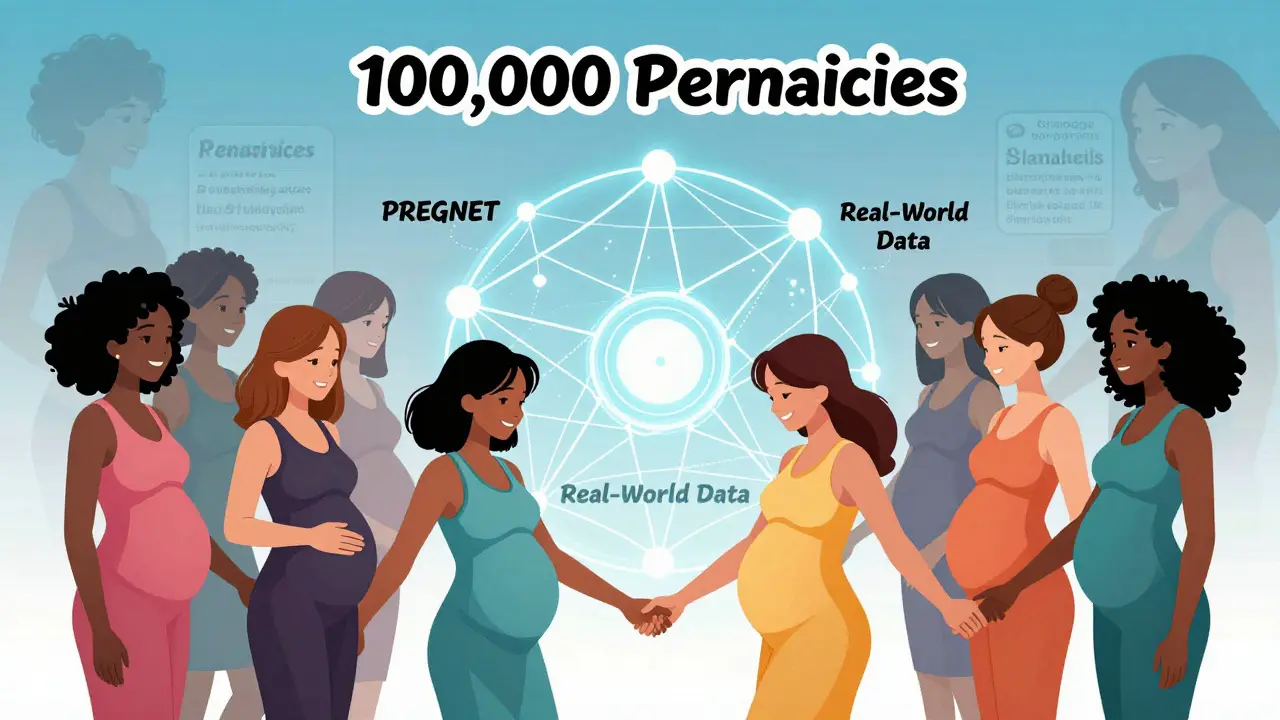
Real Stories, Real Confusion
One woman on Reddit wrote: "My doctor told me to stop my antidepressant the moment I got pregnant. Now I’m in crisis. Why wasn’t I told there are safer options?" She wasn’t alone. A 2021 survey found 68% of obstetricians say they regularly face medications with no clear safety data. Another study found that 29% of women with chronic conditions stop their meds when they get pregnant-often because they’re scared. But the consequences? 45% more complications in pregnancies where meds were stopped without medical guidance. The Mass General Pregnancy Medication Safety Hotline took over 12,000 calls in 2022. Seventy-eight percent were about anxiety or depression meds. And in 78% of those cases, the advice was: Keep taking it.The Bottom Line
There’s no such thing as a "100% safe" medication during pregnancy. But there are safer choices. And there’s a big difference between "unknown risk" and "known danger." Your job isn’t to avoid all meds. It’s to make informed decisions-with your doctor, using the best available data. Don’t rely on old letter grades. Don’t trust random internet posts. Read the label. Ask questions. And if you’re unsure, call a pregnancy medication hotline-like the one at Mass General or your local women’s health clinic. The goal isn’t perfection. It’s balance. Your health matters. Your baby’s health matters. And with better systems, better data, and better communication-we’re finally getting closer to giving both of you the care you deserve.Are all prescription drugs dangerous during pregnancy?
No. Many commonly used medications, including certain antidepressants, thyroid hormones, and blood pressure drugs, are considered safe or low-risk when monitored by a doctor. The key is not to avoid all meds, but to avoid the wrong ones. Untreated conditions like high blood pressure, diabetes, or depression can be far more dangerous to both mother and baby than properly managed medication use.
Can I take over-the-counter painkillers like ibuprofen while pregnant?
Avoid ibuprofen and other NSAIDs after 20 weeks of pregnancy. They can cause low amniotic fluid and kidney problems in the fetus. Acetaminophen (Tylenol) is generally considered the safest option for pain or fever during pregnancy, but even that should be used at the lowest effective dose for the shortest time possible.
What if I took a medication before I knew I was pregnant?
Don’t panic. Most medications taken in the first 2-4 weeks after conception either have no effect or cause an "all-or-nothing" outcome-meaning the pregnancy either continues normally or ends in a very early miscarriage. If you took a medication before realizing you were pregnant, talk to your doctor. They can assess the timing, the drug, and your individual risk. Most exposures don’t lead to birth defects.
How do I know if a drug has a pregnancy exposure registry?
Check the drug’s official prescribing information under the "Pregnancy" section. If a registry exists, it will be listed there. You can also search the FDA’s Pregnancy Exposure Registry list online. Enrolling is voluntary, free, and helps future mothers by building better safety data. You’ll get updates on the drug’s safety profile as new information becomes available.
Is it safe to take vitamins and herbal supplements during pregnancy?
Not all supplements are safe. While prenatal vitamins with folic acid are recommended, many herbal products like black cohosh, dong quai, or high-dose vitamin A can be harmful. The FDA doesn’t regulate supplements the same way as prescription drugs, so safety data is often missing. Always talk to your provider before taking any supplement-even if it’s labeled "natural."
What to Do Next
If you’re pregnant or thinking about it:- Make a list of every medication, supplement, and herbal product you take.
- Schedule a pre-pregnancy or early prenatal visit with your OB-GYN or primary care provider.
- Ask: "Is this safe? Is there a better alternative? Is there a registry I should join?"
- Bookmark the FDA’s Medicine and Pregnancy page-it’s updated regularly with new safety alerts.
- If you’re on a high-risk medication, ask if your pharmacy or hospital has a maternal health pharmacist on staff. They specialize in this exact issue.
11 Comments

Jasmine Yule
December 30, 2025 at 13:01 PM
I can't believe how many doctors still use the old letter system. I had mine tell me to ditch my SSRI because it was 'Category C'-like that meant I was risking my baby's life. Meanwhile, my depression was spiraling. This post is a godsend. Someone needs to send this to every OB in the country.

Greg Quinn
December 31, 2025 at 19:50 PM
It's funny how we treat pregnancy like a science experiment where every variable must be zeroed out. But the body isn't a lab. The real risk isn't the pill-it's the silence around it. We fear the unknown, but we ignore the known: untreated illness kills more mothers and babies than any medication ever has.

Lisa Dore
January 2, 2026 at 07:18 AM
To anyone reading this and feeling scared: you're not failing. You're trying. And you're not alone. I was on sertraline through both pregnancies. My kids are 8 and 11 now-healthy, hilarious, and obsessed with dinosaurs. The data is on our side. Talk to your doc. Join a registry. Be your own advocate. You've got this.

Sharleen Luciano
January 2, 2026 at 23:46 PM
I'm frankly astonished that anyone still trusts the FDA's labeling system. It's a glorified brochure. Meanwhile, the EMA actually enforces pregnancy prevention programs for teratogens. The U.S. is operating on goodwill and hope. If you're taking anything beyond prenatal vitamins, you're essentially participating in a human trial with no informed consent.

Alex Ronald
January 4, 2026 at 18:49 PM
I'm a pharmacist who specializes in maternal health. I see this every day. Women stop their blood pressure meds because they read 'possible risk' on a Google result. Meanwhile, preeclampsia is the #1 cause of preterm birth. The real danger isn't the drug-it's the misinformation. Always check the official label. Always ask for a maternal health pharmacist. We exist for this exact reason.

Teresa Rodriguez leon
January 6, 2026 at 08:04 AM
I took 3 different antidepressants during my pregnancy and my daughter is now 5. She has sensory processing issues. Coincidence? Maybe. But I still feel guilty every time she melts down. No one warned me about the long-term neurodevelopmental stuff. This article makes it sound so clinical. It’s not just data-it’s your child’s brain.

Paige Shipe
January 6, 2026 at 22:43 PM
The notion that 'untreated depression is worse' is a dangerous oversimplification. What about the child who grows up with a mother who is emotionally numb because of SSRIs? What about the long-term epigenetic effects? We don't know. And pretending we do is irresponsible. The absence of evidence is not evidence of safety.

Emma Duquemin
January 7, 2026 at 21:08 PM
OMG I just joined the sertraline pregnancy registry!! I was terrified to even ask my OB but this post gave me the guts. I’m so done with being gaslit by the medical system. If my kid ends up with a slight delay or a weird tic? Fine. But if I had a breakdown and missed her first steps? That’s the real tragedy. I’m choosing presence over perfection. And I’m not sorry.

Fabian Riewe
January 9, 2026 at 04:28 AM
I just found out I’m pregnant and was about to quit my blood pressure meds because my mom said 'everything's bad when you're preggo'. Then I read this. Holy crap. I’m booking an appointment with my doc tomorrow. And I’m printing out the FDA pregnancy label for every pill I take. This isn’t just info-it’s a lifeline.

Amy Cannon
January 10, 2026 at 01:34 AM
As a cultural anthropologist who has studied maternal health practices across five continents, I must emphasize that the Western biomedical model’s obsession with pharmacological risk mitigation often eclipses the holistic, community-based care models that have safely supported pregnant women for millennia. While data is valuable, we must not mistake quantification for wisdom. The human experience of pregnancy transcends the FDA label. One must consider social support, nutritional access, psychological safety, and cultural context-factors that are rarely, if ever, captured in a clinical registry.
Himanshu Singh
December 30, 2025 at 02:38 AM
this is so helpful!! i was freakin out about my anxiety meds n now i feel less alone. ty for breakin it down like this.
also folic acid 800mcg? i had no idea. gonna start today!!