
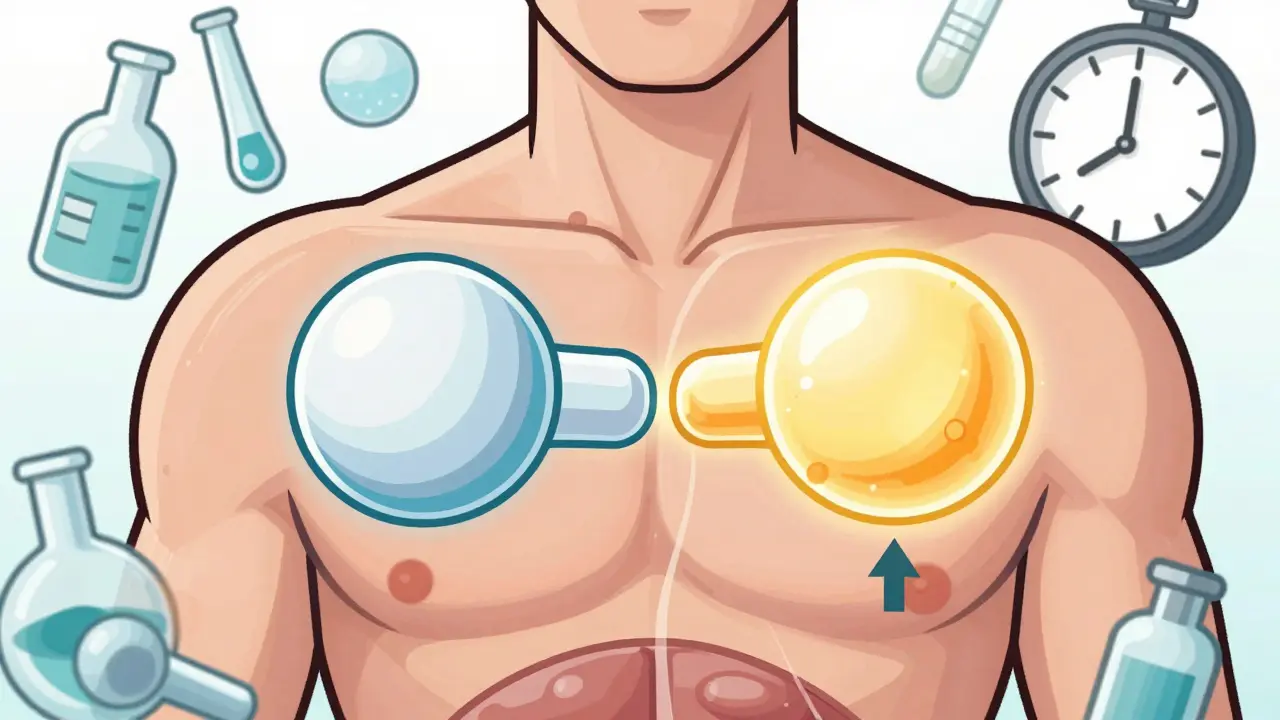
When a patient takes a pill that contains two drugs in one dose - like a blood pressure medication with a diuretic, or an asthma inhaler with a steroid and a bronchodilator - they’re using a combination product. These aren’t just two pills in one package. They’re carefully engineered formulations where the way the drugs interact inside the body can change how well they work. For generic versions of these products to be approved, they must prove they behave the same as the brand-name version. That’s called bioequivalence. But proving this isn’t as simple as comparing one drug to another. It’s one of the toughest challenges in generic drug development today.
Why Bioequivalence for Combination Products Is Harder Than It Looks
For a single-drug tablet, bioequivalence testing is straightforward. You give 24 to 36 healthy volunteers the generic and the brand-name version, measure how much drug enters the bloodstream, and check if the levels match within 80% to 125%. If they do, the generic is approved.
But with combination products, you’re dealing with two or more active ingredients. Each one might be absorbed differently. One might be water-soluble, the other oily. One might be released quickly, the other slowly. And if the two drugs interact chemically in the pill - say, one degrades the other - that changes everything. The generic must match not just the overall effect, but the exact behavior of each component. That means testing for two separate drug levels, not one. And if they’re not measured correctly, the whole study fails.
According to FDA data from 2023, nearly 73% of all new drugs approved between 2010 and 2019 were complex products like these. But only 14.5 months, on average, are needed to approve a standard generic. For combination products? It takes 38.2 months. That’s more than double.
Three Types of Combination Products - Each With Its Own Problems
Not all combination products are the same. The biggest categories are fixed-dose combinations (FDCs), topical products, and drug-device combinations - and each has unique testing hurdles.
Fixed-Dose Combinations (FDCs)
FDCs are the most common. Think of drugs like dolutegravir/lamivudine for HIV or amlodipine/atorvastatin for heart disease. The challenge? You can’t just test the two drugs separately and assume they’ll behave the same together. The formulation might change how fast each drug is absorbed. One study found that a generic version of a combination antihypertensive failed because the calcium channel blocker was absorbed too slowly when paired with the diuretic - even though each worked fine alone.
The FDA now requires three-way crossover studies: patients get the brand, the generic, and the two individual drugs given separately. This increases the number of volunteers needed to 40-60. And because you’re measuring two different drugs, you need two separate blood tests per time point. That’s expensive. And if the data is noisy - say, due to metabolism differences between people - you might need even more volunteers to get a clear answer.
Topical Products
Topical combination products - like creams with a steroid and an antifungal - don’t enter the bloodstream. They work on the skin. So how do you prove they’re the same? You can’t just measure blood levels. You have to measure how much drug actually gets into the top layers of skin.
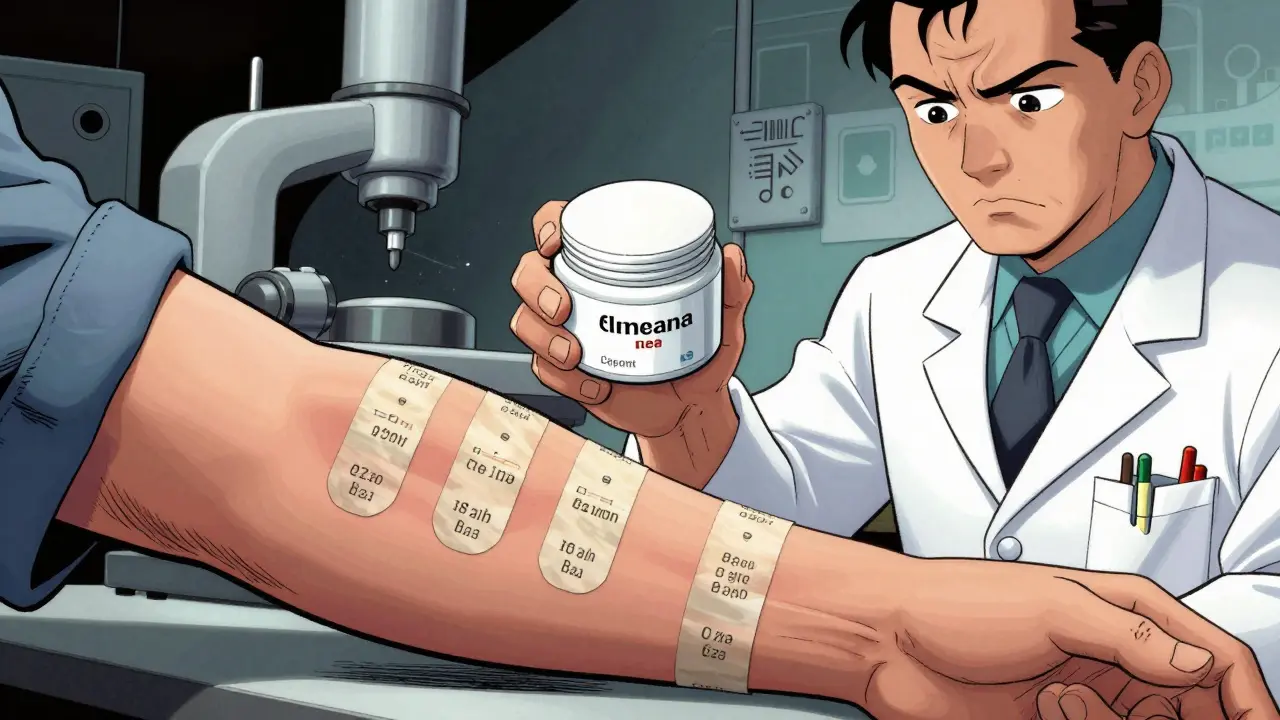
The FDA recommends a method called tape-stripping: peeling off 15-20 thin layers of skin with adhesive tape and analyzing how much drug is in each layer. But here’s the problem: there’s no standard on how thick each strip should be, how much skin material you need, or how to compare the results between products. One lab’s results can differ from another’s by 30% just because of technique. A generic developer in Australia reported spending over $2 million on three failed studies before finally getting approval - all because the tape-stripping method didn’t match the reference product’s penetration profile.
Drug-Device Combinations
These are the trickiest. Think inhalers, auto-injectors, or nebulizers. The drug is only as good as the device that delivers it. A small change in the inhaler’s valve, the spray pattern, or even the button’s resistance can mean the patient gets 20% less drug - or worse, too much.
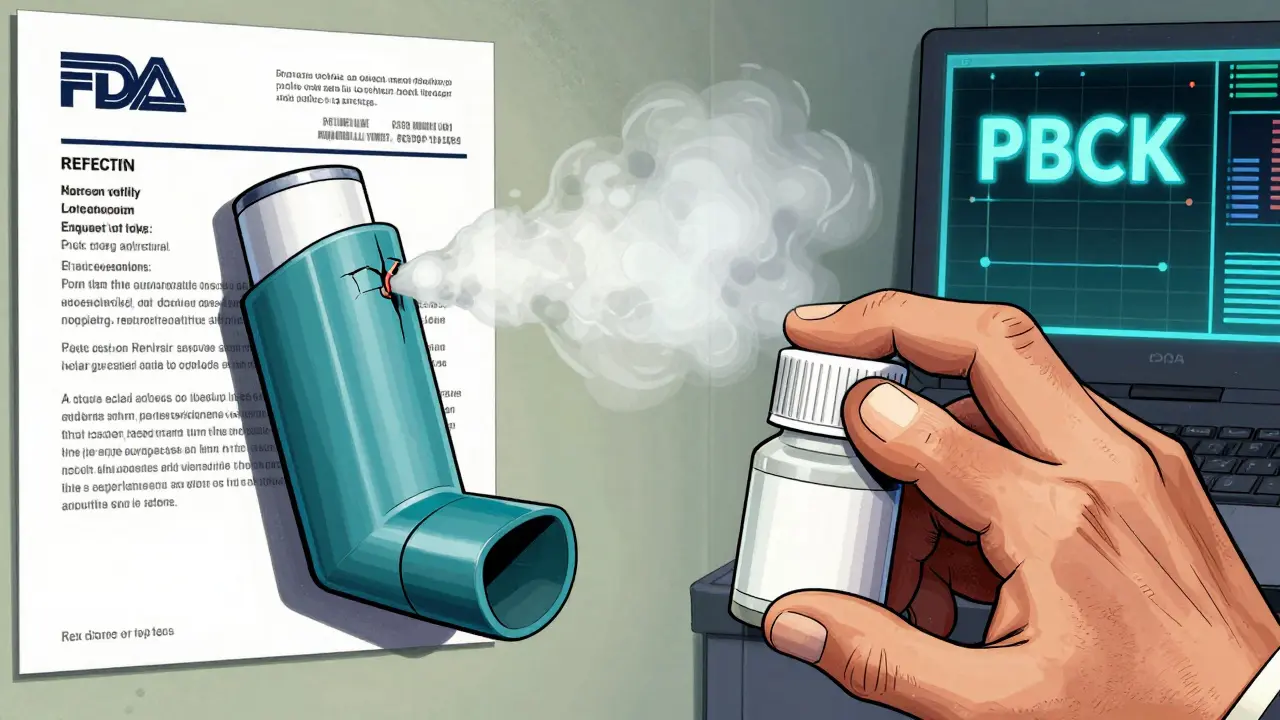
The FDA now requires device performance testing alongside bioequivalence. For inhalers, that means measuring the aerodynamic particle size distribution. If the generic’s particles are 10% larger than the brand’s, the drug won’t reach the lungs the same way. And it’s not enough to just match the numbers - you have to prove the patient can use it the same way. A 2024 FDA report found that 65% of rejection letters for generic inhalers cited issues with user interface. One generic auto-injector failed because the button required 15% more force to press - enough to make it harder for elderly patients to use.
Why So Many Generic Developers Are Struggling
It’s not just the science. It’s the cost and time.
Developing a standard generic costs $5-10 million. For a complex combination product? $15-25 million. And bioequivalence testing makes up 30-40% of that. Labs need high-end LC-MS/MS machines - each costing $300,000 to $500,000 - and scientists with years of training just to run the tests.
Companies like Teva and Viatris report that over 40% of their complex product failures are due to bioequivalence issues. Mylan (now Viatris) had one product - a foam for eczema - that failed three times in a row because the drug penetration measurements kept changing. Each failure meant a 12-month delay. That’s $5 million down the drain.
And it’s worse for smaller companies. A 2023 survey of 35 generic manufacturers found that 89% considered current bioequivalence requirements for combination products “unreasonably challenging.” Many can’t afford the specialized labs, the long studies, or the repeated attempts. Some just give up.
What’s Being Done to Fix This?
There’s progress - but it’s slow.
The FDA launched the Complex Generic Products Initiative in 2018 and has since published 12 product-specific bioequivalence guidances. These help developers know exactly what tests to run. For example, the guidance for a specific HIV combination now requires simultaneous bioequivalence testing of both drugs with 90% confidence intervals. That’s clearer than before.
Another big help? Physiologically-based pharmacokinetic (PBPK) modeling. Instead of running 60-person clinical trials, companies can now simulate how the drug behaves in the body using computer models. As of Q2 2024, 17 generic approvals used PBPK modeling to replace part of the clinical study. One company reduced its clinical trials by 40% and saved $7 million.
The FDA is also working with NIST to create reference standards - like a ruler for drug measurements. For inhalers, they’re developing a standardized particle size reference. By late 2024, labs will be able to calibrate their equipment to the same standard. That should cut down on lab-to-lab variability.
And there’s new hope for topical products. Pilot studies show that in vitro-in vivo correlation (IVIVC) models - which predict how well a cream will work based on lab tests - are 85% accurate. If this becomes standard, it could eliminate the need for expensive tape-stripping studies altogether.
What This Means for Patients and Healthcare Systems
Generic drugs saved the U.S. healthcare system $373 billion in 2020 alone. But if combination products stay stuck in development limbo, patients miss out. Many rely on these drugs for chronic conditions - diabetes, asthma, heart disease, HIV. Without affordable generics, they pay hundreds or thousands more per year.
Right now, 45% of complex brand products have no generic alternative. That’s because the path to approval is too long, too expensive, and too uncertain. If the FDA’s new initiatives succeed - and if more companies adopt modeling and standardized testing - we could see generic versions of $78 billion worth of combination products on the market by 2028.
But if nothing changes? Those drugs will stay expensive. And patients will keep paying the price.
What’s Next?
The FDA plans to release 50 new product-specific guidances by 2027. The first focus? Respiratory products - because 78% of inhaler submissions still fail bioequivalence testing. That’s a sign they’re listening.
For developers, the message is clear: don’t guess. Engage early with regulators. Use modeling. Follow the guidances. And don’t assume what works for a single drug will work for a combination.
For patients? The fight isn’t over - but the tools to win it are finally being built.
What is a combination product?
A combination product is a medical product that contains two or more active ingredients in a single dosage form - such as a pill, cream, or inhaler - or combines a drug with a device, like an auto-injector. Examples include asthma inhalers with two drugs, HIV medications with two antivirals in one tablet, or eczema creams with a steroid and an antifungal.
Why can’t generic manufacturers just copy the brand-name combination product?
They can’t just copy it because the way the ingredients interact in the formulation can change how each drug is absorbed. One ingredient might slow down or speed up the release of the other. The physical structure of the product - like the coating of a pill or the spray pattern of an inhaler - also affects delivery. Even small differences can lead to different clinical outcomes, so regulators require proof that the generic behaves the same way in the body.
How is bioequivalence tested for topical combination products?
For topical products like creams or foams, bioequivalence is tested by measuring how much drug gets into the top layers of skin. The FDA recommends a method called tape-stripping - peeling off 15-20 thin layers of skin with adhesive tape and analyzing the drug content in each. But because there’s no standard on how thick the strips should be or how much skin to analyze, results can vary between labs, making approval difficult.
What role does the FDA play in approving generic combination products?
The FDA sets the rules for proving bioequivalence. For combination products, they issue product-specific guidances that outline exactly which tests are needed - whether it’s blood tests, skin sampling, or device performance checks. They also review data from clinical studies, require early consultations through Type II meetings, and are developing reference standards to reduce lab variability. Their goal is to ensure generics are safe and effective without requiring full clinical trials.
Why do some generic combination products fail approval?
Most failures happen because the generic doesn’t match the brand in one or more key areas: drug absorption rates, delivery from a device, or consistency in skin penetration. For inhalers, a slightly different spray pattern can cause under-dosing. For pills, chemical interactions between ingredients can change release timing. Even small differences in manufacturing - like a different binder in the tablet - can throw off the entire profile. These issues often show up only after expensive clinical studies, leading to costly delays.
Are there alternatives to expensive clinical trials for combination products?
Yes. Physiologically-based pharmacokinetic (PBPK) modeling is now accepted by the FDA as a substitute for part of a clinical study. It uses computer simulations to predict how a drug behaves in the body based on its chemical properties and formulation. For some products, this reduces the need for human trials by 30-50%. In vitro-in vivo correlation (IVIVC) models are also emerging for topical products, using lab tests to predict real-world performance. These tools are helping developers save millions and speed up approvals.
12 Comments

Casey Tenney
March 21, 2026 at 14:30 PM
This is why America’s healthcare is broken. Too much regulation. Too many labs. Too many middlemen. Just let generics be generics. If it looks the same and costs less, let people use it. End of story.

Bryan Woody
March 21, 2026 at 19:42 PM
Let me get this straight - we’re spending $25 million to prove that a pill doesn’t chemically sabotage itself? And we’re using tape-stripping on skin like we’re doing a CSI episode? Bro. We’ve got AI that can predict protein folding. We’ve got quantum computing. But we still need 60 people to swallow pills and pee in cups for 38 months? The FDA’s got a 1998 mindset in a 2024 world. PBPK isn’t the future - it’s the bare minimum. And if you’re still doing tape-stripping without calibration standards? You’re not a scientist. You’re a lab tech with a vendetta against adhesive.

Timothy Olcott
March 22, 2026 at 05:58 AM
AMERICA FIRST! Why are we letting foreign labs test our meds? This is a national security issue! If China can make a better inhaler than us? We’re doomed. We need tariffs on tape strips. And why are they using math models? That’s communist science. Real medicine is done with blood samples and sweat. I’m calling my rep.
😡🇺🇸
Johny Prayogi
March 23, 2026 at 06:45 AM
Love how this breaks it down. The part about inhaler button pressure? That’s real. My grandma couldn’t use her generic EpiPen because it felt like she was trying to crush a soda can. She stopped using it. That’s not just a stats problem - that’s a human problem. Glad to see the FDA finally getting serious about user interface. This stuff matters. People’s lives depend on whether a button clicks right.

Nishan Basnet
March 24, 2026 at 01:29 AM
As someone from India where generics are the backbone of healthcare, I find this deeply fascinating. We’ve been making combination pills for decades - but we’ve never had the luxury of $500,000 LC-MS/MS machines. Yet we still get people treated. The real story here isn’t just science - it’s equity. If the solution is PBPK modeling, why isn’t the FDA helping labs in low-resource countries build digital capacity? Because if we can’t afford the test, we can’t make the drug. And if we can’t make the drug, millions go untreated. This isn’t just regulatory - it’s ethical.

Sandy Wells
March 24, 2026 at 21:42 PM
Interesting. But let’s be honest - most of these combination products were overengineered to begin with. Why not just prescribe two separate pills? Simpler. Cheaper. More predictable. The whole industry is chasing innovation while ignoring basic pharmacology. We’ve turned medicine into a puzzle game. And patients are the ones stuck with the missing pieces.

Jackie Tucker
March 26, 2026 at 05:02 AM
Ah yes - the modern pharmaceutical industry: a cathedral of bureaucracy built on the bones of human suffering. We’ve replaced the altar of science with the altar of compliance. PBPK modeling? Tape-stripping? These are not solutions - they are rituals. The real bioequivalence? The one between profit and patient. The FDA doesn’t regulate safety - it regulates market access. And if your company can’t afford the $20 million entrance fee? You’re not a developer. You’re a footnote.

matthew runcie
March 26, 2026 at 13:48 PM
Big thanks for laying this out so clearly. I’ve been wondering why my dad’s heart med generic kept failing and now it makes sense. The fact that one drug in the combo can mess up the absorption of the other? That’s wild. I’m glad someone’s finally trying to fix this. PBPK and standardization feel like real progress. Hope it sticks.

Nicole James
March 27, 2026 at 08:38 AM
Wait… so you’re telling me the FDA is letting companies use computer simulations instead of real people? That’s not science - that’s a simulation. What if the model is wrong? What if they’re just faking the data? Who’s auditing the AI? Who’s watching the watchers? I’ve seen documentaries - they’ve been doing this since the 90s. This is a cover-up. The real reason they’re pushing PBPK? Because they’re scared someone will find out the original brand drug was never properly tested either. And now? They’re outsourcing truth to a machine. We’re being lied to.
!!!
Solomon Kindie
March 29, 2026 at 03:23 AM
So the system is broken because it’s too expensive and too slow? Shocking. Who could’ve predicted that? Big Pharma wants to keep prices high so they can fund their next billion-dollar marketing campaign. The FDA? They’re just the gatekeepers with a 10-year-old playbook. And we wonder why people can’t afford their meds. The real problem? Capitalism. The solution? Socialized medicine. But hey - at least we’ve got tape-stripping. Maybe next they’ll use tarot cards to calibrate inhalers.

Natali Shevchenko
March 30, 2026 at 12:12 PM
There’s something quietly beautiful about how complex biology refuses to be reduced to a single number. We want to measure absorption, distribution, metabolism - all of it - with clean curves and confidence intervals. But the human body isn’t a math problem. It’s a symphony of chaos. And yet, we still try. We build labs with million-dollar machines, we peel skin with tape, we simulate molecules with code - all to answer one question: does this pill do what it’s supposed to? Maybe the real bioequivalence isn’t in the data. Maybe it’s in the fact that we keep trying. Even when it’s hard. Even when it costs millions. Even when it takes years. We still show up. And that? That’s the quietest kind of hope.
Allison Priole
March 21, 2026 at 10:13 AM
Man i just read this whole thing and honestly? It makes so much sense now why my asthma med generic kept acting up. I thought it was me, like maybe i was breathing wrong or something. Turns out the damn inhaler spray pattern was off by like 5%. That’s wild. No wonder people are getting inconsistent results. I’m glad they’re finally using PBPK modeling - it’s like giving computers the job of doing the boring math so humans don’t have to sit through 60-person trials. Honestly? This is the kind of stuff that should be on the news. Not cat videos.