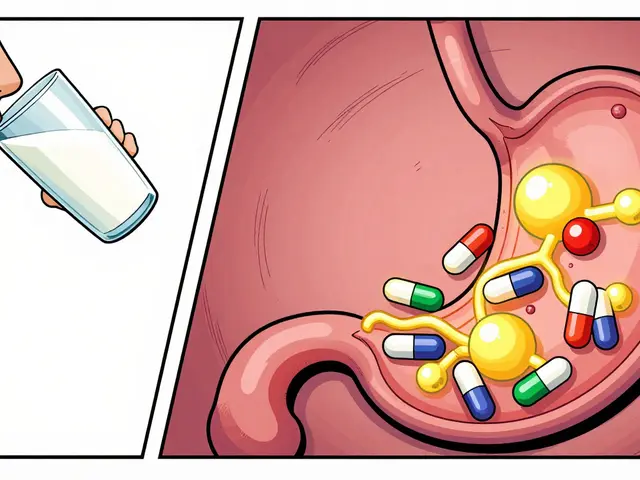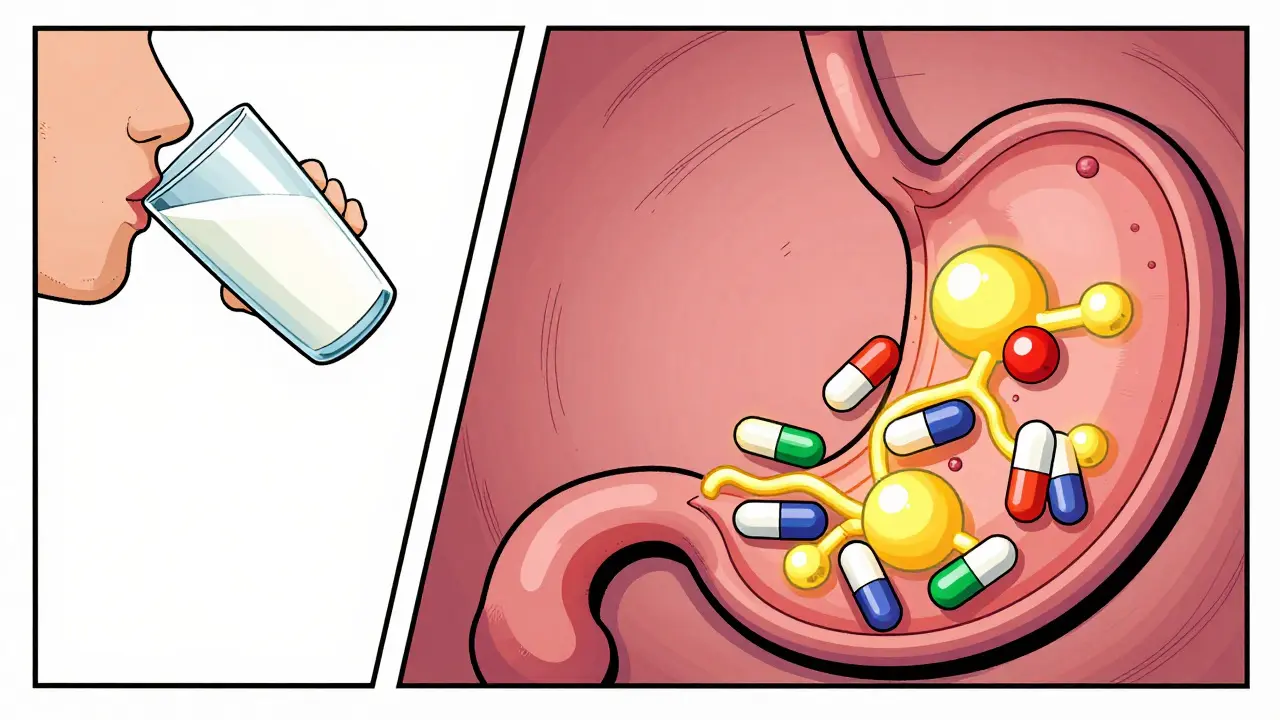
When you take certain antibiotics is medicines used to treat bacterial infections by killing bacteria or inhibiting their growth with dairy, a process called chelation occurs. In simple terms, the calcium in your milk or cheese binds to the antibiotic molecule. This creates a complex that is too large or insoluble to pass through your intestinal lining. Instead of entering your bloodstream to fight the infection, the medicine stays in your gut and is eventually flushed out of your system. Depending on the drug, this can slash the amount of medicine your body absorbs by anywhere from 20% to over 90%.
The Heavy Hitters: Which Antibiotics Are Affected?
Not every antibiotic has a problem with calcium. Penicillins and macrolides, for example, generally don't care if you have a cheeseburger with your pill. However, two major classes are highly sensitive to this interaction.
First, there are Tetracyclines is a class of broad-spectrum antibiotics used for acne, Lyme disease, and respiratory infections. This group includes drugs like tetracycline, minocycline, and the very common Doxycycline is a long-acting tetracycline derivative often used for severe acne and tick-borne illnesses. While newer versions like doxycycline are a bit more resilient, they still bind to polyvalent cations like calcium, magnesium, and iron.
Then we have Fluoroquinolones is potent antibiotics typically used for complicated urinary tract infections (UTIs) and pneumonia. This class includes Ciprofloxacin is a widely used fluoroquinolone primarily targeting Gram-negative bacteria and levofloxacin. These are particularly sensitive. Research shows that while milk might reduce ciprofloxacin levels by 70%, yogurt-which is denser in certain minerals-can crash those levels by 92%.
| Antibiotic Class | Common Examples | Estimated Absorption Drop | Primary "Culprit" |
|---|---|---|---|
| Tetracyclines | Doxycycline, Minocycline | 50% - 90% | Calcium, Magnesium, Iron |
| Fluoroquinolones | Ciprofloxacin, Levofloxacin | 50% - 92% | Calcium, Aluminum |
| Penicillins | Amoxicillin, Ampicillin | Minimal / None | N/A |
Why Timing is Your Only Real Solution
You can't change the chemistry of how calcium interacts with these drugs, so the only way to fix the problem is to ensure they never meet in your stomach at the same time. This is where the "timing window" comes in. If you take your pill and then immediately eat yogurt, the two mix instantly. If you wait, the antibiotic has a chance to be absorbed into your blood before the dairy arrives.
For those on tetracyclines, the gold standard is the "1 before or 2 after" rule: take your medication at least 1 hour before or 2 hours after eating dairy. Some pharmacists suggest extending this to 3 hours to be absolutely safe. For fluoroquinolones like ciprofloxacin, the window is even wider. You should aim for 2 hours before or up to 4-6 hours after consuming dairy products.
It's not just about milk and cheese. Many people get tripped up by "hidden" calcium. Calcium-fortified orange juice, almond milk, or even a daily calcium supplement can cause the exact same blockage. If you're taking a supplement for bone health, treat it exactly like a glass of milk-keep it far away from your antibiotic dose.

The Danger of "Sub-Therapeutic" Levels
What happens if you ignore these rules? You end up with what doctors call sub-therapeutic concentrations. This means there is some medicine in your blood, but not enough to actually kill the bacteria. This is the worst of both worlds: the bacteria aren't killed, but they are exposed to a small amount of the drug, which can actually teach them how to resist it.
This is a major contributor to Antimicrobial Resistance is the process where bacteria evolve to withstand the effects of antibiotics. When a UTI doesn't clear up because of a calcium-fortified breakfast cereal, the infection lingers, and you might eventually need a much stronger, more aggressive drug that has harsher side effects.

Practical Strategies for Your Daily Schedule
Managing these gaps can be annoying, especially if you're taking pills twice a day. The trick is to anchor your medication to times when you aren't eating dairy. For most people, that means mid-morning and right before bed.
- The Bedtime Slot: Take your dose right before sleep. Since most people don't eat a bowl of cereal at 11 PM, this is the safest window.
- The Mid-Morning Gap: If you have breakfast at 8 AM (with milk), wait until 10 AM or 11 AM to take your dose.
- The "Water Only" Rule: Always take your antibiotic with a full glass of plain water. Avoid using milk as a way to "settle your stomach" when taking pills.
- Digital Alerts: Use an app like Medisafe to set reminders that specifically warn you about food interactions.
If you find the timing too difficult, talk to your doctor about extended-release versions, such as Cipro XR. While these can be more expensive, they are sometimes designed to be less sensitive to these interactions, though timing is still generally recommended.
Does this apply to plant-based milks like almond or soy?
Yes, if they are calcium-fortified. Most plant-based milks add calcium to match the nutritional profile of cow's milk. The antibiotic doesn't care where the calcium comes from; it will bind to it regardless of whether the source is a cow or an almond.
What if I already took my antibiotic with a glass of milk?
Don't panic and don't take an extra dose. One accidental interaction likely won't ruin your entire treatment, but you should avoid doing it again. If your symptoms aren't improving, contact your doctor to let them know so they can evaluate if the absorption was compromised.
Can I take my antibiotic with food to avoid stomach upset?
Yes, but choose your food wisely. Foods like toast, apples, or plain rice are usually fine. Just avoid anything high in calcium (cheese, yogurt, milk) or minerals like iron and magnesium (some vitamins/antacids) during that critical window.
Why is yogurt worse than milk for some antibiotics?
Yogurt often has a higher concentration of calcium and other minerals per gram compared to fluid milk. Because it is more concentrated, it can create more of those insoluble complexes, leading to a more dramatic drop in the drug's bioavailability.
Do I need to worry about calcium supplements?
Absolutely. Calcium supplements are often much more concentrated than a glass of milk. You should treat your supplements exactly like dairy products and maintain the 2-to-6 hour gap depending on your specific medication.