
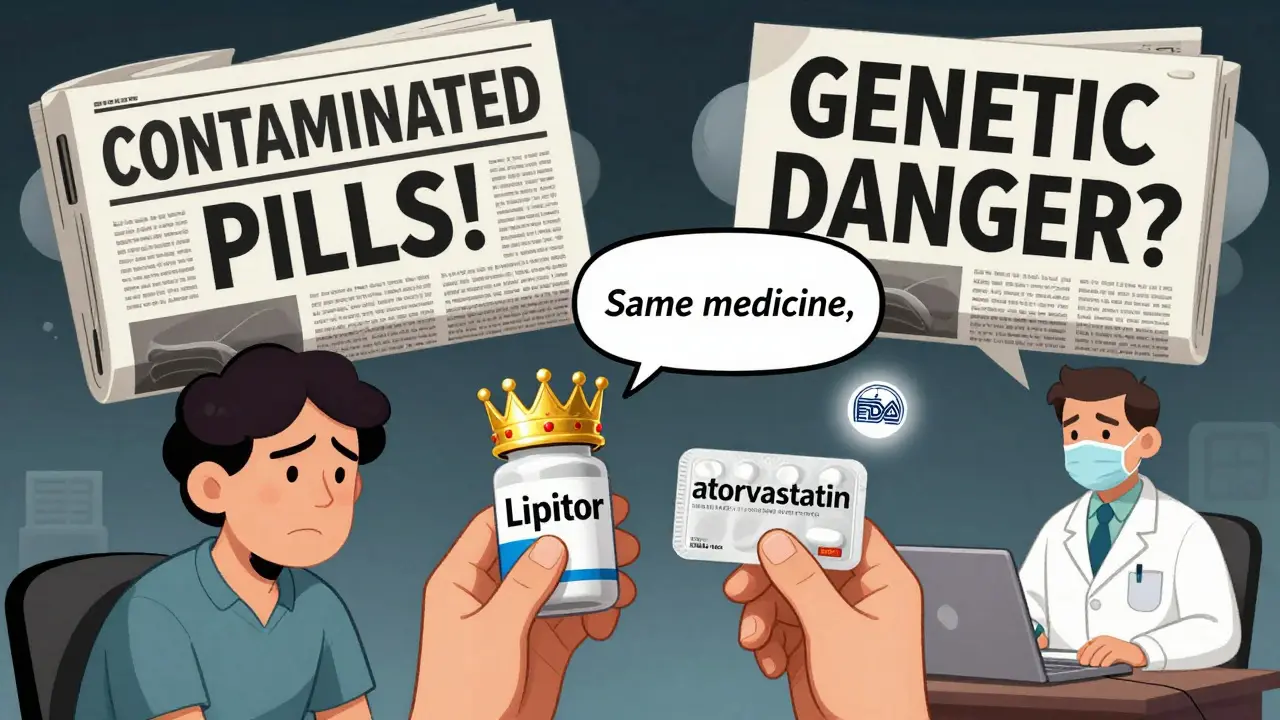
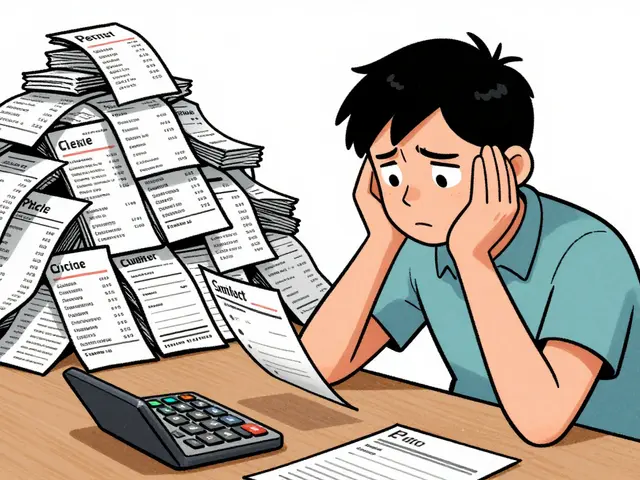
Every time you pick up a prescription, you’re making a choice - not just about your health, but about trust. And that trust is being shaped more by headlines than by science.
Eighty-four percent of prescriptions in the U.S. are filled with generic drugs. They’re just as safe. Just as effective. And often cost 80% less than the brand-name versions. Yet, if you ask someone why they refuse generics, the answer rarely has to do with data. It’s because they read a story - maybe in the New York Times - about contaminated pills from overseas. Or saw a tweet claiming, "Your generic pill is just a knockoff."
Why the Media Keeps Using Brand Names
Here’s something most people don’t realize: when news outlets report on a drug like "Lipitor" or "Zoloft," they’re not just being lazy. They’re reinforcing a mental shortcut that makes generic drugs feel less real.
A 2014 study in JAMA Network looked at 1,200 news articles about medications. Only 2% of newspapers had a written policy requiring reporters to use the generic name first. The rest? They defaulted to brand names. Why does that matter? Because your brain doesn’t process "atorvastatin" the same way it processes "Lipitor." The brand name sticks. It feels familiar. It feels trusted. The generic? It sounds like a mystery.
And when a story says, "New study finds Lipitor side effects," without ever mentioning the generic name, readers assume the problem is with the drug itself - not the brand. But if the same study had said, "Atorvastatin shows increased risk of muscle pain," you’d know: this is the same pill, sold under different labels. That’s not a coincidence. It’s a pattern.
The Fear Factor: When Bad News Makes You Pay More
Imagine you just got diagnosed with high cholesterol. Your doctor says, "Here’s a generic version - it’s cheaper and just as good." But the next day, you read a headline: "Contaminated Generic Drugs Reveal an Urgent Public Health Crisis."
What do you do? You switch to the brand-name drug - even if it costs three times as much.
A 2023 study from the University of Texas at Dallas found this reaction isn’t rare. After patients received bad health news - like a new diagnosis or abnormal test result - 72% of them chose brand-name drugs over generics within 90 days. Not because they thought the generic was unsafe. But because fear makes people cling to what feels familiar.
And here’s the cruel twist: the cheaper option is actually the one more likely to be taken consistently. Studies show people on generics are less likely to skip doses because they can afford them. But fear overrides logic. Media coverage doesn’t just inform - it triggers instinctive, costly decisions.
What the FDA Actually Says - And Why No One Believes It
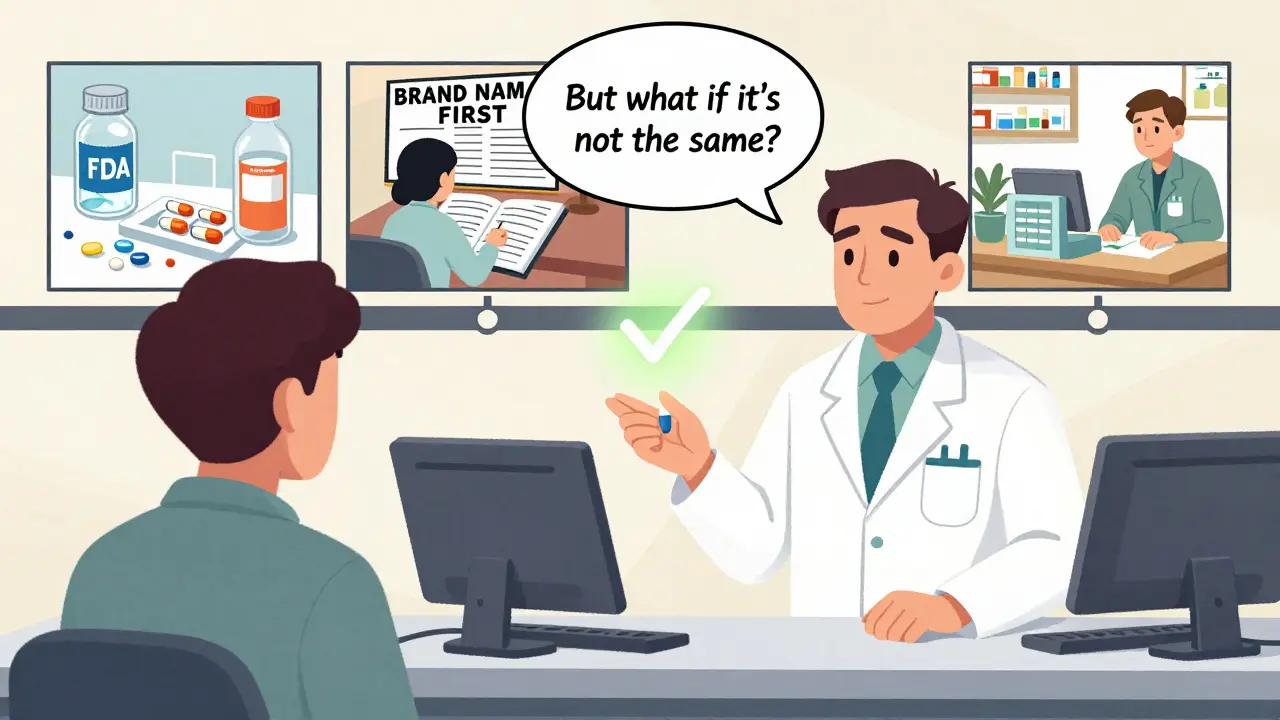
The FDA approves every generic drug before it hits the shelf. To get approval, a generic must prove it delivers the same amount of active ingredient into your bloodstream at the same rate as the brand. That’s not theory. That’s lab-tested, repeatable science.
Dr. Sarah Ibrahim, FDA lead for generic drug policy in 2023, says: "All approved products - brand or generic - are held to the same high standards of quality, safety, and efficacy." But when you hear "FDA approved," do you feel reassured? Or do you think, "Yeah, but they approved the other one too - and look what happened?"
That’s the gap. People don’t distrust the FDA. They distrust the system - and media stories feed that distrust. A 2023 PMC study found that 40% of people couldn’t tell the difference between a generic and brand-name pill just by looking at the packaging. Only 17% could correctly identify a generic drug package. If you can’t recognize it, how can you trust it?
Pharmacists Are the Missing Link
Here’s where things get interesting: the people who know the most about drugs - pharmacists - are also the most likely to use generics themselves.
A 2015 study found pharmacists preferred generic aspirin over brand-name aspirin 78% of the time. Why? Because they’ve seen the data. They’ve seen the manufacturing. They know the tiny differences - like color or shape - don’t change how the drug works.
Yet, most patients never get that conversation. A pharmacy visit lasts 90 seconds. The pharmacist hands you a pill. You don’t ask. They don’t explain.
But when they do? It changes everything. Research in US Pharmacist (2023) shows that patients who had a 2-minute talk with their pharmacist about generics were twice as likely to fill their prescription with the generic version. And they stuck with it longer.
It’s not magic. It’s simple: "This is the same medicine as the brand. It’s cheaper. It’s FDA-approved. Here’s how we know." That’s all it takes.
The Hidden Truth About Drug Prices
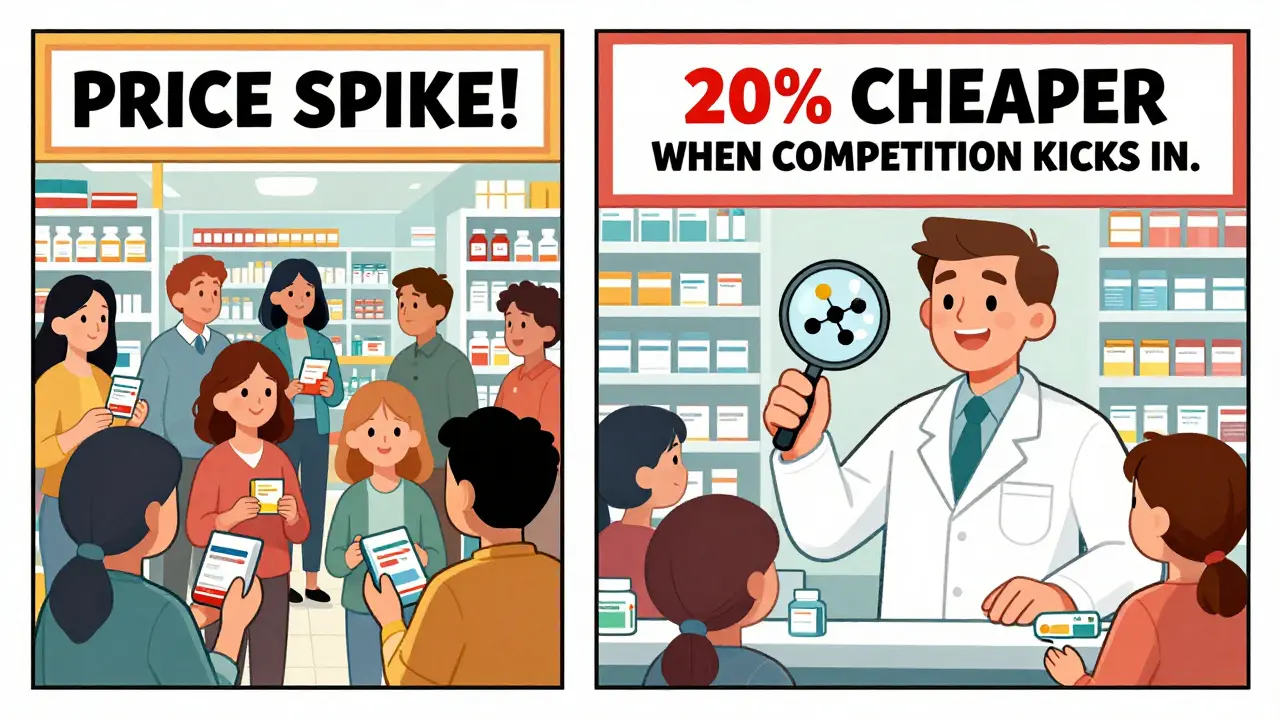
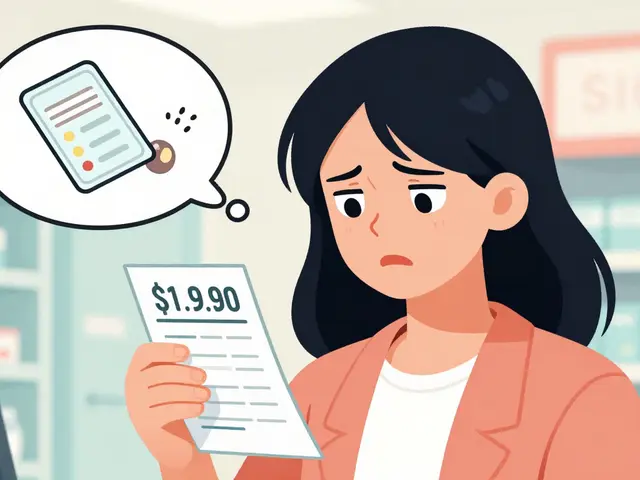
Media loves a story about price spikes. "Generic drug prices jump 500%!" - that’s clickbait gold.
But here’s what those headlines ignore: when three or more generic versions of a drug enter the market, prices drop by an average of 20%. That’s not theory. That’s data from the HHS ASPE report (2023). When competition kicks in, prices fall - fast.
So why don’t you hear that? Because a 20% price drop isn’t dramatic. It doesn’t make headlines. But a single pharmacy chain raising prices by $10? That’s a front-page story.
The media doesn’t just mislead - it distorts. It highlights rare, scary exceptions while ignoring the bigger, more important trend: generics are driving down costs for millions.
What Needs to Change - And Who Can Fix It
Fixing this isn’t about banning news stories. It’s about better storytelling.
- Newsrooms need policies that require reporters to use the generic name first - and explain what it is.
- Healthcare providers need training to talk about generics without hesitation.
- Pharmacists need time - not just to dispense pills, but to answer questions.
- Patients need simple, clear facts: "Same medicine. Same results. Lower cost. FDA-approved."
There’s no conspiracy. No cover-up. Just a system where science gets drowned out by emotion, and emotion gets amplified by headlines.
The solution? Start with honesty. Tell patients: "Yes, some generics have had problems. But so have brand-name drugs. The FDA checks them all. And if you can’t afford the brand, the generic isn’t a compromise - it’s the right choice."
And maybe, just maybe, the next time someone reads a headline about a dangerous drug, they’ll pause - and ask: "Is this about the medicine? Or just the label?"
Are generic drugs really as effective as brand-name drugs?
Yes. Every generic drug must prove it delivers the same amount of active ingredient into your bloodstream at the same rate as the brand-name version. The FDA requires this before approval. Differences in color, shape, or inactive ingredients don’t affect how the drug works. Thousands of studies confirm this - including one from 2014 in JAMA Network that found no difference in outcomes between generics and brands for heart disease, depression, and high blood pressure.
Why do some people say generics don’t work for them?
Sometimes, it’s not the drug - it’s the placebo effect, or a change in how the pill looks or feels. When someone switches from a familiar brand to a different-looking generic, they may notice a difference in side effects - even if none exist. This is called the "nocebo effect." Studies show patients report more side effects when they think they’re taking a cheaper drug. Talking with a pharmacist or doctor about this can help reset expectations.
Can I trust generics made overseas?
Yes - if they’re approved by the FDA. The FDA inspects all manufacturing facilities, whether they’re in the U.S., India, or China. A 2023 FDA audit found that 97% of generic drug plants met U.S. standards. The problem isn’t location - it’s media headlines that focus on rare violations. One bad batch gets reported. Thousands of safe batches don’t. The FDA’s inspections are rigorous - and public. You can check inspection reports on their website.
Why do doctors sometimes prescribe brand-name drugs instead of generics?
Most doctors prescribe generics - over 80% of the time. But some may choose brand names for complex drugs like inhalers or injectables, where small differences in delivery matter. Or, if a patient has had a bad reaction to a specific generic in the past, they may avoid that version. It’s not about distrust - it’s about individual response. Always ask your doctor: "Is there a generic option?" They’re often unaware of your concerns.
How can I tell if a pill is a generic?
Look at the label. Generic drugs are listed by their chemical name - like "metformin" instead of "Glucophage." The manufacturer’s name will be different from the brand. The pill may look different - different color, shape, or markings. That’s normal. If you’re unsure, ask your pharmacist. They can show you the FDA-approved list of generics for your prescription. A 2023 study found 40% of people couldn’t tell the difference - so you’re not alone.
If you’re taking a generic drug and feel unsure, talk to your pharmacist. Ask: "Is this the same as the brand?" Most will say yes - and explain why. That simple conversation is the most powerful tool we have to rebuild trust.
11 Comments

Prathamesh Ghodke
March 18, 2026 at 20:22 PM
As someone who works in pharma logistics in India, I can tell you this: the factories making generics for the U.S. are cleaner than my aunt’s kitchen during Diwali.
We have GMP-certified plants that export to 40+ countries. The FDA inspects them yearly. And guess what? Most of them are in India. Yet people still think "Made in India" = "Made in a dumpster".
It’s not about quality. It’s about perception. And perception? It’s shaped by headlines that say "Contaminated Pills" - without ever saying "0.003% of batches".
Also, your doctor doesn’t know you’re scared. Talk to them. Or better yet - talk to your pharmacist. They’re the real MVPs.

Justin Archuletta
March 19, 2026 at 06:53 AM
I used to hate generics. Now I’m hooked. Cheaper. Same stuff. No drama. Seriously. Why pay extra for a logo?

Melissa Stansbury
March 19, 2026 at 19:53 PM
Okay, but have you ever noticed how the brand-name pills are always these smooth, glossy, perfectly shaped tablets? And generics? They’re… weird. Sometimes they’re a little off-color. A little thicker. A little… unpolished.
And when you’re already anxious about your health, that tiny difference? It feels like a red flag.
I’m not saying it’s rational. I’m just saying - the packaging matters. The *feeling* matters. And no, the FDA doesn’t test how a pill makes you feel when you swallow it.
So maybe the real problem isn’t the media… it’s that we’ve turned medicine into a luxury product.

cara s
March 21, 2026 at 11:19 AM
It is, without a doubt, a profound and systemic epistemological failure in public health communication - one that is exacerbated by the commodification of medical narratives within the neoliberal media-industrial complex.
When the dominant discourse privileges brand equity over pharmacological equivalence, it does not merely misinform - it actively reconstructs the phenomenological experience of therapeutic efficacy.
One must consider, then, the semiotic weight of the word "Lipitor" as a cultural artifact - a signifier of safety, trust, and medical authority - whereas "atorvastatin" is, in the public imagination, an empty signifier, a placeholder for uncertainty.
And yet, the FDA’s bioequivalence standards are not merely rigorous - they are mathematically precise, statistically validated, and replicated across thousands of clinical trials.
Thus, the disconnect is not in the science - it is in the narrative architecture.
And that, dear readers, is where we must intervene.

Amadi Kenneth
March 23, 2026 at 10:23 AM
EVERYTHING IS A LIE.
Did you know the FDA gets funding from Big Pharma?!
And those "inspections"? They’re scheduled. They know when you’re coming.
And the "same active ingredient"? Yeah, right. What about the fillers? The binders? The dyes? Those are the REAL drugs - the ones that make you feel weird!
I’ve been taking generics for 7 years. My liver? Not the same. My sleep? Gone. My dreams? All black.
They’re testing us. And the media? They’re just the front.
Next time you see a pill? Look at the numbers on it. Those aren’t lot codes. They’re tracking IDs.
Wake up.

Shameer Ahammad
March 25, 2026 at 08:30 AM
Allow me to elucidate, with the precision of a pharmacokinetic model:
The assertion that generics are equivalent to branded drugs is not merely scientifically accurate - it is empirically irrefutable.
Yet, the persistence of irrational aversion to generics is not a failure of education - it is a failure of moral imagination.
Choosing a branded drug over a generic, when one is financially able to afford the latter, is not a personal preference - it is a social injustice.
Every dollar spent on a brand-name drug that could have been spent on a generic is a dollar denied to a single mother in rural Mississippi who cannot afford insulin.
And yet, we celebrate this as "choice."
It is not choice. It is complicity.
Stop being a consumer. Start being a citizen.

Alexander Pitt
March 25, 2026 at 12:46 PM
Pharmacists are the unsung heroes here. They know more about your meds than your doctor does.
And they’re the only ones who can actually explain why your generic looks different - and why that’s totally normal.
But they’re stuck behind counters, rushed, underpaid, and rarely given time to talk.
If you want change? Ask your pharmacist. Say: "Can you tell me about this pill?"
Then shut up and listen.

Manish Singh
March 27, 2026 at 04:39 AM
As an Indian guy who’s seen generic manufacturing up close - I can say this: the quality control in some Indian plants is tighter than my mom’s rules for dating.
They make pills for the U.S., Europe, Canada - and they’re inspected by the FDA, WHO, and EU regulators.
But here’s the thing - when a U.S. headline says "Contaminated Drug from India," it doesn’t say "1 in 300,000 batches."
It just says "India." And suddenly, everything from India is suspect.
That’s not science. That’s bias.
And it’s hurting people who can’t afford to be scared.
Next time you’re at the pharmacy - ask your pharmacist. They’ll tell you the truth.

Nilesh Khedekar
March 28, 2026 at 05:16 AM
GENERIC DRUGS ARE A TRAP.
They use the same active ingredient? Sure. But the fillers? Totally different.
Ever heard of lactose? Corn starch? Dyes? Those aren't "inactive" - they're chemical triggers.
And guess who tests them? The same labs that got caught falsifying data in 2018.
Plus - why do all generics look like they were made by a toddler with crayons?!
I switched back to brand. Paid more. Felt better. Coincidence? I think not.
And don't even get me started on how they ship them in boxes labeled "Pharmaceutical Grade" - but the shipping label says "Fragile: Do Not Drop" - like it's a glass unicorn.
They want you to feel weird. It's all part of the plan.

Robin Hall
March 30, 2026 at 02:02 AM
The systemic distortion of public perception regarding pharmaceutical equivalence is not merely a media phenomenon - it is a structural outcome of capitalist healthcare commodification.
The FDA’s approval process is statistically robust, yet its credibility is undermined by narrative fragmentation - wherein isolated incidents of non-compliance are amplified into generalized distrust.
Moreover, the linguistic privileging of brand names in journalistic discourse functions as a form of cognitive anchoring - a psychological mechanism that reinforces brand equity as a proxy for safety.
Therefore, policy reform must extend beyond media guidelines to include mandatory pharmacoeconomic literacy in public health curricula.
Until then, we remain not merely misinformed - but epistemologically colonized.
Nicole Blain
March 17, 2026 at 04:45 AM
So basically, the media sells fear like it’s a limited-time TikTok trend 😅
I switched to generics last year after my insurance stopped covering the brand. Thought I’d feel weird… but nah. Same pill. Same results. Even my cat didn’t notice the difference (and she’s a pill-sniffer).
Also, why do headlines always say "Generic Drug Price Hike!" but never "Generic Drug Price DROP Because Competition!"? 🤔
Also also, I just learned pharmacists prefer generics 78% of the time. That’s wild. I’m gonna ask mine next time. Maybe they’ll give me a high-five.