
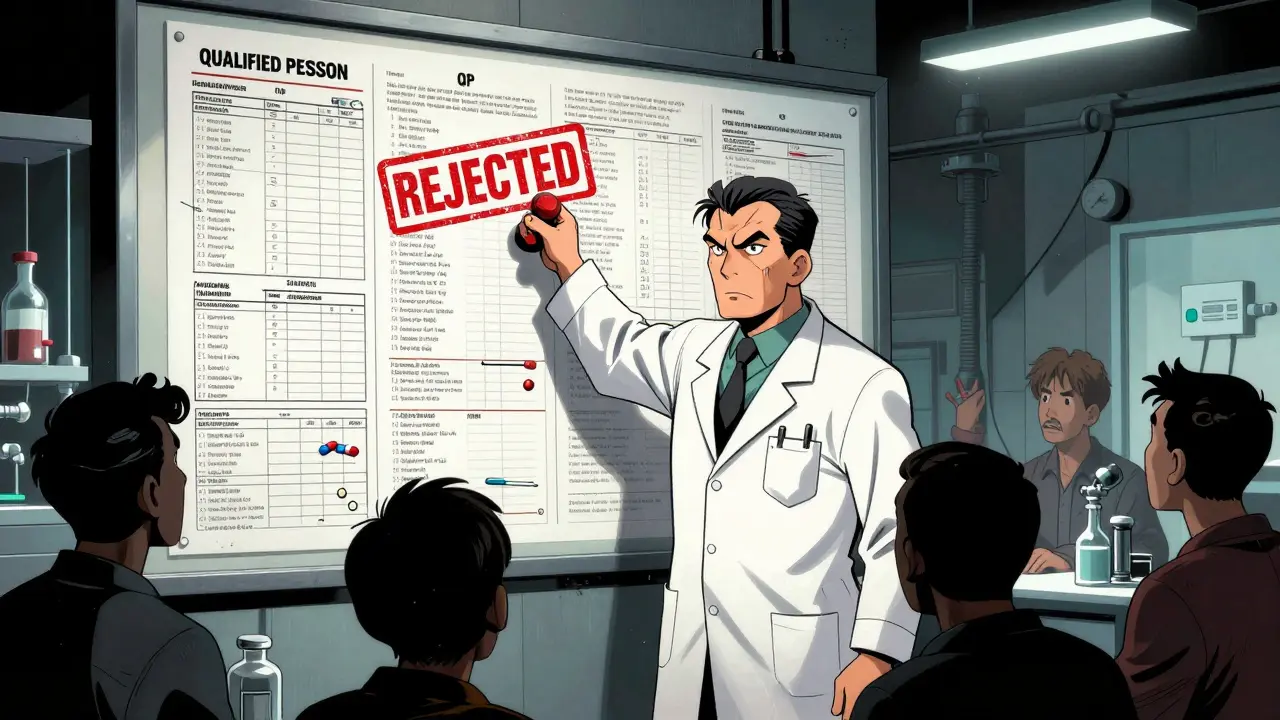
Every pill, injection, or inhaler that reaches a patient has passed through one final, critical gate: batch release testing. This isn’t just paperwork or a formality-it’s the last line of defense between a patient and a potentially dangerous medication. If a batch fails here, it never leaves the facility. No recalls. No lawsuits. No harm. But if it slips through? The cost isn’t just financial-it’s human.
What Exactly Is Batch Release Testing?
Batch release testing is the final, mandatory set of lab tests performed on every single production batch of a drug before it’s shipped out. Think of it like a final safety inspection on a car before it rolls off the assembly line-except here, the stakes are life and death. Each batch must meet strict, pre-approved standards for identity, strength, purity, and quality. These standards are defined in the drug’s marketing authorization and are enforced globally by agencies like the FDA, EMA, and WHO.It’s not enough to trust that the manufacturing process worked. You have to prove it. That’s why every batch gets tested-even if it’s the 500th batch of the same drug. No exceptions. This isn’t about efficiency. It’s about certainty.
The Core Tests: What Gets Checked?
The exact tests depend on the drug type, but every batch goes through a standard set of evaluations:- Identity testing: Is this really the drug it claims to be? Techniques like HPLC, FTIR, or NMR confirm the chemical structure matches the approved formula.
- Assay/potency: Does it contain the right amount of active ingredient? Acceptable range? Usually 90-110% of the labeled amount. Too little? The drug won’t work. Too much? It could be toxic.
- Impurity profiling: Are there unwanted chemicals? ICH guidelines limit unknown impurities to 0.10% in new drug substances. Even tiny amounts can cause allergic reactions or long-term damage.
- Microbial limits: Is the batch clean? For non-sterile products, microbial counts must stay under 100 CFU/g. For injectables? Sterility is non-negotiable.
- Endotoxin testing: Especially critical for IV drugs. Endotoxins from bacteria can trigger fever, shock, or death. Limits are as low as 5.0 EU/kg/hr for spinal injections.
- Dissolution testing: Will the pill break down properly in the body? Generic drugs must match the brand-name version’s dissolution profile (f2 similarity factor ≥50).
- Particulate matter: For injectables, tiny glass or metal particles can cause strokes or blockages. Limits are 6,000 particles/mL ≥10μm and 600 particles/mL ≥25μm.
- Physical checks: Tablet hardness (4-10 kp), visual inspection of injectables (100% of vials), and packaging integrity are all part of the process.
These aren’t suggestions. They’re requirements backed by USP, ICH, and FDA guidelines. Skip one, and the entire batch is rejected.
Why Does This Matter So Much?
In 2023, the FDA reported that a single drug recall costs an average of $10.7 million. But money is the least of it. In 2022 alone, batch release testing blocked about 1,200 unsafe batches from reaching U.S. patients-up 27% from 2018 because testing got stricter. That’s 1,200 chances for harm that never happened.Most batch failures happen in three areas: dissolution (32%), impurities (28%), and microbial contamination (23%). A single batch of a monoclonal antibody released with subpotent levels in 2023 led to a $9.2 million recall and an 18-month import ban. That’s not just a financial hit-it’s a loss of trust.
Patients don’t care if your lab is “modern” or your software is “cutting-edge.” They care that the pill they swallow will work-and won’t kill them. Batch release testing is the only system designed to guarantee that.
Who Signs Off? The Qualified Person (QP)
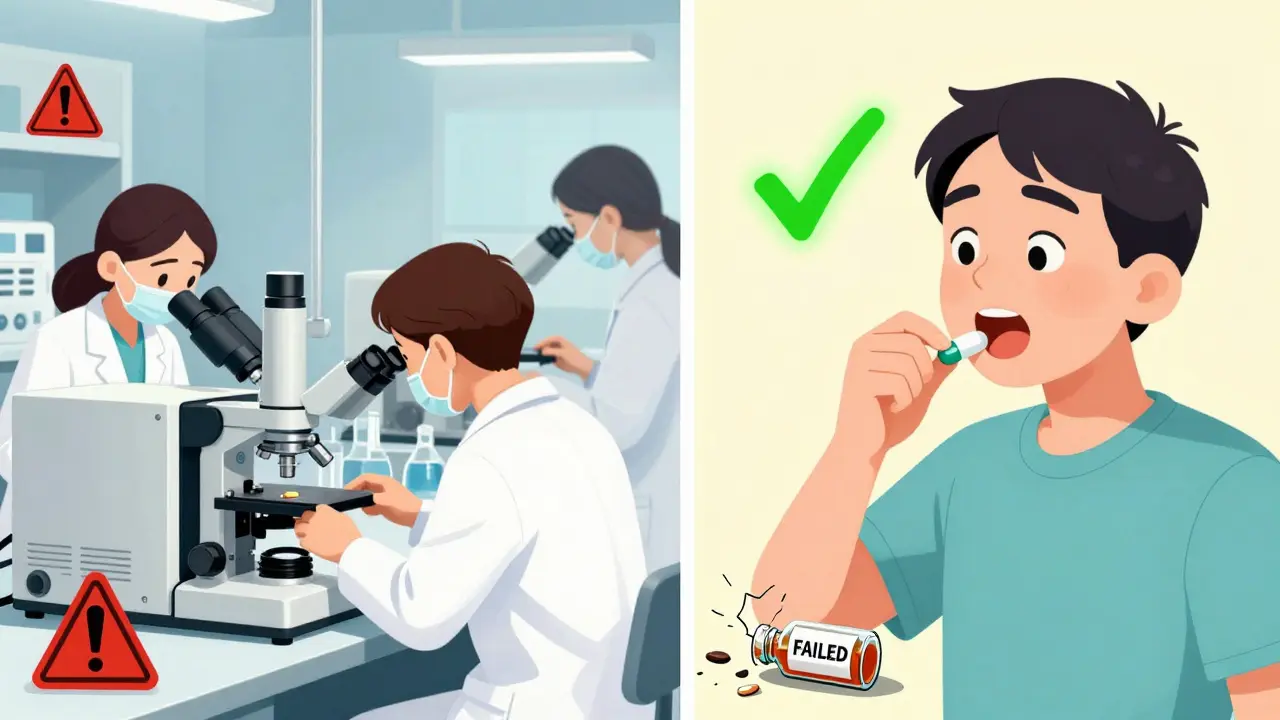
In the EU, no batch leaves without a Qualified Person (QP) signing off. These aren’t just lab managers-they’re certified experts with at least five years of GMP experience and formal training. The QP reviews every test result, every document, every deviation. They’re the final human checkpoint.But there’s a problem: Europe is short by 32% of needed QPs. That’s causing delays. Some batches sit for weeks because there’s no one to review them. In the U.S., it’s a designated quality unit representative, but the pressure is the same. One signature. One decision. One life potentially on the line.
How Long Does It Take?
Timing varies wildly by product type:- Simple small-molecule generics: 7-10 days
- Complex generics (like inhalers or topical gels): 14-21 days
- Biologics (monoclonal antibodies, vaccines): 21-35 days
Why the difference? Biologics are made from living cells. They’re fragile. Every step-purification, storage, testing-has to be perfect. A single temperature spike during transport can ruin a batch. That’s why testing for these drugs is longer, more complex, and more expensive.
Since 2020, testing costs have risen an average of 22% due to stricter standards. Companies are spending more time, more money, and more people to get it right.
Where Things Go Wrong
Even with all the rules, mistakes happen. The biggest causes of delays and failures:- Method transfer issues: When a test moves from R&D to the manufacturing lab, it often doesn’t work the same way. This causes delays of nearly 15 business days on average.
- Data integrity problems: Missing signatures, unapproved changes to results, or deleted chromatograms. These are red flags for regulators. 31% of FDA 483 observations in 2024 were about data issues.
- Inadequate deviation investigations: If a test result is out of spec, you can’t just ignore it. You have to find out why. 22% of failures come from poor root cause analysis.
One company in 2024 had 47% of its FDA observations tied to method validation errors. That means their tests weren’t even reliable to begin with. How can you trust a batch if the test itself is flawed?
How Technology Is Changing the Game
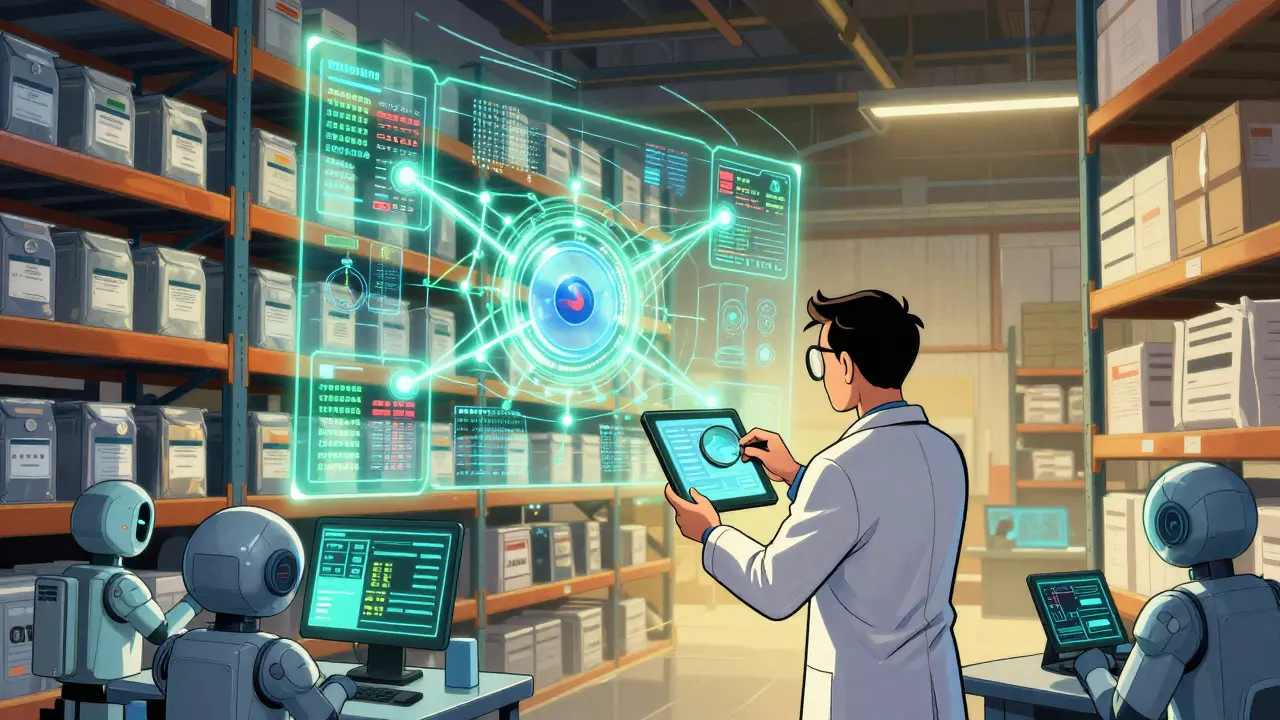
Some companies are turning to automation and AI to speed things up. Integrated Laboratory Information Management Systems (LIMS) cut batch release times by 22% for those using them. Thermo Fisher’s SampleManager was cited in 41% of those success stories.AI-driven predictive release testing is starting to appear. One 2025 study showed companies using it saw 34% fewer batch failures. But here’s the catch: regulators take 18 months to approve these new methods. That’s a long time to wait for ROI-so only high-volume products benefit right now.
The FDA’s 2025 pilot for “Predictive Release Testing” using real-time sensors in continuous manufacturing is promising. But only 12 companies qualified by October 2025. The EMA’s pilot found AI was 78% accurate-but the FDA demands 99.9% confidence before full adoption. That gap is real.
The Future: Will Batch Testing Still Exist?
Some say continuous manufacturing will make batch testing obsolete. But experts disagree. A 2025 ISPE survey found 97% of industry professionals believe some form of discrete batch verification will still be needed through 2040.Why? Because even the most automated system can fail. Sensors can misread. Algorithms can be biased. A single corrupted data point can hide a dangerous flaw. Human oversight, combined with automated checks, is still the safest approach.
New guidelines like ICH Q14 (effective Nov 2024) allow more flexible, risk-based testing for established products-cutting test time by 30% in early adopters. But for new drugs, complex biologics, or generics? Full testing remains mandatory.
By 2028, the FDA may require blockchain-based traceability for every batch. That means every test result, every shift change, every temperature log will be digitally locked and traceable. It’s not about surveillance-it’s about accountability.
What This Means for You
If you’re a patient: trust that your medication went through this process. It’s why you can be confident the drug you take is safe and effective.If you’re in pharma: this isn’t a cost center. It’s your reputation. One failed batch can cost millions-and destroy years of trust.
If you’re a regulator: keep pushing for stricter standards. The data shows it works. More testing means fewer recalls. Fewer recalls mean fewer deaths.
Batch release testing isn’t glamorous. It doesn’t make headlines. But every day, it’s the quiet system that keeps millions of people safe. And as long as people rely on medicine to heal them, it will remain non-negotiable.
Is batch release testing required by law?
Yes. In the U.S., it’s mandated under 21 CFR 211.165. In the EU, it’s required under Directive 2003/94/EC. No regulatory authority allows drugs to be distributed without documented proof that each batch meets its approved specifications. Skipping this step is illegal.
Can a batch be released without testing?
Never. Even with advanced manufacturing like continuous production, regulators require at least some form of discrete verification. The FDA’s 2025 pilot for real-time release testing still requires validation of critical quality attributes before release. No batch leaves without proof.
How long are batch test records kept?
By FDA rules, all raw data-including chromatograms, instrument printouts, and analyst calculations-must be retained for at least one year after the product’s expiration date. For biologics and certain high-risk products, records may be kept for up to 25 years.
What happens if a batch fails release testing?
The batch is quarantined and held for review. If the failure is due to a one-time error (like a calibration issue), the batch may be retested after correction. If the failure is due to a systemic problem (like contamination or incorrect formulation), the batch is destroyed. The root cause must be investigated and corrected before future batches are released.
Why do biologics take longer to release than small-molecule drugs?
Biologics are made from living cells, making them far more sensitive to environmental changes. They require additional tests for potency, stability, and purity that take longer to perform. Testing often involves cell-based assays that can take days to grow and analyze. Plus, storage conditions must be tightly controlled, and any deviation triggers a full review.
Are generic drugs tested the same way as brand-name drugs?
Yes. Generic drugs must meet the same identity, strength, purity, and dissolution standards as the brand-name version. The FDA requires bioequivalence testing to prove they work the same way in the body. The only difference is the cost-generics are cheaper to produce, not less rigorously tested.
Can AI replace human reviewers in batch release?
AI can help analyze data faster and flag anomalies, but it cannot replace the human reviewer. Regulatory agencies require a qualified person to interpret results, assess risk, and make the final decision. AI is a tool, not a substitute. Human judgment is still required to handle exceptions, investigate deviations, and ensure patient safety.
10 Comments

Michael Rudge
January 7, 2026 at 02:10 AM
Oh wow, so the pharma industry spends millions just to make sure their $20 pill doesn’t kill you? Groundbreaking. Next they’ll tell us the sky is blue and water is wet. Meanwhile, my insulin costs $300 because ‘quality control’-lol. Real nice, guys.
Still waiting for the FDA to audit their own salaries.

Ethan Purser
January 8, 2026 at 08:44 AM
Y’all realize we’re literally trusting our lives to people who work in rooms with beige walls and lab coats that haven’t been washed since 2019?
I mean, I get it-science is hard. But also… why does it feel like we’re all just one corrupted chromatogram away from a nationwide tragedy? I’m not saying the system’s broken… I’m saying it’s held together by duct tape and hope.
And don’t even get me started on QPs. One person, one signature, one life on the line. That’s not oversight-that’s a spiritual ritual with a compliance checklist.
Also, why do biologics take 35 days? Are they praying to the Cell Gods before release? 🙏
I’m not scared of the medicine. I’m scared of the humans behind it.

Doreen Pachificus
January 10, 2026 at 01:51 AM
Interesting that they mentioned AI can be 78% accurate but regulators want 99.9%. That’s like saying your self-driving car can avoid 78% of pedestrians, but we’ll only let it on the road if it hits 99.9%.
Meanwhile, humans make mistakes too. Maybe the real question is: who’s more reliable-the algorithm or the overworked QP with three cups of coffee and a 12-hour shift?

Cassie Tynan
January 11, 2026 at 23:56 PM
Let me get this straight: we’re spending billions to test pills so they don’t kill us… but we let Big Pharma charge $10,000 for a cancer drug that’s been around since 1998?
That’s not capitalism. That’s psychological warfare wrapped in a lab coat.
And yet… I still trust the testing. Because if they cut corners here, we’re all dead. So yeah-pay the price. Just don’t pretend it’s about ‘innovation.’ It’s about survival.
Also, if you’re a QP in Europe: I owe you a coffee. Or ten.

Rory Corrigan
January 12, 2026 at 19:09 PM
AI can’t replace human judgment… but can it at least handle the 31% of FDA 483s caused by data integrity issues? 😅
Imagine if your spreadsheet had a soul. It’d be crying right now.

Roshan Aryal
January 13, 2026 at 15:04 PM
USA spends millions testing pills? Pathetic. In India, we make 70% of the world’s generics. No fancy AI. No 35-day waits. Just trained technicians, clean labs, and zero corruption. You think your $20 pill is safe? Half of it was made by someone who didn’t even have a lab coat.
But hey, keep your $10 million recalls. We’ll keep feeding the world.
And no, we don’t need your FDA to validate our integrity. We have our own standards-ones that don’t cost a fortune.

Jack Wernet
January 13, 2026 at 21:16 PM
As someone who has worked in global supply chains for over two decades, I can attest: the rigor described here is not merely procedural-it is ethical. The systems in place, though costly and slow, are among the most sophisticated safeguards humanity has ever devised for the vulnerable.
When I worked with a manufacturer in Bangladesh, I saw firsthand how a single mislabeled vial could cascade into a public health crisis. That’s why the QP’s signature carries such weight-it is not bureaucratic-it is moral.
Let us not underestimate the quiet dignity of those who ensure our medicines are safe. They are the unsung guardians of public trust.

Catherine HARDY
January 15, 2026 at 07:49 AM
So… you’re telling me the FDA doesn’t know what’s in every batch until it’s too late? And that the QP is just one person who might be tired, stressed, or… manipulated?
What if the entire system is a lie? What if the data is faked? What if the ‘testing’ is just a show for investors?
I’ve seen documents where test results were backdated. I’ve heard whispers in industry forums. They say the real test isn’t in the lab-it’s in the boardroom.
And now they want to use AI? What if the AI is trained on fake data? What if the blockchain is just another layer of deception?
I don’t trust the system. I trust my gut. And my gut says… we’re all just one recall away from the next pandemic.

Vicki Yuan
January 16, 2026 at 11:16 AM
Thank you for this incredibly thorough breakdown. The detail on dissolution profiles and endotoxin limits was particularly illuminating. I had no idea generic drugs had to match brand-name dissolution with an f2 factor ≥50-that’s actually brilliant.
Also, the point about method transfer delays causing 15-day bottlenecks? That’s a systemic flaw that needs urgent attention. If we can automate validation and reduce human error in data entry, we could free up QPs to focus on risk assessment rather than paperwork.
And yes-AI is a tool, not a replacement. But with proper validation and regulatory alignment, it could be the bridge between safety and scalability. Let’s not throw out the baby with the bathwater.
Also, blockchain traceability by 2028? That’s actually a game-changer. If every step is immutable, accountability becomes unavoidable. I’m all for it.
Jennifer Glass
January 5, 2026 at 14:05 PM
It’s wild to think that every pill I take has been scrutinized like a forensic case. I used to assume it was just a formality, but reading this made me realize how many variables could go wrong-and how many didn’t. That 1,200 batches blocked in 2022? That’s 1,200 people who didn’t get sick because someone checked the numbers.
It’s not sexy, but it’s sacred work.