
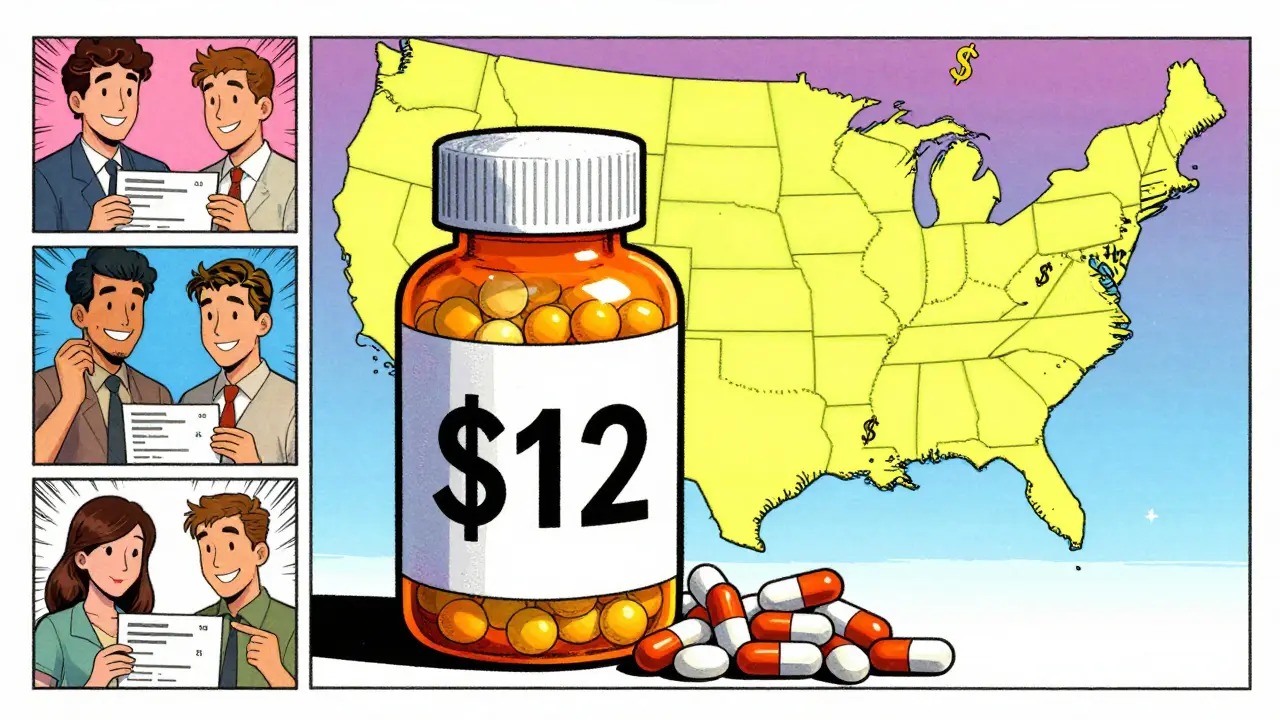
Every year, Americans spend over $700 billion on prescription drugs. But here’s the thing: generic drugs are the reason that number isn’t even higher. In 2024 alone, generic medications saved the U.S. healthcare system $482 billion. That’s not a typo. It’s $482 billion in real money that didn’t go to drug companies, insurers, or patients’ out-of-pocket pockets. And it’s all because 90% of prescriptions filled were for generics - yet they cost only 12% of what brand-name drugs do.
How Generics Slash Costs - The Numbers Don’t Lie
Let’s break it down. In 2024, 3.9 billion prescriptions in the U.S. were for generic drugs. That’s nine out of every ten prescriptions. Meanwhile, brand-name drugs made up just 10% of prescriptions - 435 million - but accounted for 88% of total drug spending: $700 billion. Generics? Just $98 billion. That’s a 90% cost difference for the same medicine.
This isn’t magic. It’s basic economics. Once a drug’s patent expires, multiple manufacturers can make the same pill. Competition drives prices down. A 2025 report from the Association for Accessible Medicines (AAM) shows that since 2016, the cost share of generics has dropped from 27% to just 12% - even as the number of prescriptions climbed. That means more people are getting the meds they need, and the system is paying less.
Take Humira, for example. The brand-name biologic cost over $70,000 per year. When biosimilars entered the market in 2023, prices began to fall. By 2024, private-label strategies pushed Humira biosimilar adoption from 3% to 28%. That single switch saved health plans millions. And it’s not just Humira. Stelara, a $6 billion biologic, now has seven FDA-approved biosimilars hitting the market at over 80% less than the original. By 2026, those biosimilars are projected to save $4.8 billion in one year alone.
The Hidden Cost of Delaying Generics
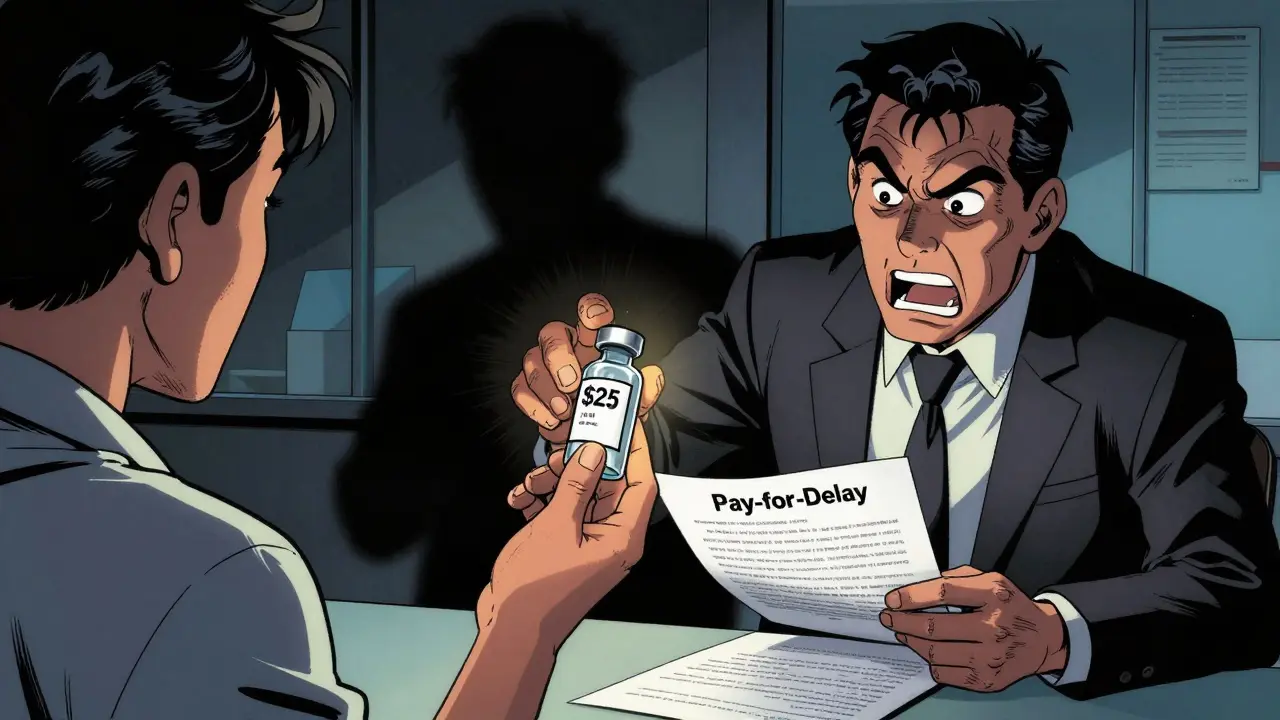
But here’s the dark side: big pharma doesn’t want generics to win. A 2024 Blue Cross Blue Shield report found that brand-name companies spend an average of $1.2 billion per year on "pay for delay" deals. That’s when a brand-name maker pays a generic company to hold off on launching its cheaper version. These deals extend monopolies - sometimes for years - and keep prices artificially high.
One patient on Reddit said switching from brand-name albuterol to the generic saved them $300 a month. That’s not unusual. GoodRx’s 2025 report found nearly 1 in 12 Americans have medical debt tied to prescription costs. For many, the difference between taking their medicine and skipping doses comes down to whether a generic is available.
And it’s not just pills. Insulin is a perfect example. Eli Lilly slashed the price of non-branded insulin from $275 to $25 per vial after public pressure and Medicare reforms. That’s a 91% drop. But it took years of protests, policy changes, and media scrutiny to get there. Generics don’t need that fight. They just need the patent to expire.
The Biosimilar Gap - A 4 Billion Missed Opportunity
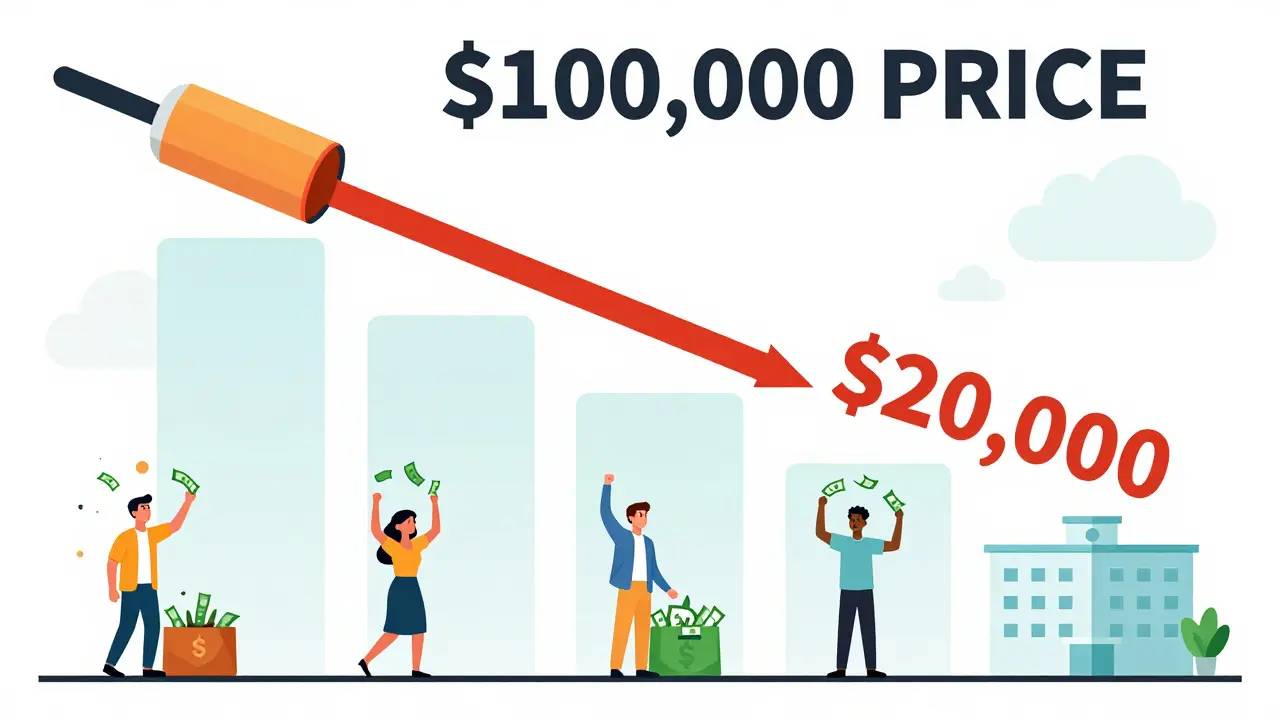
Now, here’s where things get worrying. The AAM report points out that 90% of brand-name biologics losing patent protection in the next 10 years have zero biosimilars in development. That’s a $234 billion gap in future savings. Biologics - complex drugs made from living cells - are the fastest-growing segment of drug spending. They’re used for cancer, autoimmune diseases, and rare conditions. They’re also incredibly expensive.
Without biosimilars, these drugs will keep costing $100,000 a year. With them, they could drop to $20,000. But the pipeline is dry. Why? Because developing biosimilars is expensive, risky, and legally tangled. Companies wait until the last minute. Regulators move slowly. Health plans don’t always incentivize switching. And patients? They often don’t even know they’re eligible for a cheaper version.
How Medicare and Policy Are Changing the Game
Policy is starting to catch up. The Inflation Reduction Act lets Medicare negotiate prices for 10 drugs in 2026, expanding to 30 by 2029. The Congressional Budget Office estimates this alone could save $500-550 billion over ten years. If those same negotiated prices were extended to Medicaid and private insurers? The total could hit $1 trillion.
And it’s working. Medicare Part D now caps insulin at $35 per month for seniors. That’s a direct result of policy pushing generics and price controls. By 2027, that cap will extend to commercial plans. Meanwhile, the White House struck deals with Eli Lilly and Novo Nordisk to cut Ozempic and Wegovy prices from over $1,000 to $350 per month - not because of generics, but because of pressure. The lesson? When policy forces transparency and competition, prices fall.
Why Generics Are the Only Drug Sector That Cuts Costs
Dr. Aaron Kesselheim from Harvard Medical School put it simply: "The current system of drug pricing in the United States is unsustainable." And the only sector that consistently lowers spending across the entire system? Generic medicines.
Unlike new drugs that come with billion-dollar price tags, generics don’t need marketing blitzes or investor returns. They’re made to be affordable. They’re not flashy. But they’re the backbone of affordable care.
And the data proves it. The IQVIA Institute found that in 2024, generics supported over 3.3 billion days of patient therapy. Without them, millions would have gone without treatment - or gone bankrupt trying to pay for it.
What’s Next? Don’t Wait for the System to Fix Itself
The system isn’t broken - it’s being manipulated. Pay-for-delay deals, patent thickets, and slow biosimilar approvals are all tactics designed to keep prices high. But patients and providers are pushing back.
If you’re on a chronic medication, ask your pharmacist: "Is there a generic?" If you’re on a biologic, ask: "Is there a biosimilar?" If your insurer denies coverage for the cheaper version, push back. Many health plans now have incentives to switch patients to generics - but only if you ask.
The next big savings wave? Biosimilars. They’re not science fiction. They’re here. And with seven biosimilars for Stelara entering the market in 2025, the cost drop will be massive. The question isn’t whether they’ll save money - it’s whether we’ll let them.
The U.S. spends more on drugs than any other country. But we don’t have to. With generics and biosimilars, we already have the tools to fix it. All we need is the will to use them.
8 Comments

Neeti Rustagi
March 12, 2026 at 19:56 PM
It is with profound respect for the economic principles underlying pharmaceutical accessibility that I acknowledge the remarkable cost-efficiency of generic medications. However, one must also consider the ethical implications of patent expiration timelines, particularly in nations where healthcare is commodified rather than humanized.
The disparity between U.S. drug pricing and global benchmarks remains a moral indictment. While generics reduce out-of-pocket burdens, they do not rectify the foundational inequity of profit-driven medicine.

Robert Bliss
March 14, 2026 at 02:40 AM
Generics saved my dad’s life. He’s on blood pressure meds-used to cost $300/month. Now? $12. No drama. No fuss.
Just pills. Same science. Different price. That’s all we need.
❤️

Peter Kovac
March 15, 2026 at 14:22 PM
The $482 billion savings figure is misleading without context. It reflects volume-driven cost reduction, not true price elasticity. The marginal cost of producing a generic pill is negligible, yet distribution, formulary placement, and pharmacy benefit manager (PBM) rebates create artificial inflationary layers.
When 88% of spending is concentrated on 10% of prescriptions, the market is not competitive-it is oligopolistic. The real savings lie in dismantling PBM kickbacks, not in generic adoption alone.

APRIL HARRINGTON
March 16, 2026 at 03:37 AM
OMG I JUST SWITCHED TO GENERIC ALBUTEROL AND MY INSURANCE PAID $5 I WAS CRYING IN THE PHARMACY LINE I THOUGHT I WAS GONNA DIE FROM ASTHMA BUT NOW I CAN BREATHE AND I’M NOT BROKE THANK YOU GENERIC DRUGS
WHY ISN’T THIS ON TV WHY ISN’T EVERYONE TALKING ABOUT THIS I WANT A PARADE AND A MOVIE AND A TIKTOK CHALLENGE #GENERICWARRIORS

Leon Hallal
March 17, 2026 at 16:45 PM
They say generics save money. But what about the quality? What about the side effects no one talks about? The fillers? The inconsistent dosing? You think you’re saving $300 a month, but you’re gambling with your health.
I’ve been on brand-name insulin for 12 years. I’ve seen people switch. I’ve seen the crashes. I’ve seen the ER visits. This isn’t about cost-it’s about survival.
You don’t cut corners on your life.

Judith Manzano
March 19, 2026 at 07:04 AM
This is such an important conversation. I love how the data shows generics aren’t just cheap-they’re life-saving.
But I wonder-why aren’t more doctors proactively asking patients if they’re on brand or generic? I think a lot of people don’t even know they have a choice.
And biosimilars? That’s the next frontier. If we can make them easier to access, we could prevent so much suffering. Maybe we need a national awareness campaign?
Also-has anyone else noticed how many people still think "generic" means "inferior"? That’s the real hurdle.

rafeq khlo
March 20, 2026 at 12:41 PM
The entire narrative around generics is a leftist fantasy built on emotional anecdotes and cherry-picked statistics. You ignore the R&D costs that made the original drug possible. You ignore the fact that without patent protection, innovation dies.
There are 900 biosimilars in development globally. The U.S. has 12. Why? Because we have the most transparent, rigorous regulatory system. You want cheap? Go to India. But don’t expect the same safety.
Generics are not a moral victory. They are a consequence of failed policy. And you are part of the problem for celebrating them without understanding the cost.
Mary Beth Brook
March 11, 2026 at 11:01 AM
Generic drugs aren’t saving money-they’re enabling systemic fraud. Big Pharma gets paid to delay, regulators look the other way, and Congress calls it "market competition." This isn’t economics-it’s legalized looting. We need to nationalize drug manufacturing. Now.
90% of prescriptions? That’s not a win. It’s a symptom of a broken system. Generics are the Band-Aid on a hemorrhage.