
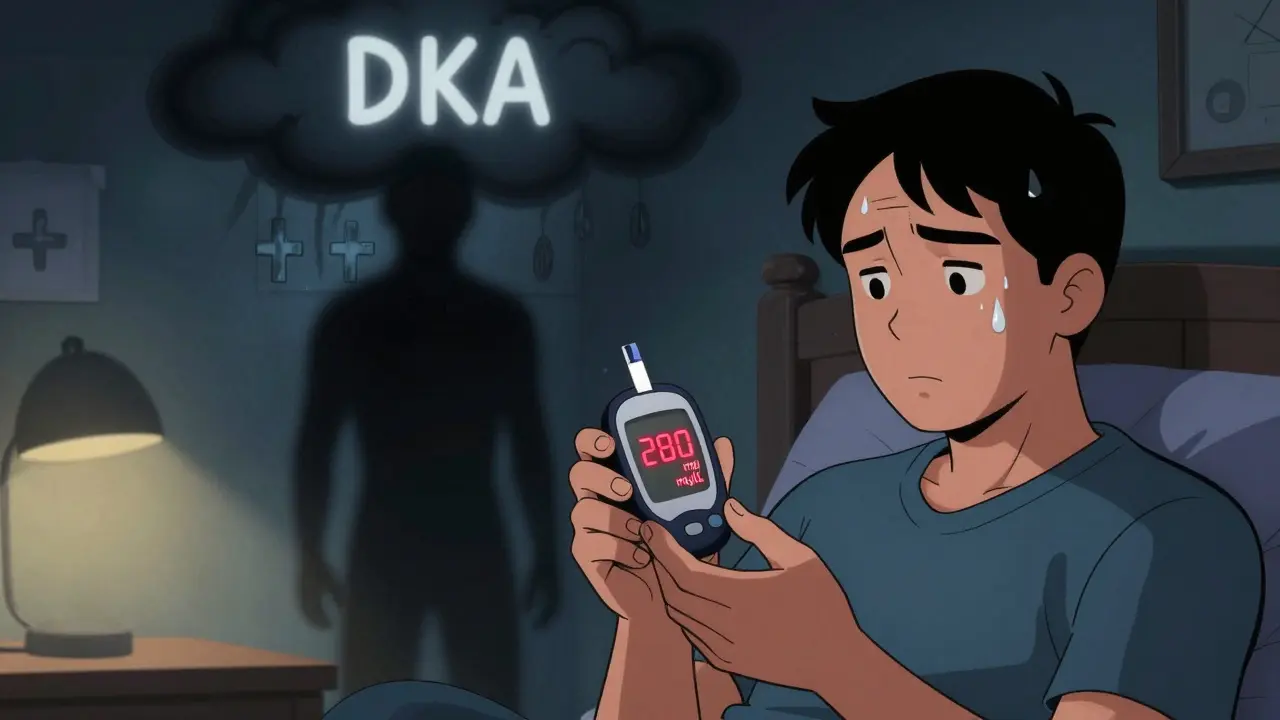
Diabetic ketoacidosis, or DKA, isn’t just a scary term you hear in medical dramas. It’s a real, life-threatening emergency that can strike anyone with diabetes-especially if they don’t recognize the early signs. Every year, over half a million people in the U.S. end up in the hospital because of it. The good news? If you catch it early and get treatment fast, you can survive it. The bad news? Waiting too long can cost you your life.
What Exactly Is Diabetic Ketoacidosis?
DKA happens when your body doesn’t have enough insulin. Without insulin, your cells can’t use sugar (glucose) for energy. So your body starts breaking down fat instead. That sounds harmless, right? But when fat breaks down too fast, it produces ketones-acidic chemicals that build up in your blood. Too many ketones make your blood dangerously acidic. That’s DKA.
It’s most common in people with type 1 diabetes, but it can also happen in type 2 diabetes if insulin is missed, during severe illness, or if someone is taking SGLT2 inhibitors (like dapagliflozin or empagliflozin) and doesn’t realize the risk. About 30% of kids who end up in the hospital with DKA didn’t even know they had diabetes until that moment.
The science is clear: DKA means your blood sugar is high (usually over 250 mg/dL), your blood is too acidic (pH below 7.3), and your ketone levels are elevated (above 3 mmol/L). Even if your blood sugar isn’t sky-high-sometimes it’s under 250 mg/dL-you can still have DKA. This is called euglycemic DKA, and it’s becoming more common, especially with newer diabetes medications.
Early Warning Signs You Can’t Ignore
DKA doesn’t come out of nowhere. It builds over hours. If you notice even two of these symptoms together, don’t wait. Test your blood sugar and ketones right away.
- Extreme thirst - You’re drinking 4 to 6 liters of water a day and still can’t quench it.
- Frequent urination - You’re peeing more than 3 liters in 24 hours. It’s not just a full bladder; it’s your body trying to flush out sugar.
- Dry mouth - Your tongue sticks to the roof of your mouth. This happens in nearly 9 out of 10 cases.
- High blood sugar - If your meter reads over 250 mg/dL, especially if you’re feeling off, this is your first red flag.
These signs might seem like a bad flu or dehydration. But if you have diabetes, they’re your body screaming for help. The ADA recommends checking ketones with urine strips or a blood ketone meter whenever your glucose is above 240 mg/dL. If ketones are moderate or large, go to the ER. Don’t call your doctor first. Don’t wait until morning. Go now.
When It Gets Worse: The Critical Symptoms
If you ignore the early signs for 12 to 24 hours, DKA gets deadly. Here’s what happens next:
- Nausea and vomiting - You can’t keep food or water down. This isn’t just a stomach bug. It’s your body reacting to acid buildup.
- Abdominal pain - It can feel like appendicitis or food poisoning. In fact, nearly half of adults with DKA are misdiagnosed in the ER because of this.
- Extreme fatigue and weakness - You can’t stand up. You can’t walk to the bathroom. Your grip strength drops by 30-40%.
- Fruity or acetone breath - It smells like nail polish remover or overripe fruit. Clinicians notice it in 7 out of 10 cases. If someone says you smell like that, take it seriously.
- Deep, rapid breathing - This is called Kussmaul respirations. Your body is trying to blow off acid by breathing faster and deeper. It’s not hyperventilating from anxiety. It’s a last-ditch effort to survive.
- Confusion or disorientation - If your blood pH drops below 7.1, your brain starts to shut down. You might not recognize your own name.
If you or someone you care about has any of these symptoms, call 911 or go to the nearest emergency room immediately. There’s no home remedy. No herbal tea. No extra insulin injection. You need hospital care.
How Hospitals Treat DKA - Step by Step
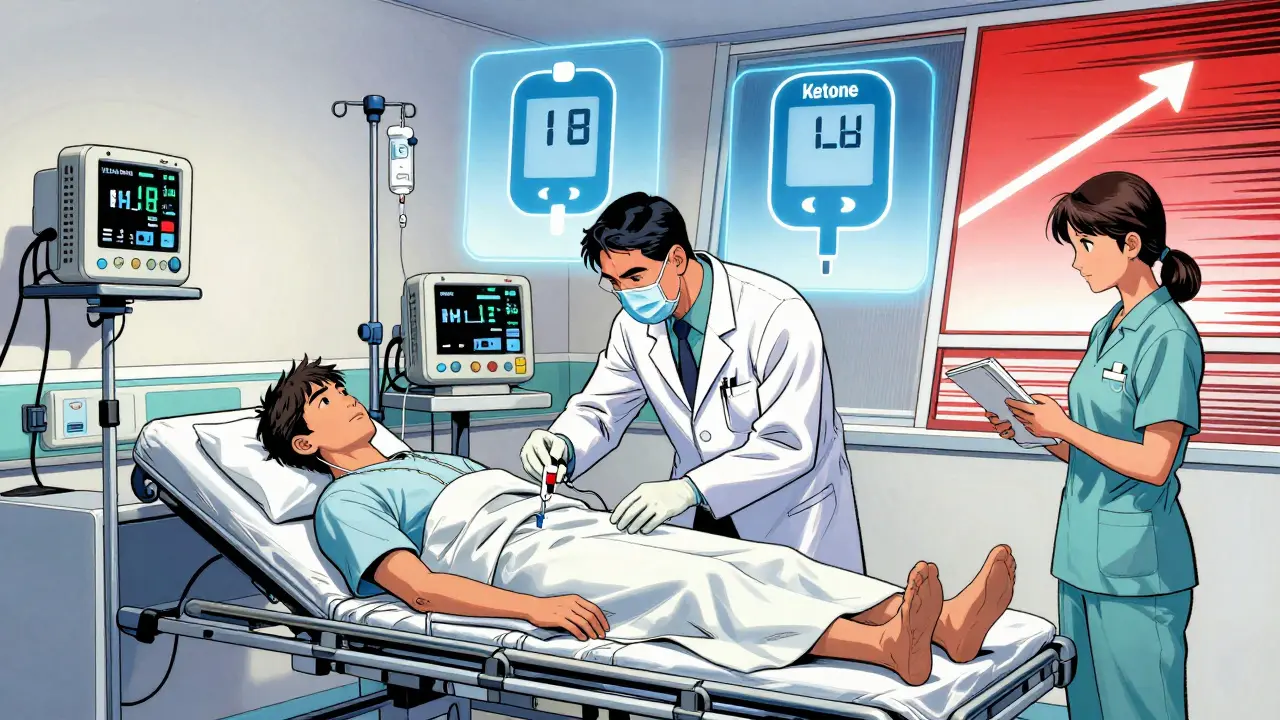
Once you’re in the ER, treatment starts within minutes. The goal is simple: fix the acid, replace fluids, and get insulin into your system. Here’s how it works.
- Fluids first - You’ll get 1 to 1.5 liters of IV saline (salt water) in the first hour. This rehydrates you and helps your kidneys flush out sugar and ketones. After that, fluids continue at a slower rate, usually 250-500 mL per hour.
- Insulin infusion - A small dose of insulin is given as a bolus, then you’re put on a continuous IV drip. The rate is carefully controlled: 0.1 unit per kg per hour. Too much insulin too fast can cause brain swelling (cerebral edema), especially in kids. That’s why glucose is lowered slowly-50 to 75 mg/dL per hour.
- Electrolyte correction - Even if your blood test shows normal potassium, your body is actually depleted. You lose potassium through urine. So doctors start replacing it as soon as levels drop below 5.2 mmol/L. Usually, 20-30 mEq per hour is given.
- Monitoring - Every hour, your blood sugar is checked. Ketones are tested every 2-4 hours. Electrolytes and blood pH are checked every 2-6 hours. You won’t leave until your ketones are below 0.6 mmol/L, your pH is above 7.3, and your bicarbonate is over 18 mmol/L - and it stays that way for two tests in a row.
Here’s what they don’t do anymore: give bicarbonate. In the past, doctors tried to neutralize the acid with baking soda. Now we know it’s rarely helpful and can cause more harm than good. Only if your pH drops below 6.9 will bicarbonate be considered-and even then, only in rare cases.
What Triggers DKA? And How to Prevent It
DKA doesn’t happen for no reason. The most common triggers:
- Infection - Pneumonia, urinary tract infections, even a bad cold. Illness increases stress hormones that block insulin.
- Missed insulin - Skipping doses because you’re sick, stressed, or can’t afford it. About 30% of DKA cases happen because insulin was stopped.
- New-onset diabetes - Especially in kids. They show up in the ER with DKA, and that’s the first time anyone knew they had diabetes.
- SGLT2 inhibitors - These drugs (like Jardiance, Farxiga) lower blood sugar by making you pee out sugar. But they can also increase ketone production. If you’re on one and get sick, check ketones even if your sugar isn’t high.
Prevention is simple: never skip insulin, even if you’re not eating. If you’re sick, test your blood sugar and ketones every 4-6 hours. Drink water. Call your doctor if ketones are moderate or large. If you use an insulin pump, switch to injections during illness-infusion sets can clog or disconnect without you noticing.
Technology Is Changing the Game
People using continuous glucose monitors (CGMs) like the Dexcom G7 have cut their DKA risk by 76%. Why? Because their devices alert them when glucose is rising and ketones are building up-before they feel sick. One user on Diabetes Daily wrote: “My CGM screamed ‘HIGH GLUCOSE + KETONES’ at 3 a.m. I called 911. I’m alive because of that alert.”
New tools are coming fast. In 2023, the FDA approved the first algorithm that predicts DKA 12 hours before it happens, using patterns from CGM data. It’s not in every pump yet, but it’s coming. And in low-resource countries, WHO has helped cut DKA deaths from 15% to 6% by using subcutaneous insulin injections instead of IV drips-proving that even simple, low-tech solutions save lives.
The Harsh Reality: Cost, Delay, and Misdiagnosis
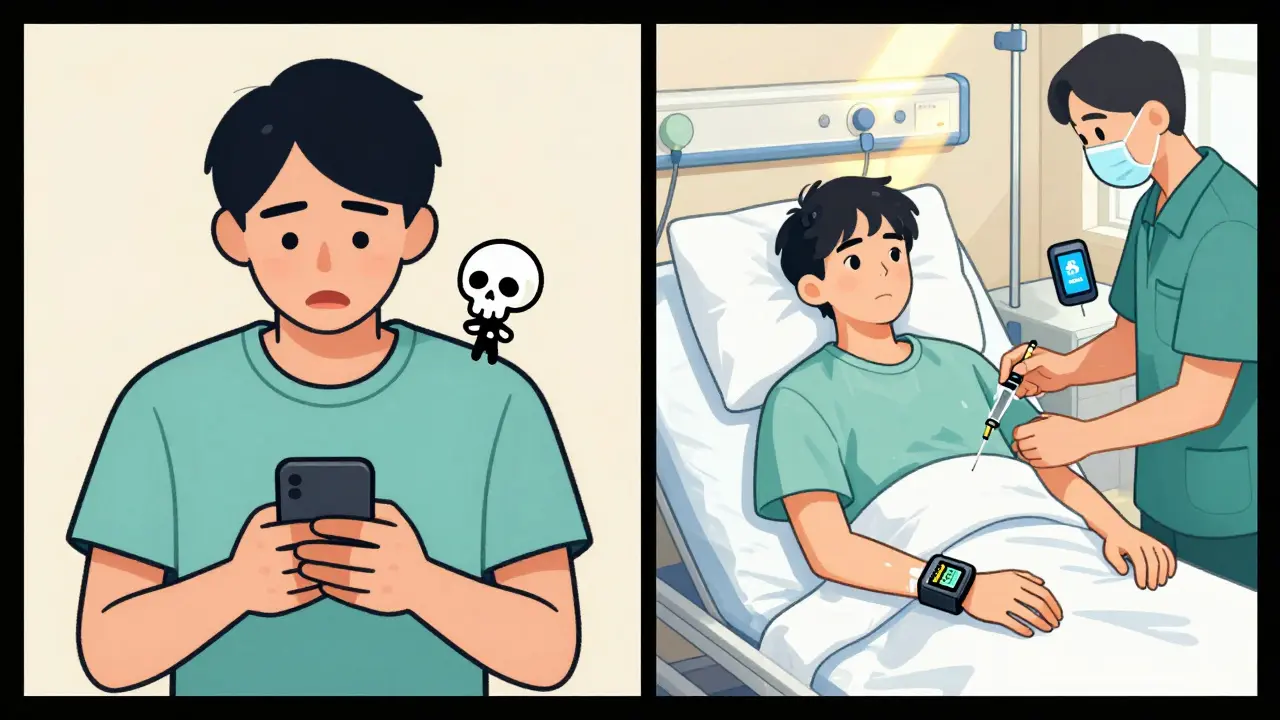
Here’s the ugly truth: many people wait too long. In a survey of over 1,200 patients, 68% waited more than 6 hours before seeking help. Why? “I thought it was just the flu.” “I didn’t want to go to the hospital.” “I couldn’t afford it.”
Insulin costs $374 a month on average in the U.S. Some people ration it. That’s not laziness-it’s survival. And it’s costing lives. Uninsured patients are 3.2 times more likely to get DKA than those with insurance.
And here’s another danger: misdiagnosis. About 18% of adult DKA cases are first thought to be gastroenteritis. You’re vomiting, you’ve got stomach pain, you’re dehydrated. Doctors treat you for food poisoning. Meanwhile, your blood is turning acidic. That delay can be fatal.
What Happens After You’re Treated?
Most people stay in the hospital for 2.5 to 4 days. The lower your initial pH, the longer you stay. Someone with a pH of 7.0-7.2 averages 2.1 days. Someone with a pH below 7.0? Nearly 4 days.
Before you leave, your care team will review your insulin routine, check your pump (if you use one), and make sure you understand how to check ketones. You’ll likely get a follow-up appointment within a week. And you’ll be warned: DKA can come back. About 12% of patients have another episode within 72 hours if they don’t follow up properly.
Don’t think you’re “cured” after leaving the hospital. DKA is a warning sign that something in your diabetes management is broken. Fix it now-or risk ending up back there.
Bottom Line: Know the Signs. Act Fast.
Diabetic ketoacidosis kills. But it doesn’t have to. If you have diabetes, you need to know the early signs: thirst, peeing a lot, dry mouth, high blood sugar. If ketones are present, you’re in danger. Don’t wait for vomiting, confusion, or fruity breath. By then, it’s too late.
Test your blood sugar and ketones regularly. If you’re sick, check more often. If ketones are moderate or large, go to the ER. Don’t call your doctor first. Don’t wait until morning. Don’t hope it goes away. Your life depends on how fast you act.
And if you’re someone who cares for a person with diabetes-learn these signs too. You might be the one who saves their life.
Can you have DKA with normal blood sugar?
Yes. This is called euglycemic DKA, and it accounts for about 10% of cases. It’s more common in people taking SGLT2 inhibitors (like Jardiance or Farxiga), during pregnancy, or when fasting. Even if your blood sugar is under 250 mg/dL, if you have symptoms like nausea, vomiting, or fruity breath, test for ketones. Don’t assume normal sugar means you’re safe.
Can you treat DKA at home?
No. DKA is a medical emergency. Even if you feel okay, your body is in severe distress. Home treatment with extra insulin or fluids won’t fix the acid buildup or electrolyte imbalances. Delaying hospital care increases your risk of brain swelling, coma, or death. If ketones are moderate or large, go to the ER immediately.
How long does DKA treatment take in the hospital?
Most people stay 2.5 to 4 days. The length depends on how severe the DKA was at admission. If your blood pH was above 7.0, you might leave in 2 days. If it was below 7.0, expect 4 or more days. Treatment doesn’t end when your sugar drops-it ends when your ketones are gone, your pH is normal, and your electrolytes are stable for two consecutive checks.
Why do some people get DKA even if they take insulin?
Illness, infection, or stress can make your body resist insulin. Even if you take your dose, your body may need more. Insulin pumps can also fail-tubing gets clogged, the site detaches, or the insulin spoils in heat. That’s why you need to check ketones during illness, even if you’re taking insulin. Never assume your pump is working perfectly.
Is DKA more dangerous for children?
Yes. Children are at higher risk of cerebral edema-a dangerous swelling of the brain-during DKA treatment. It’s rare (0.5-1% of cases) but deadly, with a 21-24% fatality rate. That’s why hospitals use slower fluid and insulin protocols for kids. Parents should watch for confusion, headaches, or vomiting after treatment starts. If these happen, tell the medical team immediately.
Can you prevent DKA if you have type 2 diabetes?
Yes, but it requires vigilance. Type 2 diabetes can lead to DKA if insulin production drops (especially during illness) or if medications like SGLT2 inhibitors are used without proper monitoring. If you’re on insulin or have been told you’re insulin-deficient, treat DKA risks the same way as type 1. Test ketones when sick, stay hydrated, and never stop insulin without medical advice.
11 Comments

Kyle Young
March 16, 2026 at 07:56 AM
It’s fascinating how DKA operates as both a physiological and sociological phenomenon. The body’s metabolic collapse mirrors the collapse of healthcare accessibility. The ketones aren’t just biochemical byproducts - they’re symptoms of systemic failure. When insulin becomes a luxury good, the body’s natural response becomes a death sentence. The tragedy isn’t the disease - it’s the indifference built into the infrastructure meant to prevent it.

Aileen Nasywa Shabira
March 17, 2026 at 03:54 AM
Oh wow, another ‘DKA is scary’ PSA. Did you also include a link to your GoFundMe? 🙄 Let’s be real - if you’re getting DKA because you ‘forgot’ insulin, you’re not a victim. You’re someone who didn’t bother to learn the basics. My cousin had a pump fail and she switched to injections in 48 hours. She didn’t wait for a hospital. She didn’t cry about cost. She just did the work. Maybe if people stopped treating diabetes like a theme park ride, fewer of them would end up in the ER.

Kendrick Heyward
March 17, 2026 at 17:44 PM
My best friend died of DKA last year. She was 22. She had insurance. She took her insulin. Her pump disconnected for 18 hours and no one told her to check ketones. They didn’t even teach her how. Now I have to live with that. And you people are arguing about who’s to blame? 💔

lawanna major
March 18, 2026 at 21:59 PM
It’s important to recognize that euglycemic DKA is not a rare edge case - it’s a growing clinical reality, particularly among those using SGLT2 inhibitors. The assumption that normal blood glucose equates to safety is dangerously outdated. Clinical guidelines must evolve to reflect this, and patient education must prioritize ketone awareness over glucose fixation. Prevention requires rethinking the narrative: DKA isn’t a failure of discipline - it’s a failure of communication.

Ryan Voeltner
March 20, 2026 at 15:52 PM
The hospital protocol for DKA is remarkably consistent across institutions and reflects decades of evidence-based refinement. Fluid resuscitation followed by controlled insulin infusion and electrolyte correction remains the gold standard. The avoidance of bicarbonate except in extreme acidosis demonstrates medical progress through humility and data. This is why structured clinical pathways save lives.

Emily Hager
March 21, 2026 at 03:42 AM
Interesting how you mention that 30% of kids are diagnosed with diabetes *through* DKA. But you don’t mention that many pediatricians still don’t test for ketones when a child presents with vomiting and dehydration. Or that insurance denies CGMs for type 2 patients even when they’re on SGLT2s. This article reads like a pamphlet for people who already have access to care. What about the ones who don’t?

Michelle Jackson
March 22, 2026 at 09:10 AM
ok but like… why is everyone acting like DKA is some mysterious horror story? i had it once. i tested my ketones, called my doc, got sent to the hospital, got fluids and insulin, and left in 2 days. i didn’t die. i didn’t need a miracle. i just followed the damn steps. if you’re not checking ketones when you’re sick, that’s not a system failure - that’s you being lazy. stop making it a trauma narrative.

becca roberts
March 23, 2026 at 01:36 AM
Let’s be real - if your CGM screams ‘HIGH GLUCOSE + KETONES’ at 3 a.m., you don’t call 911. You call your endo. Or your mom. Or your roommate. You don’t just assume ‘ER = life or death.’ The system is set up to make you feel like you’re one mistake away from dying. But that’s not always true. Sometimes, you just need a quick adjustment. Sometimes, you’re just tired. And sometimes, you’re not in danger - you’re just scared. And that’s okay. You don’t have to panic to survive.

David Robinson
March 24, 2026 at 21:18 PM
Look. I’ve been diabetic for 17 years. I’ve had DKA twice. Once because my pump tubing got kinked. Once because I was too ashamed to tell my family I missed insulin for three days. You think this is about knowledge? It’s about shame. It’s about stigma. It’s about being told ‘you should’ve known better’ while you’re vomiting in a bathroom because you can’t afford to refill your prescription. This isn’t a checklist. It’s a cry for help. And no, I won’t be grateful that someone wrote a long article about it. I just want to live without being punished for being sick.

Jeremy Van Veelen
March 26, 2026 at 02:49 AM
Diabetic ketoacidosis - the ultimate metaphor for modern medicine’s failure to humanize chronic illness. We have algorithms that predict it 12 hours in advance. We have CGMs that glow like warning beacons. And yet, people still die because they were told to ‘manage’ a condition that costs more than their salary. This isn’t science. This is performance art. And we’re all just spectators watching someone bleed out while we post infographics like it’s a TED Talk.

Sanjana Rajan
March 15, 2026 at 20:23 PM
So let me get this straight - you’re telling me I need to run to the ER if my ketones are moderate, but my insulin costs more than my rent? 🤡 I’ve skipped doses before because I had to choose between insulin and groceries. Don’t act like this is just about ‘not acting fast enough.’ It’s about a system that lets people die because they can’t afford to live.