

Why Fiber Matters for Weight Control
You’ve probably heard that fiber helps with digestion, but if you’re trying to manage your weight, not all fiber is created equal. The real magic happens when you understand the difference between soluble fiber and insoluble fiber. One type directly slows your hunger, while the other keeps things moving behind the scenes. Neither will melt fat on its own, but when used right, they work together to help you eat less, feel fuller longer, and avoid the mid-afternoon snack crash.
What Soluble Fiber Actually Does to Your Body
Soluble fiber doesn’t just disappear in your gut-it turns into a thick, jelly-like gel. Think of it like a sponge soaking up water inside your stomach. This gel slows down how fast your stomach empties, which means food stays with you longer. Studies show this delay can be as much as 25-30%. That’s why you don’t feel hungry again an hour after lunch.
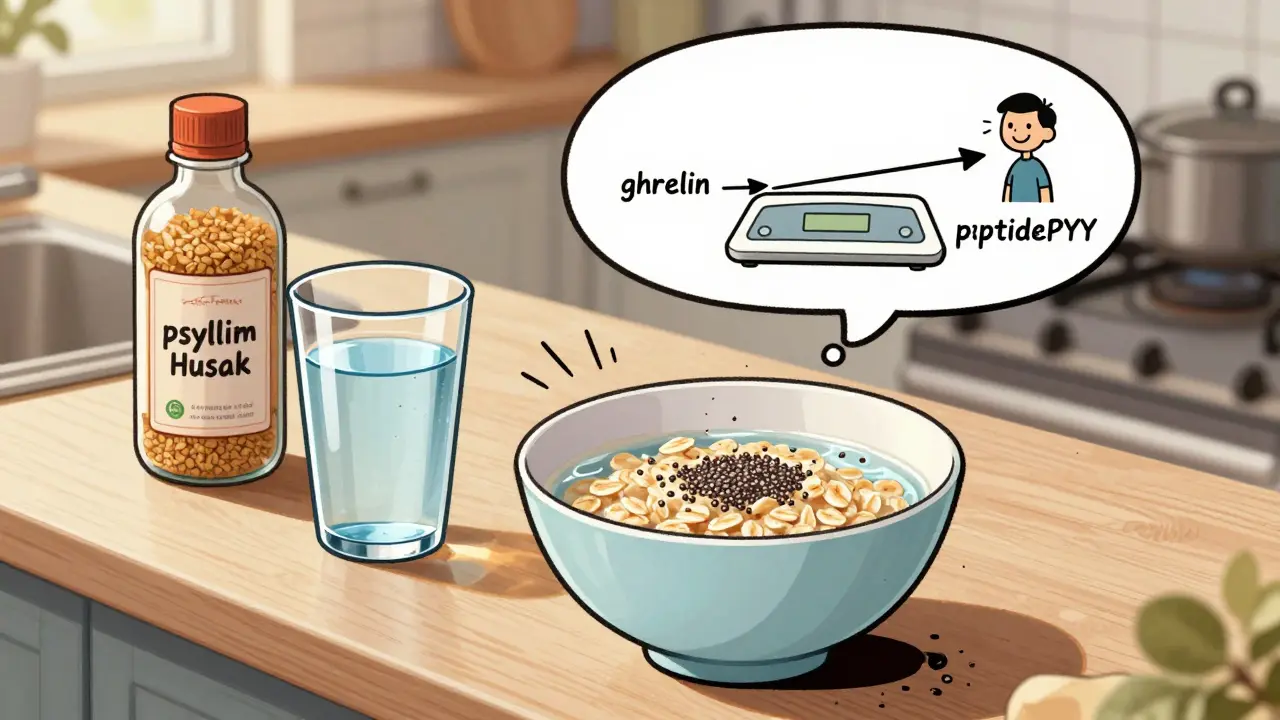
It also gets in the way of fat absorption. About 15-20% of the fat you eat gets trapped in this gel and passes through your system instead of being stored. That’s not a magic trick, but it adds up over time. Viscous soluble fibers-like psyllium, beta-glucans, glucomannan, and pectin-are the heavy lifters here. Psyllium husk, for example, can absorb up to 50 times its weight in water. That’s why people who take it before meals often say they feel full even after eating less.
A 2023 study in PMC10253086 tracked people using psyllium supplements for 8 weeks. Those taking it lost an average of 3.2% of their body weight. The placebo group? Just 1.1%. That’s not a fluke. When you combine soluble fiber with a balanced diet, your body starts regulating appetite hormones like ghrelin and peptide YY. Less hunger. More control.
Insoluble Fiber: The Quiet Helper
Insoluble fiber doesn’t dissolve. It doesn’t turn into gel. It just moves through your system like a broom, sweeping things along. It adds bulk to your stool-about 3-5 grams of bulk for every 10 grams you eat. That’s why it’s so good for regular bowel movements and preventing constipation.
But here’s the catch: it doesn’t directly make you feel full. It doesn’t slow digestion or block fat. Its role in weight control is indirect. When your gut runs smoothly, you’re less likely to bloat, feel sluggish, or crave sugar. And when you’re not bloated, you’re more likely to stick to your eating plan. Insoluble fiber keeps your digestive system running like a well-oiled machine, which supports overall metabolic health.
Think of it this way: soluble fiber is the appetite controller. Insoluble fiber is the cleanup crew. You need both, but if your goal is weight loss, soluble fiber is the one you should focus on first.
Which Foods Give You the Most Weight-Loss Fiber?
Whole foods are always better than supplements. Why? Because they come with vitamins, antioxidants, and other compounds that fiber alone doesn’t have. A piece of fruit isn’t just fiber-it’s water, natural sugars, and phytonutrients working together.
- Apples: One medium apple has 2.4 grams of fiber, and 71% of it is soluble. The pectin in apples forms that satisfying gel right in your stomach.
- Oats: A bowl of oatmeal gives you about 4 grams of fiber, mostly beta-glucan. That’s the same fiber shown to reduce post-meal blood sugar spikes by 12-15%.
- Beans and lentils: Half a cup of black beans has 7.5 grams of fiber, half of it soluble. They’re also packed with protein, which doubles the satiety effect.
- Chia seeds: Just one tablespoon gives you 5 grams of fiber, mostly soluble. They swell up in water and create a gel that fills your stomach.
- Whole wheat bread: One slice has 2 grams of fiber, but 75% of it is insoluble. Great for digestion, but not your main weapon for hunger control.
People who successfully lost weight using fiber didn’t rely on pills-they ate more beans, oats, apples, and vegetables. A 2023 Healthline survey found that 63% of those who stuck with fiber for weight loss did it through whole foods, not supplements.
Supplements: Helpful, But Not a Shortcut
Psyllium husk supplements are the most researched and effective for weight loss. In studies, they consistently beat other types like inulin or guar gum. Amazon reviews show 76% of 5-star ratings mention reduced snacking. But here’s the problem: 42% of users report bloating or gas, especially when they start too fast.
Insulin-based supplements like those in chicory root or as powder additives? They’re less effective for weight loss. People report more bloating and less appetite control. They’re better for gut bacteria than for shedding pounds.
Supplements can help, but they’re not magic. The same 2023 study showed that psyllium users lost an average of 0.75 pounds and 0.25 inches off their waist after 10 weeks. That’s real-but it’s not dramatic. And if you don’t drink enough water, you’ll get constipated instead of relieved.
How to Use Fiber Without the Bloat
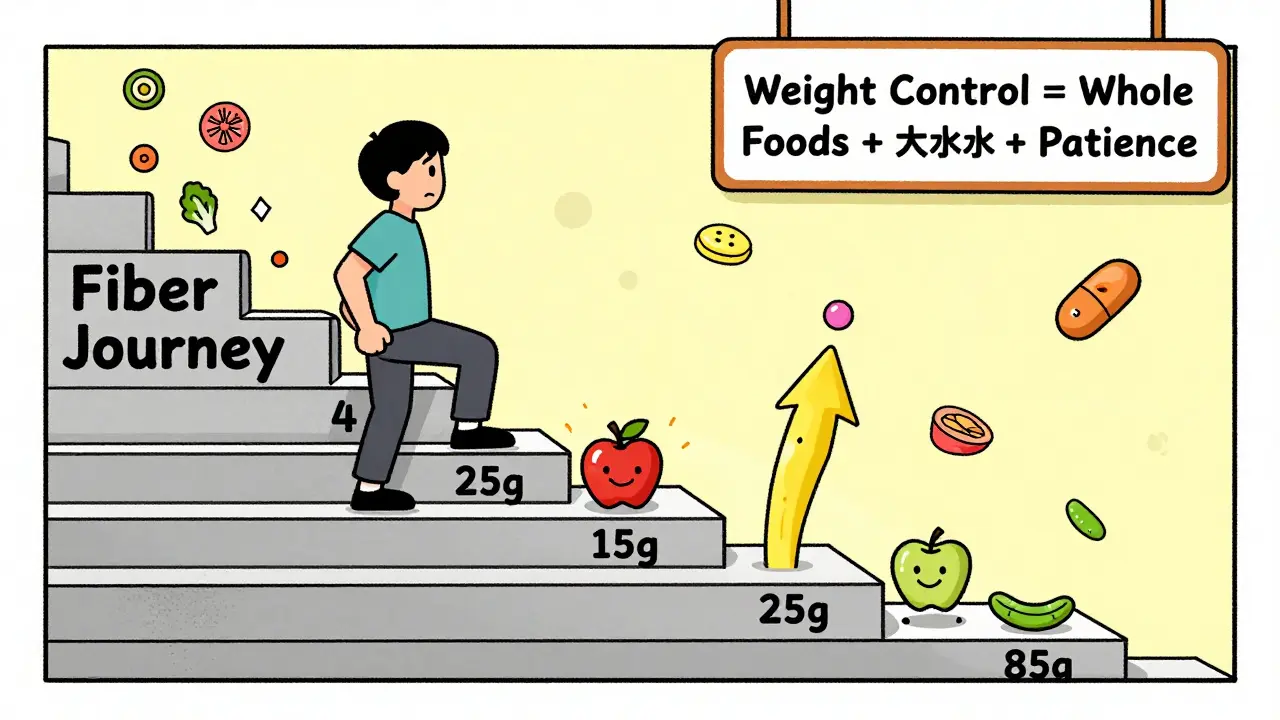
The biggest mistake people make? Going from zero fiber to 20 grams overnight. That’s a recipe for gas, cramps, and quitting.
Here’s what actually works:
- Start with 5 extra grams of fiber per week. If you’re eating 15 grams now, aim for 20 next week, then 25.
- Drink at least 16-24 ounces of water for every 5 grams of supplemental fiber. No exceptions.
- Take soluble fiber 15-30 minutes before meals. A teaspoon of psyllium in water before lunch can cut your calorie intake by 10-15%.
- Balance your fiber types. Aim for about 3 parts insoluble to 1 part soluble. That keeps digestion smooth without overloading your gut.
- Don’t expect miracles. Benefits plateau around 15 grams of soluble fiber per day. More doesn’t mean better.
People who stick with it report fewer cravings, steadier energy, and less need to snack. It’s not about starving yourself-it’s about eating smarter.
The Bigger Picture: Fiber Isn’t a Diet, It’s a Lifestyle
Only 5% of Americans get enough fiber daily. That’s a problem. Research from NHANES shows people who eat 25+ grams of fiber per day have 27% lower obesity rates than those eating less than 15 grams-even after accounting for exercise and other habits.
But fiber alone won’t make you thin. It’s not a replacement for eating whole foods, moving your body, or sleeping well. The strongest results come when fiber is part of a bigger change. The 2023 study authors were clear: "Dietary fiber supplements in combination with energy restriction" work best. Translation: eat less junk, eat more plants, and let fiber help you feel satisfied doing it.
Companies are now testing personalized fiber plans based on your gut bacteria. But for now, the best advice is simple: eat more beans, oats, apples, and chia. Drink water. Go slow. And don’t chase pills. Your body knows how to use real food better than any supplement ever could.
Can soluble fiber really help me lose weight?
Yes, but only if you use the right kind. Viscous soluble fibers like psyllium, beta-glucans, and glucomannan have been shown in multiple studies to reduce appetite, slow digestion, and slightly block fat absorption. People using these fibers consistently lost about 0.75 pounds and 0.25 inches off their waist after 10 weeks. It’s not dramatic, but it’s real-and it adds up over time.
Is insoluble fiber good for weight loss?
Not directly. Insoluble fiber doesn’t affect hunger hormones or slow digestion. But it keeps your gut running smoothly, which helps prevent bloating and discomfort. When you’re not feeling sluggish or constipated, you’re more likely to stick to healthy eating habits. So while it won’t make you lose weight on its own, it supports the process.
Should I take fiber supplements or eat whole foods?
Whole foods are better. Fruits, beans, oats, and vegetables give you fiber plus vitamins, antioxidants, and other nutrients that work together to support weight loss. Supplements like psyllium can help fill gaps, but studies show people who rely on whole foods stick with their plan longer and see better overall results. Think of supplements as a backup, not the main tool.
How much fiber should I eat for weight control?
Aim for 25-38 grams of total fiber daily, with at least 10-15 grams coming from soluble fiber-especially viscous types. Most people get less than half that. Start slow: add 5 grams per week until you hit your target. Too much too fast causes bloating and gas. Consistency matters more than quantity.
Why do I feel bloated when I start eating more fiber?
Your gut bacteria need time to adjust. If you suddenly increase fiber, especially soluble fiber, bacteria ferment it quickly and produce gas. Drink more water, increase fiber slowly (5 grams per week), and pair it with insoluble fiber from whole grains or vegetables. Most bloating goes away in 1-2 weeks. If it doesn’t, you might be taking too much supplement fiber without enough whole foods.
Does fiber help with belly fat?
Yes, but indirectly. Soluble fiber helps reduce visceral fat-the dangerous fat around your organs-by improving insulin sensitivity and lowering inflammation. One study showed psyllium users lost 4.3% of their visceral fat over 8 weeks, compared to just 1.2% in the placebo group. It’s not spot reduction, but it’s one of the few dietary tools proven to target deep belly fat.
Can I just take fiber pills and not change my diet?
No. Fiber supplements won’t work if you keep eating processed foods, sugar, and fried meals. The research is clear: fiber works best when paired with a calorie-controlled, whole-food diet. Think of fiber as a tool to help you eat less, not an excuse to eat whatever you want. Long-term weight loss comes from habits, not pills.
What’s the best time to take fiber for weight loss?
Take soluble fiber 15-30 minutes before meals. That’s when it forms its gel and fills your stomach before you start eating. This reduces how much you eat during the meal. For insoluble fiber, spreading it across meals-like having oats at breakfast and beans at lunch-is ideal for steady digestion. Avoid taking fiber right before bed unless you’re using it for overnight satiety, which some new research is exploring.
12 Comments

Ellie Norris
February 2, 2026 at 21:22 PM
I love this! Just started adding chia to my yogurt and honestly? No more 3pm cookie cravings. I used to think fiber was just for constipation 😅 but now I’m hooked. Tip: soak chia overnight or it’s like eating tiny crunchy balls of regret.

clarissa sulio
February 4, 2026 at 12:32 PM
This is why America’s getting fatter - people think supplements are magic. We used to eat beans and oats and apples and we didn’t need some fancy powder from Amazon. Real food > pills. End of story.

Vatsal Srivastava
February 4, 2026 at 15:59 PM
Soluble fiber slows digestion? Wow. Groundbreaking. I bet if you told someone in 1980 that water makes food swell they’d have called you a mystic. Also why is everyone acting like psyllium is the holy grail? I’ve seen better results from just not eating pizza

Becky M.
February 6, 2026 at 08:41 AM
i just started eating more lentils and honestly my energy is way better. i used to crash after lunch but now i’m chillin’ like a villain. also i typo a lot so sorry if i spelled something wrong lol

Dan Pearson
February 7, 2026 at 20:32 PM
Oh great. Another ‘fiber is magic’ post. Let me guess - you also think drinking green tea cures cancer and yoga fixes your trauma? Newsflash: you still have to eat less junk. Fiber doesn’t erase a Whopper. Stop pretending this is a life hack.

Bob Hynes
February 8, 2026 at 19:29 PM
I’m from Canada and we don’t have psyllium husk in every corner store like you guys do here. But we do have lentils, oats, and apples. And honestly? We’re not all dying of bloating. Maybe the problem isn’t fiber... it’s how fast we’re shoveling it in. Slow down, folks. Your gut isn’t a racecar.

Nick Flake
February 8, 2026 at 19:31 PM
Fiber isn’t about weight loss. It’s about listening. Your body’s been screaming for real food for decades, and now you’re giving it a supplement? The gel isn’t magic - it’s your digestive system finally being treated like a living thing, not a garbage chute. We’ve forgotten how to eat. Fiber’s just the whisper that reminds us.

Chinmoy Kumar
February 10, 2026 at 01:42 AM
this is so helpful i tried adding beans to my meals and at first i was like oh no the gas but after 5 days it was gone and i felt lighter like my body was finally working right 😊

Brett MacDonald
February 10, 2026 at 11:33 AM
The real question is why are we so obsessed with quantifying everything? 15 grams of soluble fiber? 50x water absorption? We’re turning nutrition into calculus. What if the answer is just... eat more plants? No numbers. No supplements. Just food.

Sandeep Kumar
February 11, 2026 at 09:14 AM
Americans think fiber is a product you buy. In India we eat dal, roti, and vegetables. We don’t need psyllium. We don’t need studies. We just eat. Your obsession with supplements is why you’re still fat.

Bridget Molokomme
February 13, 2026 at 05:57 AM
I took psyllium before dinner and didn’t eat dessert. Then I took it again the next day. Then I realized I was just using it as an excuse to avoid thinking about why I was stressed eating. So I stopped. And started walking. And now I’m not obsessed. Funny how that works.



Hannah Gliane
February 2, 2026 at 12:50 PM
OMG finally someone gets it 😭 I tried that psyllium thing and thought I was gonna explode... then I drank water like a normal human and now I’m losing weight without even trying. Why is this not on every diet app?? 🙃