
Antifungal/Antiviral & H2 Blocker Timing Calculator
Check Your Medication Combination
Results
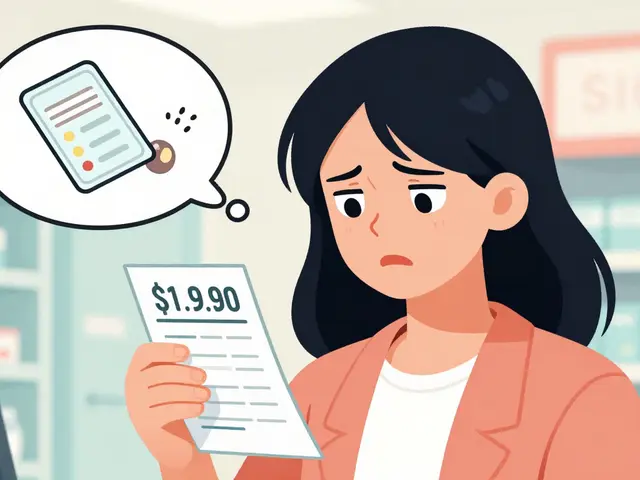
When you take an H2 blocker like famotidine or cimetidine for heartburn or acid reflux, you might not think about how it affects other medicines you’re on-especially antivirals and antifungals. But these seemingly simple acid reducers can seriously mess with how well your antifungal or antiviral drugs work. In some cases, they can cause treatment to fail. In others, they can push drug levels too high, leading to dangerous side effects. This isn’t theoretical-it’s happening in clinics every day, and most patients don’t even know it.
What H2 Blockers Actually Do
H2 blockers, or histamine H2-receptor antagonists, work by blocking the signal that tells your stomach to make acid. They don’t shut it off completely, but they lower stomach acidity from a harsh pH of 1-3 up to a much milder 4-6. This helps heal ulcers and soothe GERD. The three H2 blockers still available in the U.S. as of 2026 are famotidine (a widely used H2 blocker with minimal enzyme interference), cimetidine (an older H2 blocker with strong enzyme-inhibiting effects), and nizatidine (a less common option with low interaction risk). Ranitidine, once popular, was pulled from the market in 2020 because of cancer-causing contaminants.
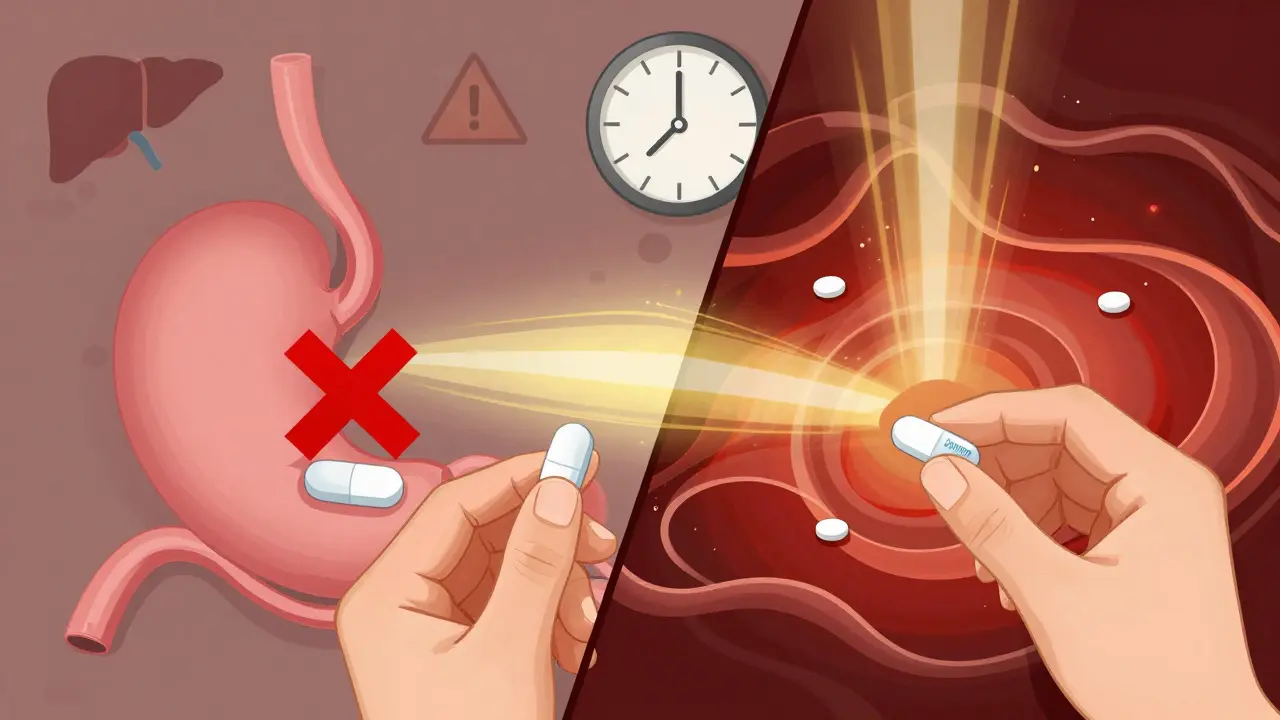
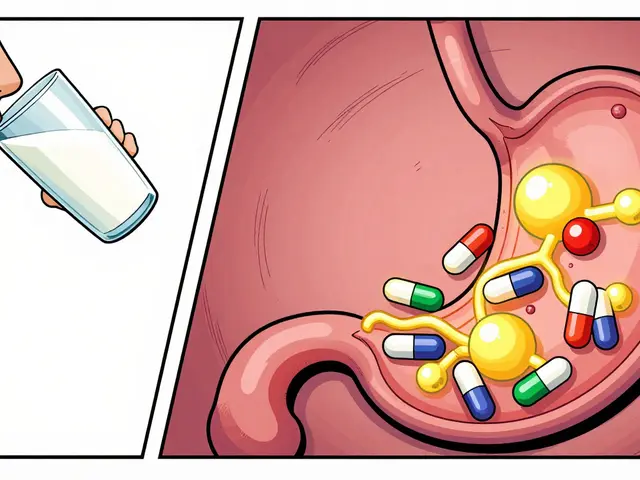
Here’s the catch: many antivirals and antifungals need stomach acid to dissolve and get absorbed. If you take an H2 blocker right before or with these drugs, they might not dissolve properly. The result? Less of the drug gets into your bloodstream. That means your infection might not clear-or worse, it could come back stronger.
Why Antifungals Are Especially Vulnerable
Not all antifungals react the same way. The big problem is with the azoles: itraconazole, voriconazole, posaconazole, and isavuconazole. These are used for serious fungal infections like aspergillosis and candidiasis.
Itraconazole is the most sensitive. Studies show its absorption drops by 40-60% when taken with H2 blockers. That’s not a small drop-it’s enough to make the drug useless. The reason? Itraconazole tablets need a highly acidic environment to dissolve. At pH 4 or higher, they just sit there, undissolved, and pass right through your gut.
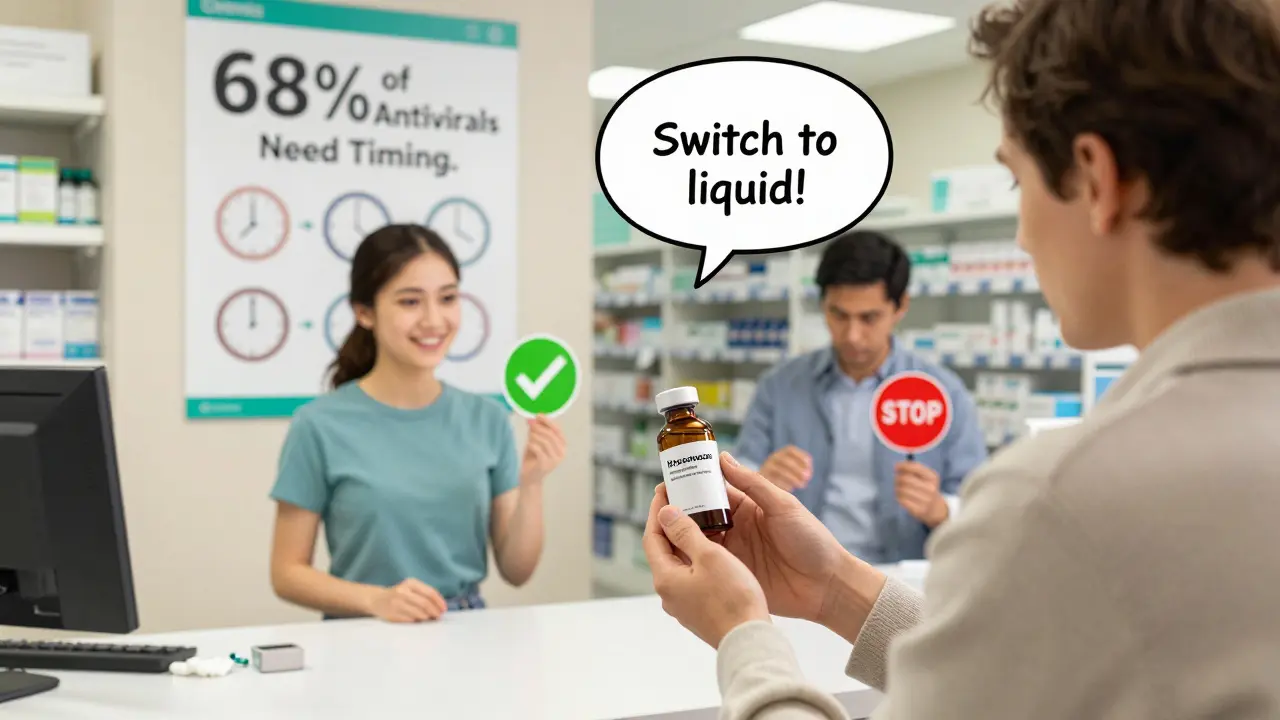
But here’s the twist: the oral solution of itraconazole contains citric acid, which helps it dissolve even when stomach acid is low. So if you’re on an H2 blocker, your doctor might switch you from tablets to the liquid form.
Fluconazole doesn’t have this problem. It dissolves easily in water, regardless of pH. So if you’re taking fluconazole, you can usually take your H2 blocker without worry.
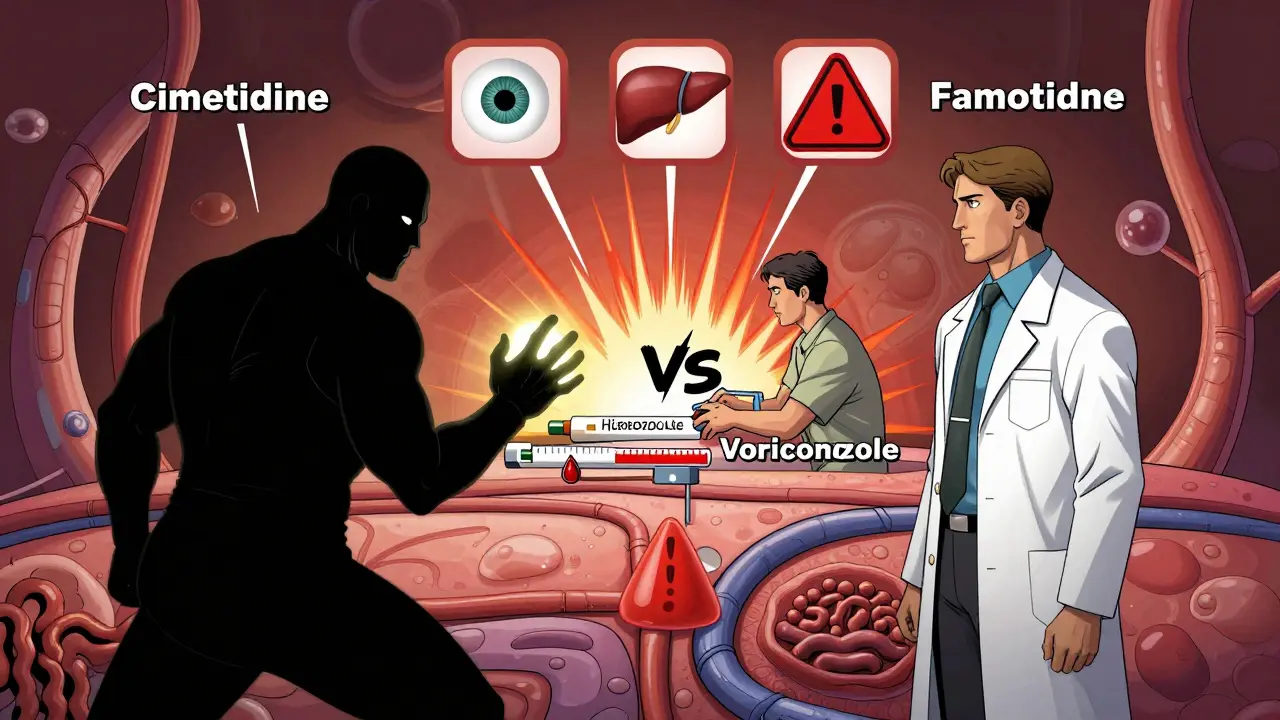
And then there’s voriconazole. It’s not pH-sensitive like itraconazole, but it’s a different kind of troublemaker. It’s metabolized by the liver enzyme CYP2C19-and so is cimetidine. When you take them together, cimetidine blocks the enzyme that breaks down voriconazole. This causes voriconazole levels to spike by up to 40%. That can lead to hallucinations, liver damage, or severe skin reactions. The FDA recommends checking voriconazole blood levels if you’re on cimetidine. Famotidine? It doesn’t do this. So if you need acid suppression and voriconazole, famotidine is the safer pick.
Antivirals and the pH Problem
Antivirals face similar issues. The most well-documented case is atazanavir, an HIV drug. It needs acid to dissolve. When taken with famotidine, atazanavir exposure drops by up to 77%. That’s enough to cause HIV resistance. The FDA specifically says: take atazanavir at least 2 hours before any H2 blocker.
Another one is dasatinib, used for certain leukemias and sometimes off-label for viral complications. It also requires low pH for absorption. Studies show H2 blockers can cut its levels by more than half.
Here’s a startling stat: in a 2022 FDA review of 42 antiviral drugs, 68% had warnings about acid-reducing agents. H2 blockers were involved in 28% of those cases. That’s not minor. That’s a major risk.
Cimetidine vs. Famotidine: The Real Difference
Not all H2 blockers are created equal. The biggest danger comes from cimetidine. Its chemical structure lets it block liver enzymes (CYP1A2, CYP2C9, CYP2C19, CYP2D6). This means it doesn’t just affect absorption-it can make other drugs build up to toxic levels.
For example:
- Cimetidine + voriconazole = higher voriconazole levels → risk of toxicity
- Cimetidine + cyclosporine = higher cyclosporine levels → kidney damage
- Cimetidine + warfarin = higher INR → bleeding risk
That’s why cimetidine has over 40 documented drug interactions. Famotidine? It barely touches liver enzymes. It’s mostly safe with antivirals and antifungals-if you time it right.
That’s why, between 2019 and 2022, hospitals switched 92% of patients from cimetidine to famotidine when they were on antifungals. It wasn’t random. It was based on hard data.
How to Avoid Dangerous Interactions
Here’s what actually works in real clinical practice:
- For itraconazole: Use the oral solution if you’re on an H2 blocker. If you must use tablets, take the antifungal at least 2 hours before the H2 blocker.
- For voriconazole: Avoid cimetidine entirely. Use famotidine instead. Monitor blood levels if you’re on both.
- For atazanavir: Take it at least 2 hours before your H2 blocker. Never take them together.
- For fluconazole or isavuconazole: You’re mostly safe. Still, separating doses by 2 hours is a smart habit.
- For any antifungal: If you’re unsure, check the FDA label. Most now say: “Avoid concurrent use with acid-reducing agents.”
And here’s something shocking: a 2022 survey of 1,200 hospital pharmacists found that only 43% consistently told patients how to time their doses. That means more than half of patients on itraconazole and famotidine are taking them at the same time-risking treatment failure.
Why H2 Blockers Are Still Better Than PPIs
You might wonder: why not just skip H2 blockers and use a proton pump inhibitor (PPI) like omeprazole? After all, PPIs block acid more completely.
Actually, that’s the problem. PPIs suppress acid for 24+ hours. H2 blockers only last 6-12 hours. That means if you take an antifungal like itraconazole in the morning, you can wait until mid-afternoon to take your H2 blocker-and your stomach will still be acidic enough for absorption. With a PPI, your stomach stays too alkaline all day. No timing trick works.
Plus, PPIs have more interactions. Omeprazole interacts with 78 drugs. Cimetidine? Only 44. Famotidine? Less than 10.
So if you need acid suppression while on antivirals or antifungals, H2 blockers-especially famotidine-are still the better choice. Just use them wisely.
What’s Coming Next
The FDA is pushing for clearer labeling on all pH-dependent drugs. By late 2026, every drug affected by stomach acid will be required to have exact timing instructions on its label. That should cut interaction-related failures by about 35%.
Meanwhile, new formulations are in the works. One lipid-based itraconazole delivery system (currently in Phase 3 trials) can absorb even at pH 6. If it gets approved, the whole problem of H2 blocker interactions with itraconazole could disappear.
Can I take famotidine with fluconazole?
Yes, you can. Fluconazole doesn’t rely on stomach acid for absorption, and famotidine doesn’t interfere with liver enzymes. No timing adjustment is needed. This combination is considered safe.
Is cimetidine still used today?
Cimetidine is still available, but it’s rarely used when antivirals or antifungals are involved. Due to its strong enzyme-inhibiting effects, it’s been largely replaced by safer options like famotidine. It’s mostly reserved for patients who can’t tolerate other acid reducers.
What if I accidentally take my antifungal and H2 blocker together?
If it’s a one-time mistake, it’s unlikely to cause immediate harm. But if it happens regularly, it can lead to treatment failure-especially with itraconazole or atazanavir. Contact your pharmacist or doctor to assess whether you need a blood test or dose adjustment.
Do antacids have the same interaction risks as H2 blockers?
Yes-and often worse. Antacids like Tums or Maalox cause a sudden, sharp rise in stomach pH and can last longer than H2 blockers. They’re more likely to cause absorption problems. If you need a quick fix for heartburn while on an antiviral or antifungal, take the antacid at least 2 hours before or after your medication.
Why does famotidine have fewer interactions than cimetidine?
Famotidine’s chemical structure lacks the imidazole ring that cimetidine has. That ring is what allows cimetidine to bind to liver enzymes and block them. Famotidine doesn’t do that, so it doesn’t interfere with how your body processes other drugs.
Bottom line: H2 blockers aren’t harmless. When you’re on antivirals or antifungals, they can be the missing link in treatment failure. The fix isn’t stopping them-it’s knowing which one to use, when to take it, and how to time it. Talk to your pharmacist. Read the labels. And don’t assume all acid reducers are the same.
12 Comments

Haley Gumm
February 26, 2026 at 18:28 PM
The 68% stat about antivirals having warnings? That’s not a coincidence-that’s a systemic failure. Hospitals aren’t training nurses properly, and patients are left guessing. We need mandatory pharmacist consultations before prescribing these combos. No more ‘just take it with food’ nonsense.

tia novialiswati
February 27, 2026 at 19:46 PM
I’m so glad someone finally broke this down without jargon! 🙌
My mom was on voriconazole and cimetidine for years-no one told her until she started hallucinating. Now she’s on famotidine and doing great. Don’t assume your doctor knows this. Ask. Always.

Lillian Knezek
February 28, 2026 at 21:11 PM
This is all a Big Pharma scam. They want you on PPIs because they’re more profitable. H2 blockers are safer, but they don’t make enough money off them. The FDA ‘pushing for clearer labels’? Ha. They’re still letting companies bury warnings in 12-point font. 🤡

Christopher Brown
March 1, 2026 at 10:41 AM
Americans think pills are candy. You take meds like snacks. That’s why you’re dying.

Dominic Punch
March 2, 2026 at 07:14 AM
I’ve been a pharmacist for 18 years and I still get surprised by how often this slips through. The real tragedy? It’s 100% preventable. We have the tools. We have the data. We just don’t communicate it. I print this post and hand it to every patient on antifungals. It’s changed lives.

Valerie Letourneau
March 2, 2026 at 20:35 PM
The precision of this clinical analysis is commendable. One must acknowledge the structural implications of pharmacokinetic variability in therapeutic outcomes. The temporal separation of dosing regimens, as outlined, represents a paradigm shift in patient-centered pharmacotherapy. I shall disseminate this within my academic network.

Khaya Street
March 4, 2026 at 12:34 PM
I read this while eating my tacos. Honestly? I just take my acid stuff whenever. If it works, it works. My doctor never mentioned any of this. Probably just trying to sell me more meds.

Christina VanOsdol
March 5, 2026 at 10:40 AM
Wait-so famotidine is safe?!!?? But what about the 2020 recall?? And the lawsuits?? And the fact that cimetidine is still in stock at Walmart?? I’m gonna call my pharmacy NOW!!! 😱🤯‼️

Brooke Exley
March 7, 2026 at 05:52 AM
I had no idea fluconazole was the safe one!! I’ve been on it for yeast infections for years and took famotidine like clockwork. I feel like a genius now 😊
Thank you for writing this like a friend explained it over coffee. I’m sharing this with my sister. She’s on voriconazole right now.

Alfred Noble
March 7, 2026 at 19:12 PM
i didnt even know h2 blockers could do this
my doc just said 'take this for heartburn' and i did
so now im paranoid
did i mess up my antifungal treatment??
should i go to er??
help

Matthew Brooker
March 9, 2026 at 18:36 PM
This is why we need better patient education. Not just labels. Not just pamphlets. Real conversations. I’ve been on atazanavir for 5 years. Never once did my HIV specialist mention timing with famotidine. Just assumed I knew. I didn’t. Now I do. Thanks for the clarity.

kirti juneja
February 24, 2026 at 23:36 PM
OMG I just realized I’ve been taking famotidine with my itraconazole like a total newbie 😅
Switched to the liquid form last week after reading this-my fungal infection finally started clearing. Also, my pharmacist gave me a sticky note that says ‘H2 blockers ≠ harmless’ and I frame it now. 💯