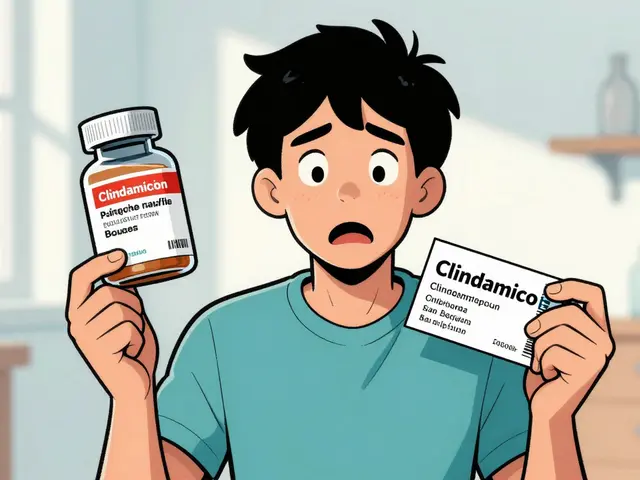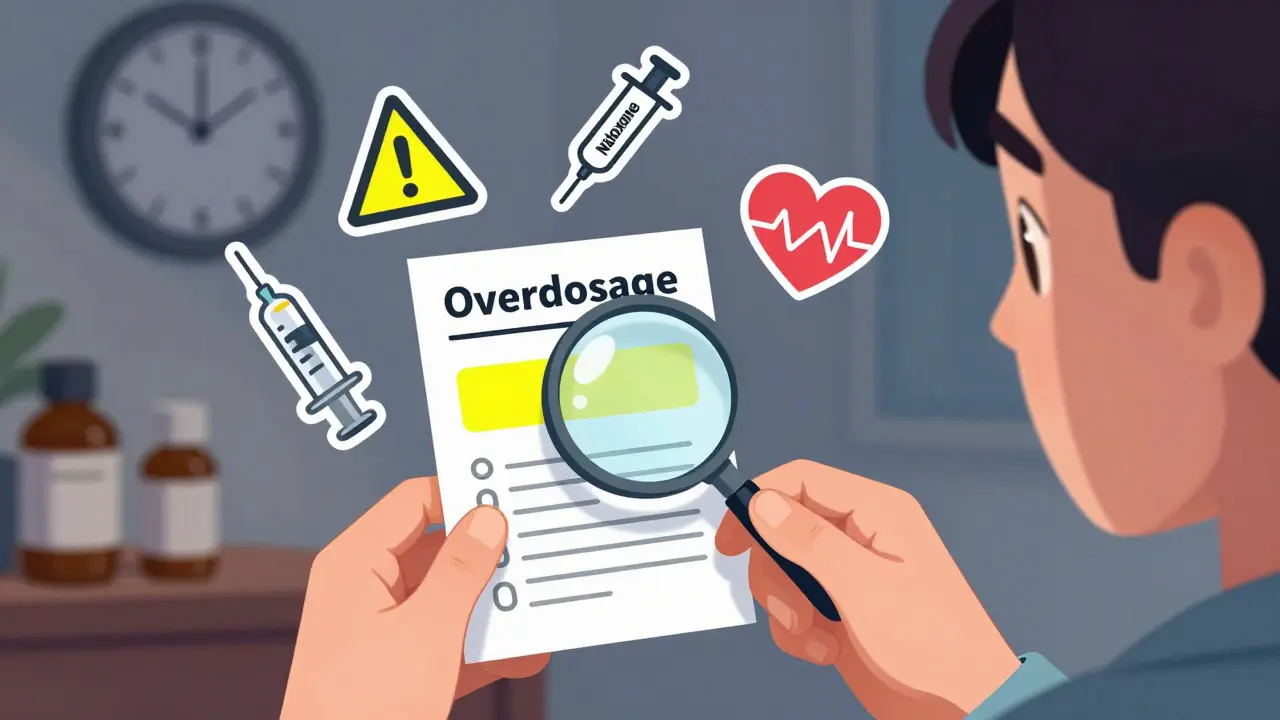
Every time you pick up a new prescription, you get a small booklet with it - the medication guide. Most people glance at it, maybe read the side effects, and toss it in a drawer. But buried in that paper is critical information that could save your life: overdose warnings and antidotes. If you or someone you care about takes medications like opioids, benzodiazepines, or certain antidepressants, knowing how to read this guide isn’t optional - it’s essential.
Where to Find Overdose Warnings in the Medication Guide
Don’t start reading from the beginning. Go straight to the section labeled "Overdosage". This is the only part of the guide that legally must contain information about what happens if too much of the drug is taken, and what to do about it. The U.S. Food and Drug Administration (FDA) requires this section to be clear, specific, and easy to find.Look for phrases like:
- "Ingestion of more than [X] mg may result in serious toxicity"
- "Symptoms of overdose include..."
- "Treatment of overdose consists of..."
For example, if you’re taking oxycodone, the Overdosage section will tell you that doses over 40 mg in opioid-naïve patients can cause respiratory depression, extreme drowsiness, or loss of consciousness. It won’t say "you might die" - but it will list the exact signs that mean you’re in danger.
Don’t skip the "Warnings and Precautions" section either. That’s where you’ll find Boxed Warnings - the FDA’s strongest alert. If a drug has a boxed warning for overdose risk, it means the danger is serious enough to be highlighted in a thick black border. Fentanyl patches, for instance, carry this warning because even a small amount can be fatal if misused.
How to Spot Antidote Information
The antidote - the medicine that can reverse an overdose - is usually listed right after the overdose symptoms in the "Overdosage" section. But it’s not always obvious. Look for words like:- "Naloxone may be used to reverse..."
- "Flumazenil is indicated for benzodiazepine overdose..."
- "Supportive care includes administration of..."
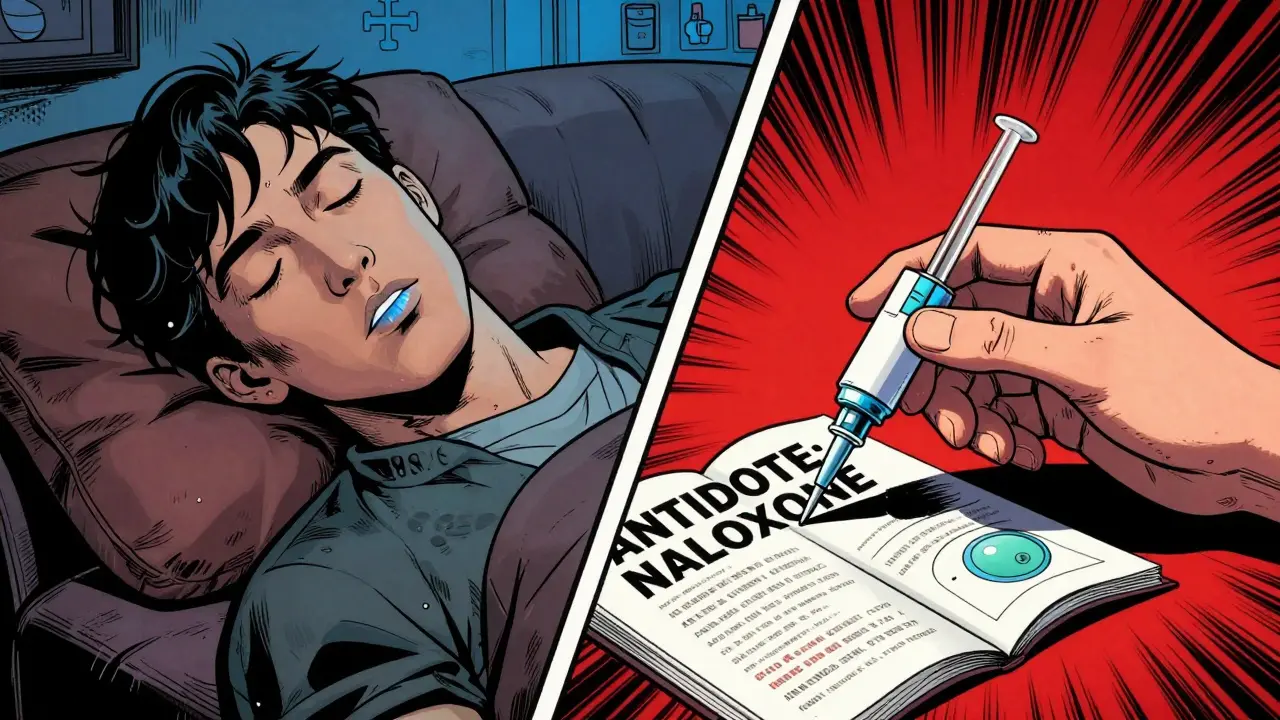
For opioids, naloxone is the standard antidote. The guide might say: "Naloxone hydrochloride is a specific antidote for opioid overdose. Administer intranasally or intramuscularly as soon as overdose is suspected."
But here’s the catch: the guide won’t tell you how to get naloxone or where to inject it. That’s on purpose. Medication guides are meant to inform, not replace emergency training. Still, knowing the name of the antidote means you can ask your pharmacist: "Can I get naloxone with this prescription?" And the answer should be yes - it’s available over the counter in all 50 states.
What the Guide Won’t Tell You (But You Need to Know)
Medication guides are written by drug manufacturers, not emergency responders. They’re legally required to be accurate, but they’re not designed for quick reading during a crisis. Here’s what they leave out:- How long it takes for symptoms to appear
- Whether the antidote works after a certain time
- What to do if you don’t have the antidote
- How to recognize an overdose in someone else
For example, a guide might say: "Overdose may cause respiratory depression." But it won’t tell you that the person might look like they’re just asleep - until their lips turn blue, or their breathing becomes shallow and irregular. That’s why you need to pair the guide with real-world knowledge.
Learn the signs of overdose:
- Unresponsive to loud noises or shaking
- Slow, gurgling, or stopped breathing
- Pinpoint pupils
- Cold, clammy skin
- Fingernails or lips turning blue or purple
If you see these signs, call emergency services immediately - even if you’re not sure. Don’t wait for confirmation from the guide. The guide is a reference. Emergency response is action.
How to Use the Guide Before You Need It
Reading the guide after an overdose happens is too late. You need to read it before you take the first pill. Here’s how:- Open the guide the first time you get the prescription. Don’t wait.
- Find the "Overdosage" section. Highlight it with a yellow marker.
- Write down the antidote name and keep it on your phone or wallet.
- Ask your pharmacist: "Is there an antidote? Can I get it with this prescription?"
- Keep a copy of the guide in your medicine cabinet - not tucked away in a box.
For people taking multiple medications, create a simple one-page summary:
| Medication | Overdose Risk | Antidote | Emergency Action |
|---|---|---|---|
| Oxycodone | Respiratory depression above 40 mg | Naloxone | Call 000, give naloxone, keep person awake |
| Alprazolam | Sedation, coma with high doses | Flumazenil | Call 000, do not give naloxone |
| Sertraline | Seizures, heart rhythm issues | None (supportive care) | Call 000, monitor breathing |
This table doesn’t replace the guide - it distills it into something you can act on.
Why This Matters More Than You Think
In Australia, accidental overdose deaths rose by 18% between 2020 and 2023. Many of these involved people who were taking their medications exactly as prescribed - but didn’t know the risks of combining them with alcohol, sleeping pills, or even certain painkillers. The medication guide already warned them. They just didn’t know how to read it.One woman in Sydney took her prescribed tramadol for back pain and drank a glass of wine at dinner. She fell asleep and didn’t wake up. Her medication guide clearly stated: "Avoid alcohol. May increase risk of respiratory depression." But she never read it. She thought the warning was just a legal formality.
That’s the problem. People think these warnings are there to protect the company, not them. They’re not. They’re there to protect you.
What to Do If You’re Still Unsure
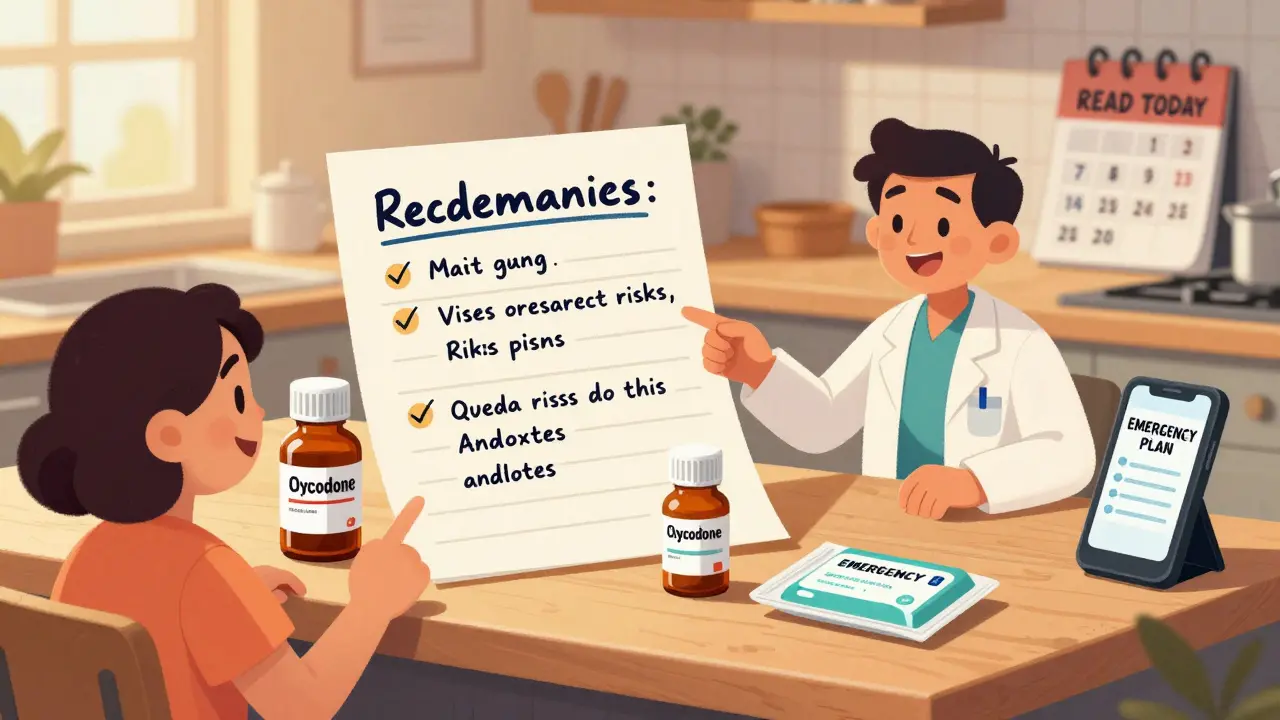
If the guide uses medical terms you don’t understand - like "respiratory depression" or "serotonin syndrome" - don’t guess. Ask:- Your pharmacist: "What does this mean in plain English?"
- Your doctor: "What are the real signs I should watch for?"
- Your local harm reduction service: Many offer free medication guide reviews.
In Australia, services like Needle and Syringe Programs and Family Drug Support will sit with you and walk through your medication guide - no judgment, no cost. You don’t need to be struggling with addiction to use these services. You just need to care about staying safe.
Final Reminder: The Guide Is Your First Line of Defense
You don’t need to memorize every page. But you do need to know where the overdose and antidote information is. Keep that knowledge close. Tell someone you trust - a partner, a friend, a neighbor - what to look for. Keep naloxone in your home if you’re on opioids. Practice using it.Medication guides are not junk mail. They’re your personal safety manual. Reading them isn’t a chore - it’s a lifeline.
Can I get naloxone without a prescription?
Yes. Naloxone is available over the counter at most pharmacies in Australia without a prescription. You can ask the pharmacist for it by name. Many pharmacies keep it behind the counter, so you may need to request it. Some community health centers and needle exchange programs also provide it for free.
What if the medication guide doesn’t mention an antidote?
Not all drugs have a specific antidote. For example, antidepressants like sertraline or fluoxetine don’t have a direct reversal agent. In those cases, the guide will say treatment is "supportive care" - meaning emergency services will focus on keeping you breathing and your heart stable. That doesn’t mean the overdose isn’t serious. If you suspect an overdose, call emergency services immediately - even if there’s no antidote.
Are overdose warnings the same for brand-name and generic drugs?
Yes. By law, generic drugs must have the same safety information as their brand-name counterparts. The Overdosage section, Boxed Warnings, and antidote information must match exactly. The only difference is the manufacturer’s name and packaging. Always check the guide that comes with the version you’re taking - even if it’s generic.
Can I rely on online sources instead of the medication guide?
No. Online sources, even from reputable sites, may be outdated, incomplete, or not specific to your exact medication and dosage. The medication guide is the only document approved by health regulators (like the TGA in Australia or the FDA in the U.S.) for your specific prescription. It’s the only one legally required to be accurate and up to date. Always use the guide that came with your bottle.
What should I do if I can’t read the small print on the guide?
Ask your pharmacist for a large-print version. Many pharmacies can print a simplified version with larger text. You can also use your phone’s camera to zoom in on the text. Some apps, like Google Lens or Apple’s Live Text, can read printed text aloud. If you’re visually impaired, contact your local disability support service - they can help you get the information in audio or braille format.
If you take medications regularly, make reading the guide part of your routine - like checking the expiration date. It’s not just paperwork. It’s your plan for staying safe.