
Statin Side Effect Risk Calculator
Personal Risk Assessment
Risk Assessment Results
Key Risk Factors
Recommendations
When you’re prescribed a statin to lower your cholesterol, you probably don’t think about whether it’s water-soluble or fat-soluble. But that tiny difference-hydrophilic vs lipophilic-can make a real difference in how your body reacts. For millions of people taking statins, the choice between these two types isn’t just chemistry. It’s about muscle pain, fatigue, brain fog, and whether you can stick with the medication long-term.
What Makes a Statin Hydrophilic or Lipophilic?
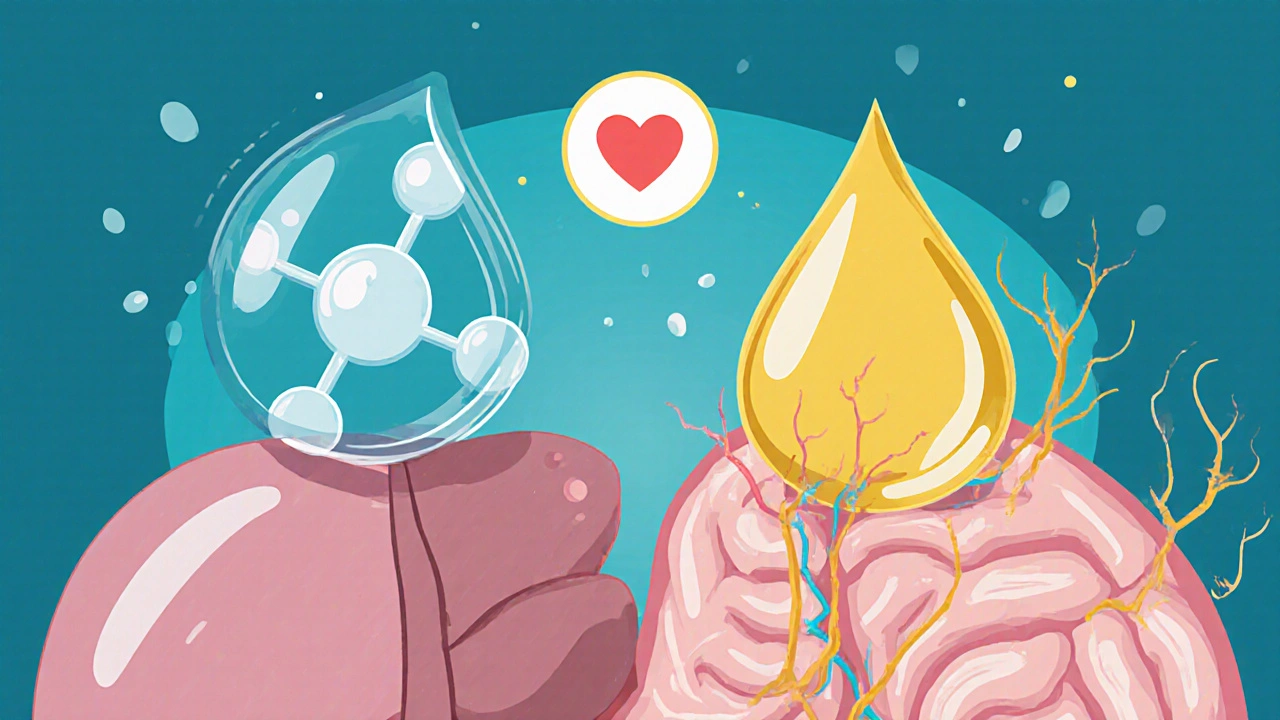
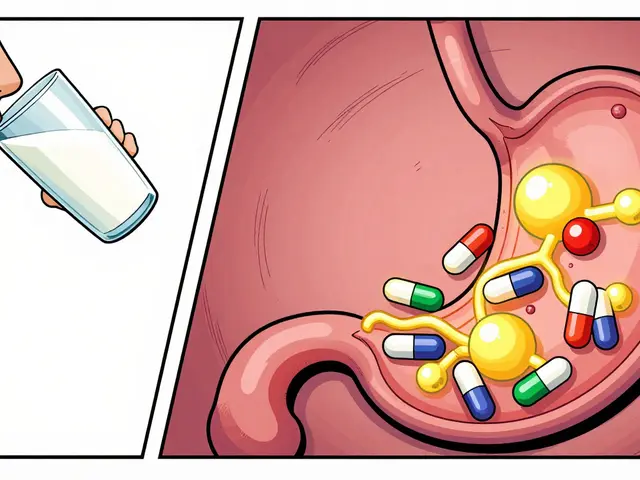
Statins are grouped by how they dissolve in your body. Hydrophilic statins love water. They can’t easily slip through cell membranes on their own. Instead, they need special transporters, mostly in the liver, to get inside. That means they mostly stay where they’re needed: in the liver, where cholesterol is made. The two main ones are pravastatin and rosuvastatin.
Lipophilic statins, on the other hand, are fat-soluble. They slip through cell membranes like butter on toast. That lets them get into muscles, nerves, and even the brain. These include atorvastatin, simvastatin, fluvastatin, lovastatin, and pitavastatin.
This isn’t just academic. A 2019 study in the Journal of Clinical Pharmacology found lipophilic statins reach 3.5 to 5.2 times higher concentrations in muscle tissue than hydrophilic ones. That’s why doctors used to assume lipophilic statins caused more muscle problems.
The Old Belief: Lipophilic Statins Cause More Muscle Pain
For years, the story was simple: fat-soluble statins = more muscle pain. The logic made sense. If a drug gets into your muscles easily, it should cause more damage. That’s why many doctors switched patients from simvastatin or atorvastatin to pravastatin or rosuvastatin when muscle aches showed up.
But here’s the twist: real-world data doesn’t always back it up. A 2021 study tracking 15 million people in the UK found something surprising. When comparing rosuvastatin (hydrophilic) to atorvastatin (lipophilic), the hydrophilic statin actually had a higher risk of muscle side effects-1.17 times higher. Simvastatin (lipophilic) had a higher risk than atorvastatin (also lipophilic), but that had more to do with dose than solubility.
That study, published in the Journal of General Internal Medicine, shook up the old thinking. If hydrophilic statins aren’t consistently safer, then what’s really driving muscle pain?
Why Muscle Pain Happens (It’s Not Just Solubility)
It turns out, the story is more complicated than just whether a statin is water- or fat-soluble. Muscle pain from statins is likely caused by a mix of factors:
- Dose: Higher doses of any statin increase risk. Rosuvastatin at 40 mg carries more risk than pravastatin at 40 mg-not because of solubility, but because it’s a much more potent drug.
- Age: People over 65 are nearly twice as likely to have muscle symptoms.
- Gender: Women have a 57% higher risk than men.
- Body weight: People with low BMI (under 25) are more vulnerable.
- Other meds: Taking amiodarone, cyclosporine, or certain antibiotics can spike statin levels in your blood.
- Genetics: Some people have a gene variant (SLCO1B1) that makes it harder for their liver to clear statins, leading to buildup and muscle damage.
One 2023 study in Nature Scientific Reports even found that hydrophilic statins like rosuvastatin might increase the risk of hearing loss in women while protecting men. That’s not something you’d predict just from solubility.

Real People, Real Experiences
Online forums are full of stories that defy the textbook rules.
On Reddit, one user wrote: “I took simvastatin for 8 years with zero issues. Then I switched to rosuvastatin for better cholesterol control-and within weeks, I couldn’t climb stairs without pain.”
Another said: “I had terrible muscle cramps on atorvastatin. My doctor switched me to pravastatin. The pain vanished in 10 days.”
But then there’s Dave, who wrote on his health blog: “I tried both pravastatin and rosuvastatin. Both gave me muscle pain. Only when I went back to a low dose of simvastatin did I feel normal again.”
These aren’t rare cases. A 2022 survey by the American Heart Association found that 63% of patients who switched from a lipophilic to a hydrophilic statin reported better muscle symptoms. But 37% didn’t. And some even got worse.
The takeaway? Your body reacts to statins like a fingerprint-unique, unpredictable, and not easily predicted by chemical labels.
When Hydrophilic Statins Actually Win
Despite the confusion, hydrophilic statins do have clear advantages in specific situations.
If you have kidney problems (eGFR under 60), hydrophilic statins like pravastatin and rosuvastatin are safer. A 2021 study in the Journal of the American Heart Association showed they reduce major heart events by 22% more than lipophilic statins in people with poor kidney function. Why? Because they’re cleared mostly through the liver, not the kidneys.
They also have fewer drug interactions. Pravastatin, for example, is metabolized by less than 10% through the CYP3A4 liver enzyme. Simvastatin? About 70%. That means if you’re on blood pressure meds, antifungals, or even grapefruit juice, lipophilic statins are far more likely to build up to dangerous levels.
And if you’re worried about brain fog or memory issues, hydrophilic statins might help. Because they don’t cross the blood-brain barrier easily, they’re less likely to affect cognitive function. That’s why some neurologists prefer them for older patients with mild memory concerns.

What Should You Do?
Don’t assume one type is “better.” The best statin for you depends on your health, your meds, your age, and your genetics-not just whether it’s water- or fat-soluble.
Here’s what to ask your doctor:
- “What’s my risk for muscle side effects based on my age, weight, and other meds?”
- “Do I have kidney problems? If so, should we pick a hydrophilic statin?”
- “Am I on any drugs that interact with CYP3A4? If yes, avoid simvastatin or lovastatin.”
- “Can we start with the lowest effective dose-even if it’s a lipophilic statin?”
- “If I get muscle pain, what’s the next step? Switching statins? Lowering the dose? Taking CoQ10?”
And if you’re already on a statin and feel fine? Don’t switch just because you read something online. Stopping statins without a plan increases your risk of heart attack or stroke.
The Bottom Line
The hydrophilic vs lipophilic debate isn’t settled. Some experts still swear by the solubility theory. Others call it outdated. The truth? It’s one factor among many.
For most people, the most important thing isn’t whether their statin is fat-soluble. It’s whether they can take it without side effects-and whether it keeps their heart healthy.
Statins save lives. But they’re not one-size-fits-all. The goal isn’t to find the “safest” statin. It’s to find the right one for you.
If you’ve had muscle pain before, don’t give up on statins. Try a different type. Try a lower dose. Try CoQ10. Talk to your doctor. You’re not broken. You just need a better fit.
What’s Next for Statins?
The future of statin therapy is moving away from solubility labels and toward personalized medicine. New research is looking at genetic testing to predict who’s likely to have side effects. Trials like STATIN-PEP are testing whether older adults respond better to pravastatin than atorvastatin. And new drugs like bempedoic acid (Nexletol) are being used alongside statins to lower cholesterol without touching muscles at all.
By 2025, hydrophilic statins may make up over half of new prescriptions-not because they’re magically safer, but because doctors are learning to choose based on the whole person, not just a chemical property.
For now, the best advice is simple: don’t fear the label. Understand your body. And work with your doctor to find the statin that lets you live well-for years to come.
9 Comments

Astro Service
November 30, 2025 at 10:39 AM
Man, I don't care what some study says. If you're not taking simvastatin, you're not serious about your heart. America's #1 statin. Made in the USA. Not some fancy water-soluble junk from Europe or India. My grandpa took it in '82 and still mows his lawn at 89. Case closed. 🇺🇸

DENIS GOLD
December 1, 2025 at 04:54 AM
Lol, so now we're supposed to believe the science changed because some guy on Reddit said his muscles hurt? 🤡 Next they'll say gravity's a suggestion and we should all just 'listen to our bodies' while floating off into space. Classic pseudoscience dressed up as 'personalized medicine'. Give me a break.

Ifeoma Ezeokoli
December 1, 2025 at 05:03 AM
Y'all, I just want to say - this whole thread is giving me so much emotional whiplash 😭. I’ve been on rosuvastatin for 5 years, had zero muscle pain, but my mom switched from atorvastatin to pravastatin and said it was like waking up from a 10-year nap. Both are valid. Both are real. Your body is not broken - it’s just unique. Please be gentle with yourselves and each other. 🌿💖

Daniel Rod
December 2, 2025 at 14:14 PM
It’s wild how we reduce complex biology to binary labels - water-soluble vs fat-soluble - like our bodies are just chemical equations. 🤔 But we’re not. We’re ecosystems. We’re histories. We’re trauma, sleep, stress, and grandma’s fried chicken. Maybe the real answer isn’t which statin, but which version of *you* is being listened to? 🌱❤️

gina rodriguez
December 3, 2025 at 17:17 PM
I really appreciated this post. I was on simvastatin for years and had constant cramps. My doctor switched me to pravastatin and I felt like a new person. But I didn’t switch because of solubility - I switched because I listened to my body. Small dose, steady pace, and lots of walking. You got this. 💪

Sue Barnes
December 5, 2025 at 08:29 AM
If you’re blaming your muscle pain on statin solubility, you’re just avoiding responsibility. You’re overweight, sedentary, and eating sugar like it’s oxygen. Stop looking for a chemical excuse. Take your pill. Move your body. Eat less bread. Done. 🙄

jobin joshua
December 6, 2025 at 20:12 PM
Bro I tried rosuvastatin… my ears started ringing 😵💫 then I went back to simva… and boom… silence. Also I’m Indian, 68kg, 45yrs - no diabetes, no meds. So yeah, solubility? Nah. It’s the *dose*. And maybe the moon phase. 🌕

Sachin Agnihotri
December 8, 2025 at 16:21 PM
Okay, but… let’s be real: we’re all just guessing. The science says one thing, the studies say another, and your cousin’s yoga instructor’s aunt says statins are made from lizard sweat. 😅 I’ve tried three. All gave me weird dreams. Now I just eat oats, walk 10k steps, and pray to the cholesterol gods. It’s not perfect… but it’s honest. 🙏
Rajiv Vyas
November 28, 2025 at 22:04 PM
Wait, so you're telling me Big Pharma doesn't want us to know hydrophilic statins are just a Trojan horse for kidney surveillance? 😏 They're using 'liver clearance' as a cover to track our bio-data through urine samples. I've been taking pravastatin for 3 years and my smart toilet just started sending me 'cholesterol trend alerts'. Coincidence? I think not. 🤫