
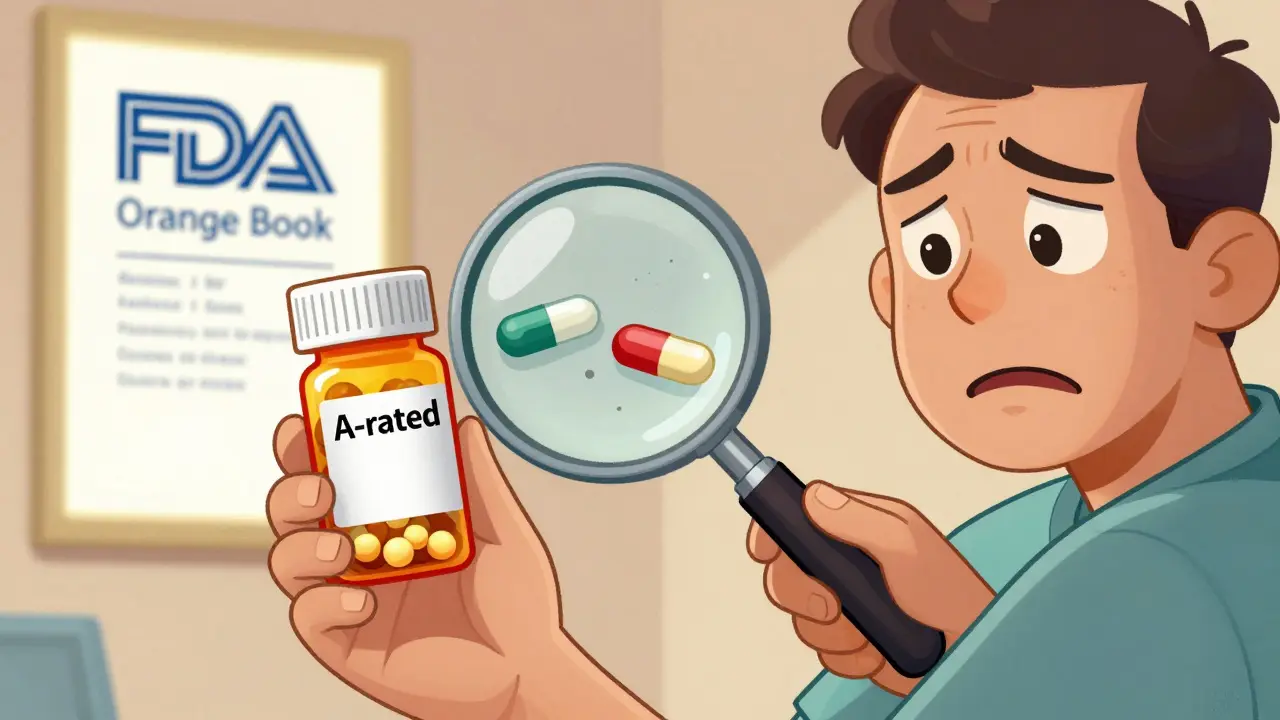
When two or more drugs are combined into a single pill or treatment, the goal is simple: better results with fewer pills. But what happens when you switch from one brand to a generic, or from one manufacturer’s version to another? Suddenly, a simple swap can become a minefield. Therapeutic equivalence isn’t just a regulatory term-it’s the invisible rulebook that decides whether a patient gets the same effect, or risks side effects, hospital visits, or worse.
What Therapeutic Equivalence Really Means
Therapeutic equivalence means two drug products can be swapped without changing the outcome. Not just the same active ingredients-but the same amount, the same form, the same way they’re taken. If you’re on a combination pill like amlodipine/benazepril for high blood pressure, and your pharmacy switches you from one generic to another, you expect the same blood pressure control. That’s what therapeutic equivalence is supposed to guarantee. The U.S. Food and Drug Administration (FDA) tracks this through the Orange Book, a public database updated every month. As of 2023, over 14,000 drug products have been rated. About 95% of them carry an “A” rating, meaning they’re considered interchangeable. The rest? They’re flagged as “B”-meaning there’s uncertainty. Maybe the absorption is different. Maybe the inactive ingredients affect how the drug works. In combination products, that uncertainty multiplies.The Problem with Different Doses in Combinations
Combination drugs aren’t just two pills in one. They’re a carefully balanced system. Take tramadol and acetaminophen. Tramadol works on pain receptors in the brain. Acetaminophen reduces inflammation. Together, they’re stronger than either alone. But if you switch from a 37.5 mg/325 mg tablet to a 50 mg/325 mg tablet, you’re not just increasing tramadol-you’re changing the whole balance. The FDA doesn’t treat these as simple math problems. A 20% increase in one component might not mean a 20% increase in effect. It could mean a dangerous spike, or no change at all. This gets even trickier with drugs that have a narrow therapeutic index (NTI). These are medications where the difference between a helpful dose and a toxic one is tiny. Think warfarin, levothyroxine, or phenytoin. When these are part of a combination, even small differences in how the body absorbs the drug can lead to serious problems. A 2018 study found that 12% of patients switching between different versions of levothyroxine experienced symptoms like fatigue, weight gain, or heart palpitations-even though both versions met FDA bioequivalence standards.How the FDA Rates Combination Products
The FDA doesn’t just look at the active ingredients. It checks:- Are the active ingredients the same in type and amount?
- Is the dosage form identical? (Tablet, capsule, patch, etc.)
- Is the route of administration the same? (Oral, injected, inhaled?)
- Do both versions meet the same standards for purity, strength, and quality?
Real-World Mistakes Happen Every Day
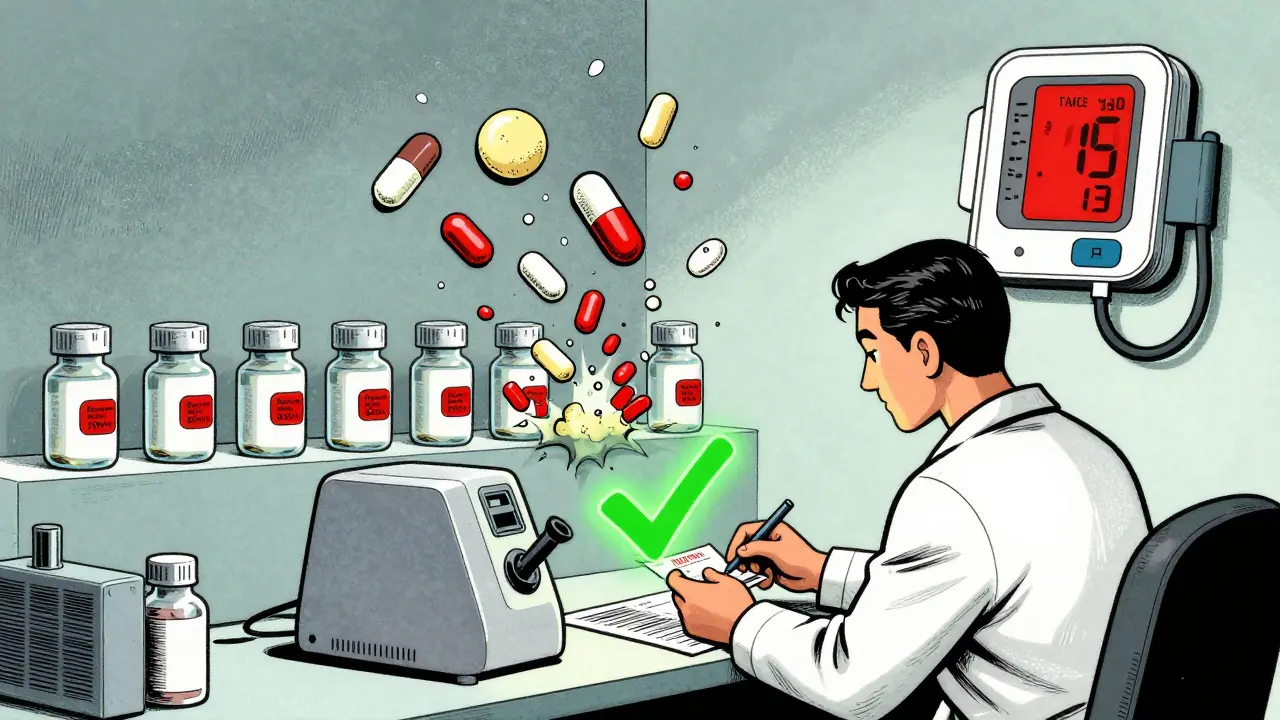
A pharmacist in Ohio posted on Reddit about switching a patient from brand-name Vytorin (ezetimibe/simvastatin) to a generic. The patient’s LDL cholesterol jumped 15%. The pharmacist checked the Orange Book-both were rated “A.” But the generic used a different coating that slowed absorption. The patient didn’t feel different. The lab results told a different story. Another case: a hospital in Chicago switched 200 patients from one generic version of amlodipine/benazepril to another. Within six weeks, 14 patients had emergency visits for low blood pressure. The active ingredients were identical. The dose was the same. But one version used croscarmellose sodium as a disintegrant, the other used sodium starch glycolate. One dissolved faster. The result? A sudden spike in drug levels. The FDA’s adverse event database recorded 247 incidents in 2022 tied to dose conversion errors in combination products. Nearly 40% involved cardiovascular drugs. Almost a third involved psychiatric combinations like sertraline/olanzapine. These aren’t rare mistakes. They’re systemic.What Works: Safe Practices for Clinicians and Pharmacies
The good news? These errors are preventable. Here’s what works:- Always check the TE code in the FDA Orange Book before substituting. Don’t assume “same name = same effect.”
- Use barcode scanning on every prescription. Systems that scan both the drug and the patient’s profile reduce substitution errors by over 60%.
- Don’t switch NTI combination drugs without close monitoring. Wait 72 hours after a switch. Check blood levels if possible.
- Keep a local formulary that lists which generics have been tested in your patient population. Some hospitals maintain their own equivalence tables based on real-world outcomes.
- Train staff. The University of California Health System cut substitution errors by 65% after a 40-hour training program for pharmacists and nurses.
The Future: Personalized Equivalence?
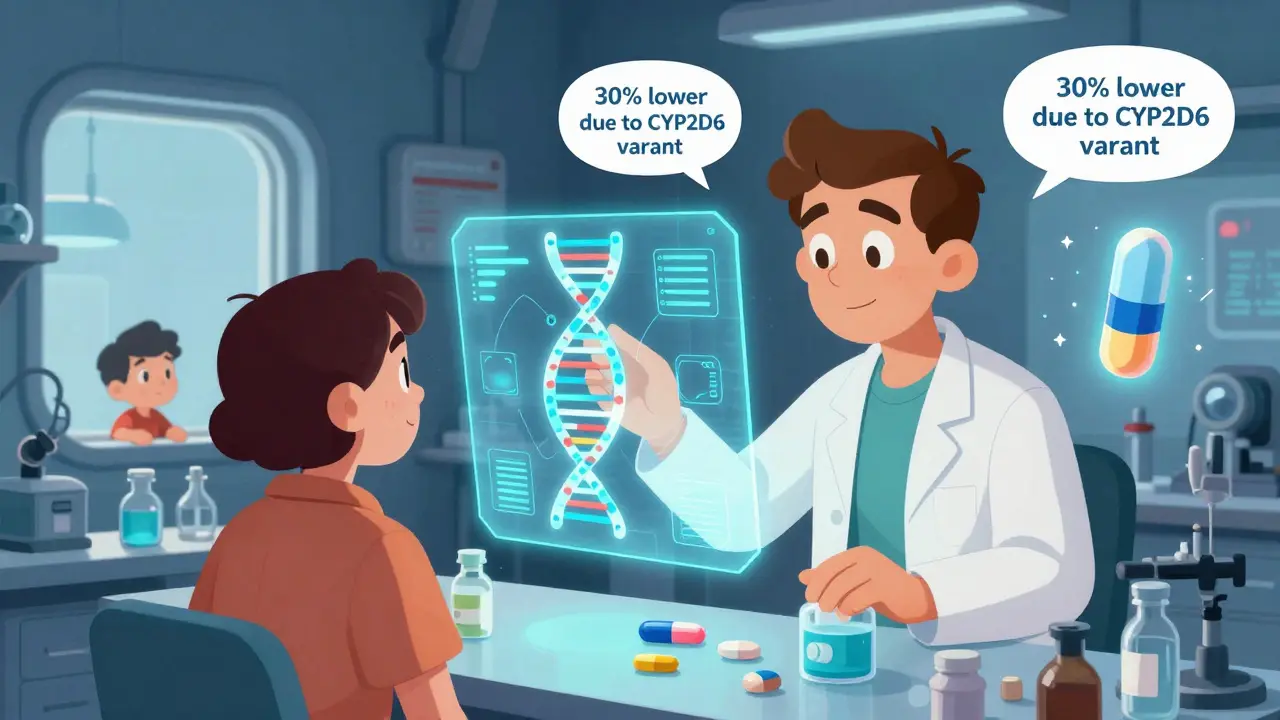
The FDA is already moving beyond simple “A” and “B” ratings. In 2023, they released draft guidance for complex combination products-especially those with nonlinear dose effects. They’re testing machine learning tools that predict whether a formulation change will cause problems. Early results? 89% accuracy. Long-term, the goal is personalized therapeutic equivalence. Imagine a patient with a genetic variant that slows drug metabolism. Their “equivalent” dose might need to be 30% lower than the standard. The NIH predicts that by 2030, 30% of therapeutic equivalence decisions will include pharmacogenomic data. That’s not science fiction-it’s the next step.What You Should Do
If you’re on a combination drug:- Ask your pharmacist: “Is this the same version I was on before?”
- Check your blood levels if it’s an NTI drug like warfarin or levothyroxine.
- Don’t assume generics are identical. Even if they’re both “A” rated, they can behave differently in your body.
- Report unexpected side effects. The FDA’s MedWatch system tracks these issues.
- Write “Dispense as Written” on prescriptions for NTI combinations.
- Use the Orange Book as part of your clinical decision-making-not just a reference.
- Keep a list of combination products that have caused issues in your practice.
Are all generic combination drugs interchangeable?
No. Only those with an "A" rating in the FDA Orange Book are considered therapeutically equivalent. Even then, some generics use different inactive ingredients that can affect absorption, especially in narrow therapeutic index drugs. Always verify the TE code before substituting.
What does an "A" rating mean in the FDA Orange Book?
An "A" rating means the drug product is therapeutically equivalent to the reference listed drug. It contains the same active ingredients, in the same strength, dosage form, and route of administration, and meets all FDA standards for quality and bioequivalence. These can be substituted without clinical concern.
Can I switch between different brands of a combination drug like amlodipine/benazepril?
If both versions have an "A" rating and identical strengths, yes-but only if you’re not on a narrow therapeutic index drug. Even then, some patients experience changes in blood pressure or side effects due to differences in fillers or coatings. Monitor closely after switching, and report any unusual symptoms.
Why do some combination drugs get a "B" rating?
A "B" rating means there’s an unresolved issue with bioequivalence. This often happens with 505(b)(2) products that change the formulation, delivery system, or inactive ingredients. These aren’t automatically interchangeable. A prescriber must approve any substitution.
How do I find the therapeutic equivalence rating for my medication?
Go to the FDA’s Orange Book website and search by brand or generic name. The listing will show the TE code (e.g., "AB" or "BX"). Your pharmacist can also access this information through pharmacy systems. Never assume equivalence without checking.
Are combination biologics covered by therapeutic equivalence ratings?
Very few. As of 2023, only 3 out of 47 approved combination biologic products have formal therapeutic equivalence ratings. These are complex molecules, and current methods can’t reliably prove interchangeability. Biosimilars for these combinations are still under development.
13 Comments

Brenda K. Wolfgram Moore
February 18, 2026 at 02:44 AM
I appreciate the depth here. This is exactly why I always check the TE code manually before dispensing. Even if two drugs are labeled the same, the fillers matter. I've seen patients with thyroid issues go haywire over a change in microcrystalline cellulose. It's not about cost-it's about physiology.

Adam Short
February 19, 2026 at 10:29 AM
This is why Britain needs to stop importing American generics. We've got our own standards. The FDA's Orange Book is a glorified shopping list for corporate greed. We don't let just any pill with an 'A' stamp pass through our NHS. We test. We monitor. We care. This American free-for-all is a disaster waiting to happen.

Kancharla Pavan
February 21, 2026 at 01:02 AM
You think this is bad? In India, we don't even have an Orange Book equivalent. Pharmacists pull generics off the shelf like candy. I once saw a man take four different versions of a combination antihypertensive in one week. He ended up in ICU with a stroke. The system doesn't care. The corporations don't care. Only the patient dies quietly, and nobody files a report.

Digital Raju Yadav
February 21, 2026 at 01:19 AM
This is why America is crumbling. You let corporations control medicine. The FDA is a puppet. The Orange Book? A marketing brochure. I’ve seen generics with the same TE code but different colors, shapes, and coatings-yet they’re labeled interchangeable. That’s not science. That’s fraud. And the FDA knows it. They just don’t care because they’re paid by Big Pharma.

Geoff Forbes
February 21, 2026 at 11:28 AM
Let’s be real: therapeutic equivalence is a myth constructed by regulatory capture. The bioequivalence studies are conducted on 20 healthy young males in controlled environments. Real patients? Diabetics. Elderly. People on 12 meds. The system ignores all of that. A 'B' rating? That’s just the FDA admitting they don’t have the data. But they still allow substitution. That’s not oversight. That’s negligence dressed in a lab coat.

Steph Carr
February 23, 2026 at 04:46 AM
I work in a mental health clinic. Sertraline/olanzapine combos? We’ve had patients who went from stable to suicidal after a generic switch. One woman cried for three days because ‘her pills felt different.’ She couldn’t explain why. But her body knew. The system treats emotion like a bug. It’s not. It’s data.

Logan Hawker
February 24, 2026 at 19:38 PM
The FDA’s ‘A’ rating is a statistical mirage. They use Cmax and AUC metrics that are meaningless for combination products. You can’t measure synergy with a spectrophotometer. The whole framework is built on 1980s pharmacokinetics. We’re in 2024. We have AI, real-time biomarkers, wearable sensors. And we’re still judging equivalence by whether two pills dissolve in the same amount of time in a beaker? This isn’t medicine. It’s a spreadsheet.

Oliver Calvert
February 25, 2026 at 16:25 PM
Barcodes help but they’re not enough. I’ve seen systems that scan the drug but not the batch number. Two batches of the same 'A' rated generic can have different disintegrants. Always ask for the manufacturer code. If they can’t tell you, don’t take it. Your life isn’t worth a 20-cent savings.

Agnes Miller
February 27, 2026 at 03:14 AM
i had a patient last week switch from one generic to another and she said her legs felt heavy and she got dizzy. we checked everything. same te code. same dose. but one had magnesium stearate and the other had stearic acid. turns out she’s allergic to the second one. no one told her. no one thought to ask. just another 'equivalent' pill. i’m so tired.

guy greenfeld
February 28, 2026 at 17:53 PM
They’re not just changing fillers. They’re changing the soul of the medicine. Did you know some generics use animal-derived gelatin? Or talc from mines with asbestos traces? The FDA doesn’t test for that. They test for 'bioequivalence'-but not for contamination, not for ethical sourcing, not for spiritual resonance. This isn’t science. It’s a cult. And we’re all lab rats.

Carrie Schluckbier
March 2, 2026 at 04:41 AM
The real conspiracy? The Orange Book is edited by former pharma executives. Every 'B' rating gets quietly upgraded to 'A' after a lobbying campaign. I’ve seen the emails. I’ve seen the contracts. They don’t want you to know. They want you to think it’s safe. It’s not. It’s a trap. And they’re counting on your trust.

Linda Franchock
March 3, 2026 at 05:22 AM
I love how people act like this is new. My grandma took the same brand of thyroid med for 40 years. Then they switched her to a 'generic' in 2010. She never smiled again. We found out later the new version had a different dye. She was allergic. They didn’t tell her. She died two years later. I still get mad. This isn’t policy. It’s betrayal.


Sam Pearlman
February 16, 2026 at 22:56 PM
I've been in pharmacy for 15 years and let me tell you, this whole 'A rating' thing is a joke. I had a patient on a generic amlodipine/benazepril switch and their BP went from 120/80 to 160/100 in three days. The FDA doesn't test real-world absorption, just lab conditions. We're playing Russian roulette with people's hearts.