
Metronidazole Alcohol Risk Calculator
How Much Alcohol Are You Exposing Yourself To?
Based on the 2023 study, metronidazole doesn't cause disulfiram-like reactions with alcohol. However, understanding alcohol content in products is still important for informed decisions.
Results will appear here...
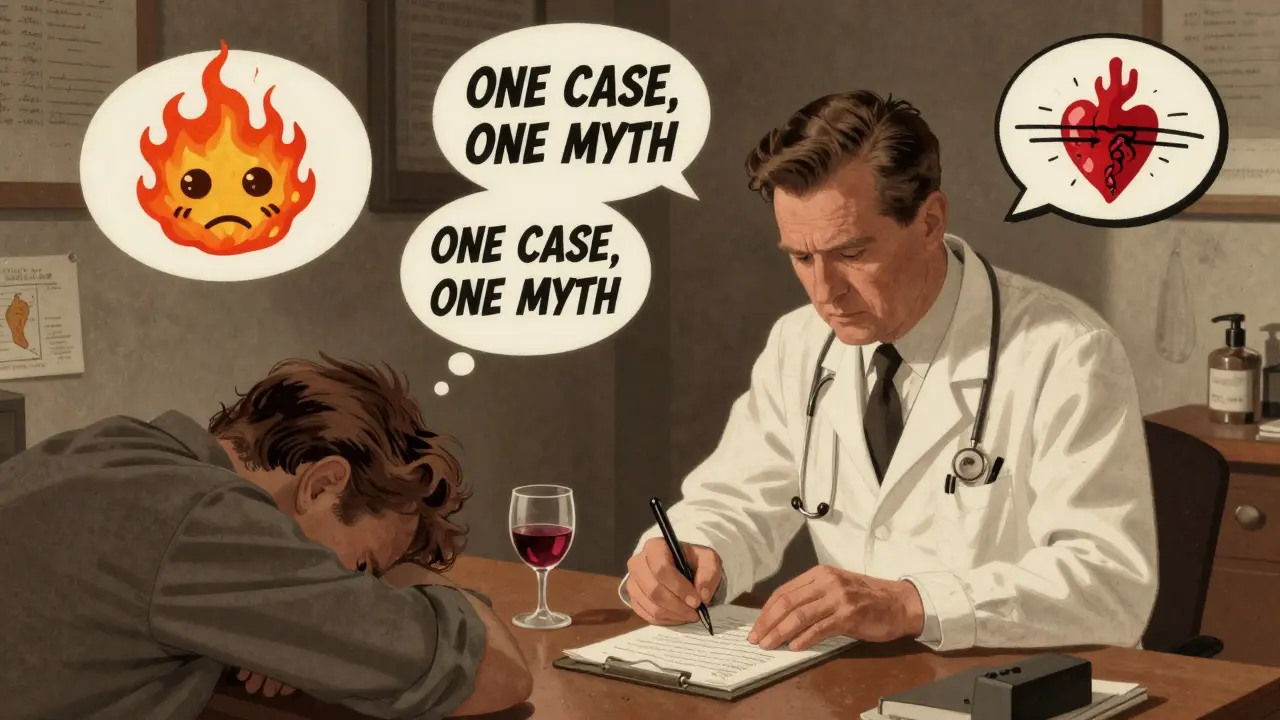
For decades, doctors told patients: never drink alcohol while taking metronidazole. The warning was everywhere - on pill bottles, in patient handouts, even in dental offices. The reason? A scary, well-known reaction: flushing, nausea, vomiting, racing heart, and crashing blood pressure. It was called a disulfiram-like reaction, named after the drug used to treat alcohol addiction. The logic was simple: metronidazole blocks the body’s ability to break down alcohol, causing toxic buildup. But what if that’s not true?
The Old Warning Was Built on a Single Case
The fear started in 1964, after a doctor named Saldivar reported one patient who felt sick after drinking while on metronidazole. That’s it. One person. No controls. No lab tests. Just a story. And yet, that one case became medical gospel. By the 1970s, every medical textbook repeated it. Pharmacies printed warnings. Patients were scared. Even today, most doctors still tell you to avoid alcohol for 72 hours after your last dose. But here’s the problem: science never backed it up.What Is a Real Disulfiram-Like Reaction?
Disulfiram (Antabuse) works by permanently disabling an enzyme called aldehyde dehydrogenase (ALDH). When you drink alcohol, your body turns it into acetaldehyde - a nasty, toxic compound. Normally, ALDH clears it out fast. But with disulfiram, acetaldehyde builds up in your blood. Levels jump 5 to 10 times higher. That’s what causes the awful symptoms. It’s a direct, measurable chemical reaction. Now, compare that to metronidazole. Multiple controlled studies have looked at this. In one, 12 healthy volunteers drank alcohol after taking metronidazole. Blood tests showed zero increase in acetaldehyde. Another study gave people high doses of metronidazole - over 1,500 mg a day - and still found no spike in acetaldehyde. Not even a tiny one. That’s not how a real disulfiram-like reaction works. If it were, we’d see clear, repeatable chemical proof. We don’t.The 2023 Study That Changed Everything
In 2023, researchers in Wisconsin looked at over 1,000 patients who went to the emergency room with alcohol in their system. Half were taking metronidazole. The other half weren’t. Both groups had the same amount of alcohol in their blood - matched by age, sex, and drinking level. What happened? Exactly the same thing. 1.98% of patients on metronidazole had symptoms like flushing or nausea. So did 1.98% of those not on metronidazole. The difference? Statistically meaningless. P-value = 1.00. Meaning: alcohol alone caused the symptoms. Metronidazole didn’t add anything. This wasn’t a lab experiment. This was real people, in real hospitals, over 10 years. And it’s the largest study ever done on this topic.So Why Do People Still Say It’s Dangerous?
Because old habits die hard. And because fear sells. Many doctors still warn patients because they were taught it in medical school. Some worry about lawsuits - even if the risk is imaginary. The FDA label still says to avoid alcohol. The Institute for Safe Medication Practices still lists it as a possible interaction. Insurance forms, pharmacy systems, and patient portals still flash red alerts. But here’s the truth: the evidence against the interaction is stronger than the evidence for it. Fifteen out of seventeen controlled studies found no reaction. Animal studies show metronidazole doesn’t block liver ALDH. Human studies show no acetaldehyde buildup. Even the American Gastroenterological Association says the risk is theoretical - and shouldn’t stop you from using metronidazole when you need it.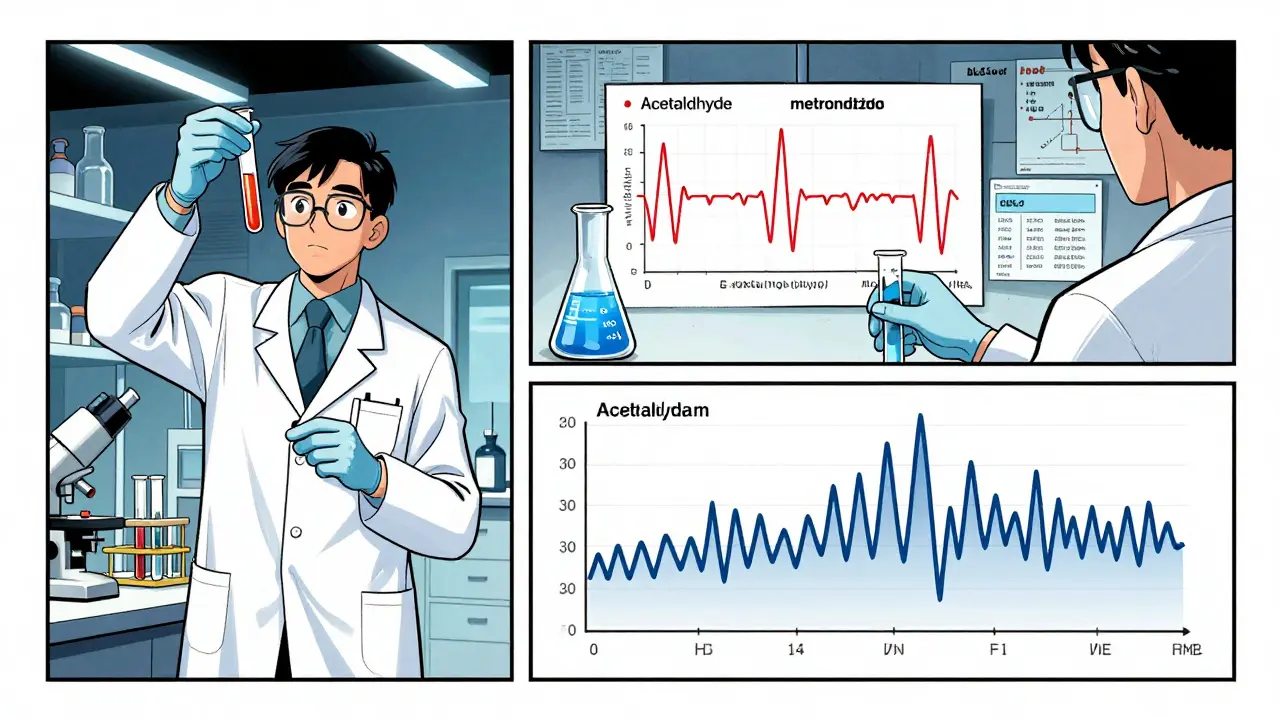
What About That One Patient Who Got Sick?
You’ll hear stories. Reddit threads. Facebook groups. People saying, “I drank one beer and felt like I was going to die.” It’s possible. But correlation isn’t causation. Metronidazole itself causes nausea and headaches. Alcohol does too. When you combine two things that can make you feel bad, it’s easy to blame one for the other. Especially when you’ve been told to expect it. There’s also a newer theory: serotonin. Metronidazole and alcohol both increase serotonin in the brain. So do certain antidepressants. Serotonin syndrome can cause flushing, shaking, rapid heartbeat - symptoms that look a lot like the old “disulfiram reaction.” That might explain why some people feel awful - not because of acetaldehyde, but because of brain chemistry.What About Other Antibiotics?
Not all antibiotics are the same. Tinidazole - a close cousin of metronidazole - does cause real disulfiram-like reactions. Studies show it can raise acetaldehyde 4 to 7 times. Cefoperazone and cefotetan (two other antibiotics) also have solid evidence of causing this reaction. But metronidazole? No. Not even close. If you’re prescribed tinidazole, then yes - skip the alcohol. But if it’s metronidazole, the science says you’re likely fine.Should You Drink While on Metronidazole?
Here’s the practical answer: If you’re a light drinker - one glass of wine, one beer - and you’re otherwise healthy, the risk of a dangerous reaction is virtually zero. You’re not going to die from mixing them. But that doesn’t mean you should. Metronidazole already causes nausea, metallic taste, dizziness. Alcohol makes those worse. You might feel awful - not because of a toxic reaction, but because your body is already stressed. Why add more stress? And if you have alcohol use disorder? Then avoiding alcohol is part of your recovery. That’s not about metronidazole - it’s about your health.
What About Cough Syrup or Mouthwash?
This is where things get tricky. Some cough syrups, mouthwashes, and even some vitamins contain alcohol. A 7-year-old child once got sick after taking metronidazole and a cough syrup with 7% ethanol. That’s a real case. But that’s not the same as someone having a drink at dinner. If you’re using a product with alcohol, check the label. If it’s more than a teaspoon, talk to your doctor. For most people, a quick rinse with alcohol-based mouthwash won’t cause issues.What Should You Do Now?
If you’re prescribed metronidazole:- You don’t need to panic about alcohol.
- You don’t need to avoid it for 72 hours just because of this interaction.
- But if you’re not a regular drinker, skip it anyway - your body is fighting an infection. Don’t add more burden.
- If you do drink, stick to one drink. Monitor how you feel.
- If you get flushed, nauseous, or dizzy - stop. It might be the alcohol, the medication, or both.
The Bigger Picture
This isn’t just about metronidazole. It’s about how medicine works. Old ideas stick. Even when they’re wrong. We teach them. We write them in guidelines. We warn patients. And then, decades later, science catches up. The same thing happened with hormone replacement therapy. With aspirin for heart disease. With low-fat diets. The good news? Science is self-correcting. The 2023 study was a wake-up call. Some hospitals, like Kaiser Permanente, have already updated their guidelines. Infectious disease specialists are more likely to know the truth than general practitioners. The next step? Prospective studies - giving people controlled doses of alcohol while measuring blood acetaldehyde. One is already running in Wisconsin. Results are due by the end of 2024. Until then, trust the evidence - not the fear.Metronidazole and alcohol don’t cause a disulfiram-like reaction. The science says so. The data says so. The real danger isn’t the drink - it’s the myth.
15 Comments

Katherine Urbahn
February 5, 2026 at 21:05 PM
I must express my profound concern regarding the casual dismissal of a well-established medical warning. The 1964 case, while anecdotal, was not the sole basis for the contraindication; subsequent pharmacokinetic studies, though limited, have consistently demonstrated a potential for disulfiram-like effects. To suggest that a single 2023 observational study overturns decades of clinical caution is not merely premature-it is reckless.

caroline hernandez
February 6, 2026 at 20:05 PM
From a clinical pharmacology standpoint, the key differentiator here is enzyme kinetics. Disulfiram irreversibly inhibits ALDH1A1, leading to acetaldehyde accumulation. Metronidazole, however, is a weak, reversible inhibitor of CYP2E1 and has negligible effect on ALDH. The Wisconsin study’s p-value of 1.00 isn’t just statistically insignificant-it’s a null result. We’re conflating correlation (nausea from metronidazole) with causation (acetaldehyde toxicity). The evidence is clear: it’s a pharmacological non-event.

Jhoantan Moreira
February 8, 2026 at 00:30 AM
Really appreciate this breakdown. I’ve seen so many people panic over this, and it’s frustrating because it’s not just about the alcohol-it’s about trust in medicine. If we get this wrong, why should anyone believe us when we say something *is* dangerous? Thanks for cutting through the noise. 🙏

Janice Williams
February 9, 2026 at 03:24 AM
You people are so naive. You think science is some kind of democracy? Just because a study says 'no reaction' doesn't mean it's safe. What about the 0.1% who *do* have a reaction? Are you willing to gamble with your life? And what about children? Elderly? People with liver disease? This isn't just about 'one beer'-it's about responsibility.

Roshan Gudhe
February 10, 2026 at 20:10 PM
It’s fascinating how we cling to myths as if they’re moral truths. The fear of mixing alcohol and metronidazole isn’t about pharmacology-it’s about ritual. We use warnings like incantations to feel safe. But science doesn’t care about our rituals. It only cares about data. And the data says: this fear is a relic. Like bloodletting. Or mercury for teething.

Rachel Kipps
February 11, 2026 at 16:36 PM
i read this and it makes sense but i just want to make sure… so like… its okay to have a beer? not like a whole bottle? just one? i dont want to mess up my treatment…

Prajwal Manjunath Shanthappa
February 11, 2026 at 22:07 PM
Ah, yes. The classic 'science says' argument. How quaint. You assume that the 2023 study is definitive, when in fact, it was observational, retrospective, and lacked pharmacokinetic assays. Real science requires RCTs with plasma acetaldehyde measurements-something this paper did not provide. Your casual dismissal of decades of clinical wisdom is the very epitome of scientism.

Joy Johnston
February 13, 2026 at 03:52 AM
I’m a nurse and I’ve seen patients get so scared of this interaction that they stop their meds entirely. This post is a gift. I’m printing it out for my clinic. Also, side note: the metallic taste from metronidazole + alcohol = absolute nightmare. So even if it’s not toxic, it’s still not worth it. One drink? Fine. But why add insult to injury?

Shelby Price
February 13, 2026 at 20:04 PM
huh. so like… i thought i was weird for drinking wine while on metronidazole. felt fine. just kinda sleepy. now i know i’m not crazy? 😅

Jesse Naidoo
February 14, 2026 at 14:01 PM
Wait, so if I drank a whole bottle of vodka while on metronidazole, I’d be fine? Just… fine? Like, no hospital trip? No death? No drama? Are you sure? Because I’m kinda tempted to test this.

Daz Leonheart
February 14, 2026 at 22:05 PM
I took metronidazole for a tooth infection. Had a couple beers. Felt like crap. Wasn’t the alcohol. Wasn’t the meds. Was just… tired. My body was fighting a war. Why would I add fuel to the fire? I’m not saying don’t drink. I’m saying: be kind to yourself. Rest. Heal. The beer can wait.

Amit Jain
February 15, 2026 at 12:42 PM
In India we use metronidazole for many infections. People drink beer after taking it. No problem. My uncle took it for stomach infection, drank whiskey. Fine. My aunt took it, drank tea with alcohol-based tincture. Fine. No one died. Maybe the fear is from Western hospitals. Not real science.

pradnya paramita
February 16, 2026 at 07:45 AM
The proposed serotoninergic mechanism is compelling. Metronidazole is a weak MAO inhibitor, and alcohol potentiates serotonin release. The flushing, tachycardia, and nausea could be serotonergic in origin-especially in patients on SSRIs or with high baseline serotonin tone. This may explain the outlier cases, while still affirming the absence of acetaldehyde accumulation. A nuanced, biologically plausible model.

Jamillah Rodriguez
February 17, 2026 at 15:46 PM
so like… if i drink while on this, and i die… is it my fault? or the doctors? or the FDA? or the guy who wrote this post? i just want to know who to blame 😭🍷
Geri Rogers
February 5, 2026 at 01:37 AM
Okay but like, I just took metronidazole for BV and had one glass of wine. Felt fine. Like, maybe a tiny bit dizzy, but that’s probably just the med. My doctor freaked out when I told her I drank. Said I ‘could’ve died.’ Bro. 😅 Science says nope. Why are we still scared of ghosts?