
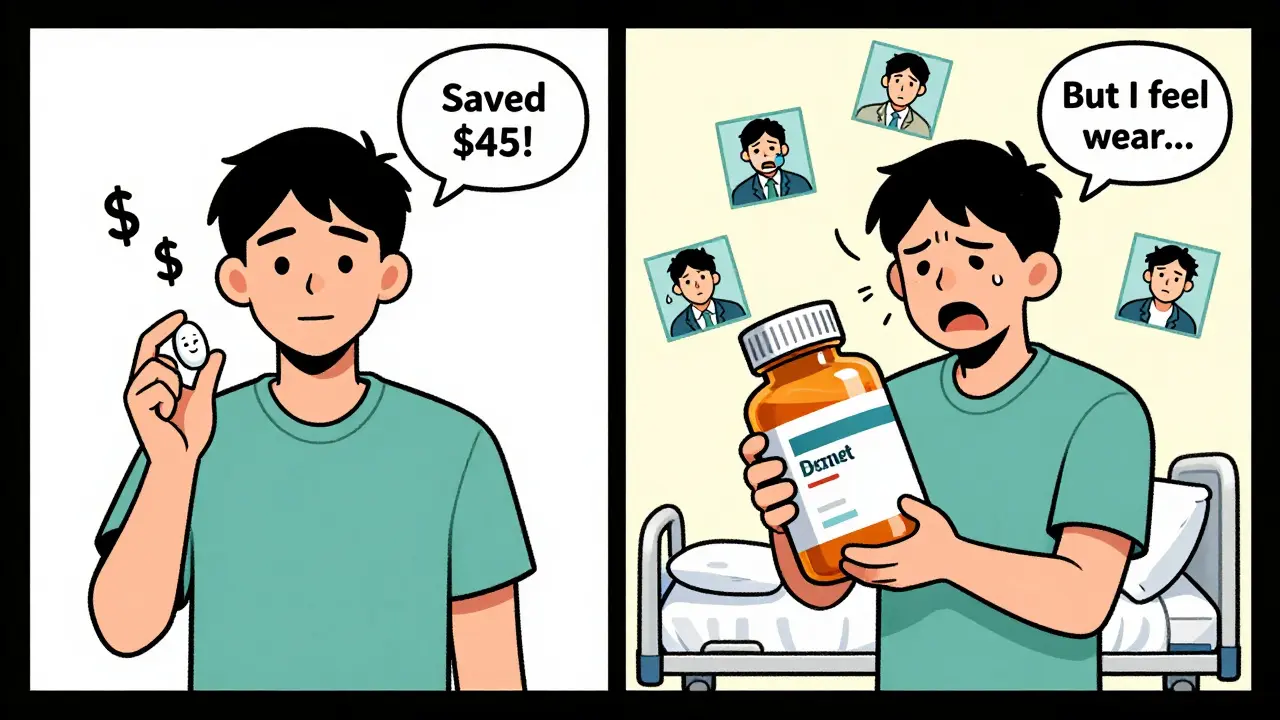
When you pick up a prescription, you might see two options: the brand-name drug you’ve heard of, or a cheaper generic version. It’s tempting to go with the lower price - but is it really the same? And what’s the full picture when you look beyond the sticker price? This isn’t just about saving money at the pharmacy. It’s about how using generics affects your health, your doctor’s decisions, and the entire healthcare system. Outcomes economics - or HEOR (Health Economics and Outcomes Research) - gives us the tools to answer that.
What HEOR Actually Measures (Beyond the Price Tag)
Most people think cost-benefit means comparing the price of a brand-name pill to its generic copy. That’s only the start. HEOR looks at the whole journey: how well the drug works, whether patients stick with it, how many hospital visits it prevents, and even how it affects someone’s ability to work or sleep. It’s not just about dollars saved - it’s about quality of life gained.
For example, a generic blood pressure pill might cost $5 instead of $50. But if patients stop taking the cheaper version because they feel different - maybe due to inactive ingredients - their blood pressure spikes, leading to an ER visit. That single visit could cost $3,000. HEOR studies track these ripple effects. They use real-world data from electronic health records and patient surveys to measure things like adherence rates, hospitalizations, and patient-reported outcomes using tools like EQ-5D and SF-36.
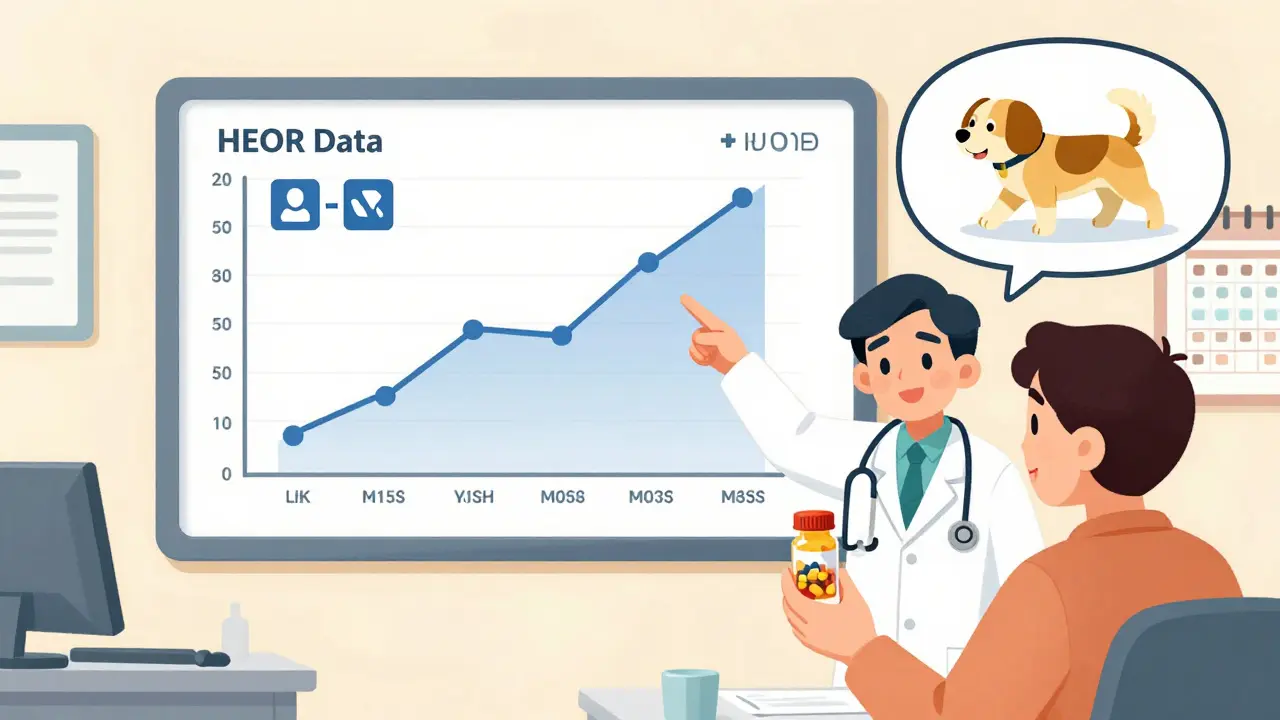
Studies show generic medications typically have 5-15% higher adherence than brand-name versions. Why? Because people can afford to take them consistently. And that consistency matters. For chronic conditions like diabetes or asthma, missing doses doesn’t just feel inconvenient - it increases the risk of complications by 5-7%. HEOR quantifies that risk reduction in dollars and quality-adjusted life years (QALYs). In the U.S., a treatment is considered cost-effective if it costs under $150,000 per QALY gained. Most generic drugs fall well below that threshold.
How Generics Compare to Brand-Name Drugs - The Evidence
The FDA requires generics to be bioequivalent. That means they deliver the same active ingredient at the same rate and amount as the brand. The standard is strict: the drug’s absorption must fall within 80-125% of the brand’s levels. In theory, that’s enough. But real life isn’t a lab.
Analysis of over 12,850 patient reviews across Drugs.com, WebMD, and Amazon found generics rated slightly lower (4.1/5) than brand-name drugs (4.3/5). About 68% of negative reviews mentioned ‘different effectiveness.’ That doesn’t mean the generic failed scientifically - it means patients felt different. Sometimes it’s the filler. Sometimes it’s the shape or size of the pill. Sometimes it’s the placebo effect - if you think you’re on a cheaper drug, your brain might interpret side effects more harshly.
For most medications, this doesn’t matter. But for narrow therapeutic index drugs - like warfarin, levothyroxine, or seizure meds - even tiny variations can be dangerous. That’s why 47% of primary care doctors are hesitant to switch patients on these drugs to generics, even though the science says they’re equivalent. HEOR studies now include longer follow-ups (24+ months) and more detailed patient feedback to catch these edge cases.
Who Saves Money - and Who Pays the Hidden Costs
Commercial insurers and Medicare Part D plans are the biggest winners. PBMs (pharmacy benefit managers) that aggressively push generics save $1,200-$1,800 per member per year. That’s billions across the system. But those savings don’t always flow to patients.
Patients who pay cash or have high-deductible plans benefit directly. GoodRx data shows 89% of patients choose generics when the price difference is over $20. But in managed care systems, insurers might require prior authorization for brand-name drugs, even if the patient prefers them. That adds administrative burden - 8-12% more paperwork for providers - and delays care.
Meanwhile, hospitals and clinics see fewer readmissions when patients stay on generics. A 2023 study found that when generic market share reached 70% or higher in a region, total treatment costs for chronic diseases dropped 12-18%. That’s because patients stayed on therapy longer, avoided complications, and didn’t need expensive interventions.
But here’s the catch: HEOR studies take time and money. Building a full dossier for a generic drug class can cost $500,000 to $2 million and take 18-24 months. That’s why only 95% of PBMs and 100% of Medicare Part D plans use HEOR - but only 35% of physician practices do. Most doctors still rely on formularies and cost-per-pill lists, not full economic models.
The Hidden Challenges: Switching Costs and Patient Trust
Switching from brand to generic isn’t always smooth. Dr. John Chen from Harvard Medical School points out that up to 5% of patients discontinue their medication during the transition - especially with complex drugs like biologics or extended-release formulations. They feel off. They don’t trust the change. And once they stop, they often don’t restart.
Reddit threads like r/Pharmacy show this isn’t just anecdotal. In a March 2024 thread with over 1,200 comments, 42% of users reported personal experiences with side effects after switching - nausea, dizziness, headaches - even when the active ingredient was identical. Many blamed inactive ingredients like dyes or fillers. While rare, these reactions are real enough to cause distrust.
That’s why HEOR now includes patient-reported outcomes at four key points: baseline, 30 days, 90 days, and 180 days after switching. It’s not just about clinical numbers - it’s about how patients feel. And if patients feel worse, even if their labs look fine, they’re less likely to stick with the treatment.
There’s also the ‘therapeutic misconception’ - when patients believe they’re getting the brand-name drug, they report better outcomes. In one study, patients given identical pills labeled as ‘brand’ reported fewer side effects than those told they were on generics. That’s not the drug’s fault - it’s the power of perception. HEOR is starting to account for this by blinding patients in studies and tracking expectations.
How Healthcare Systems Are Using HEOR to Make Smarter Decisions
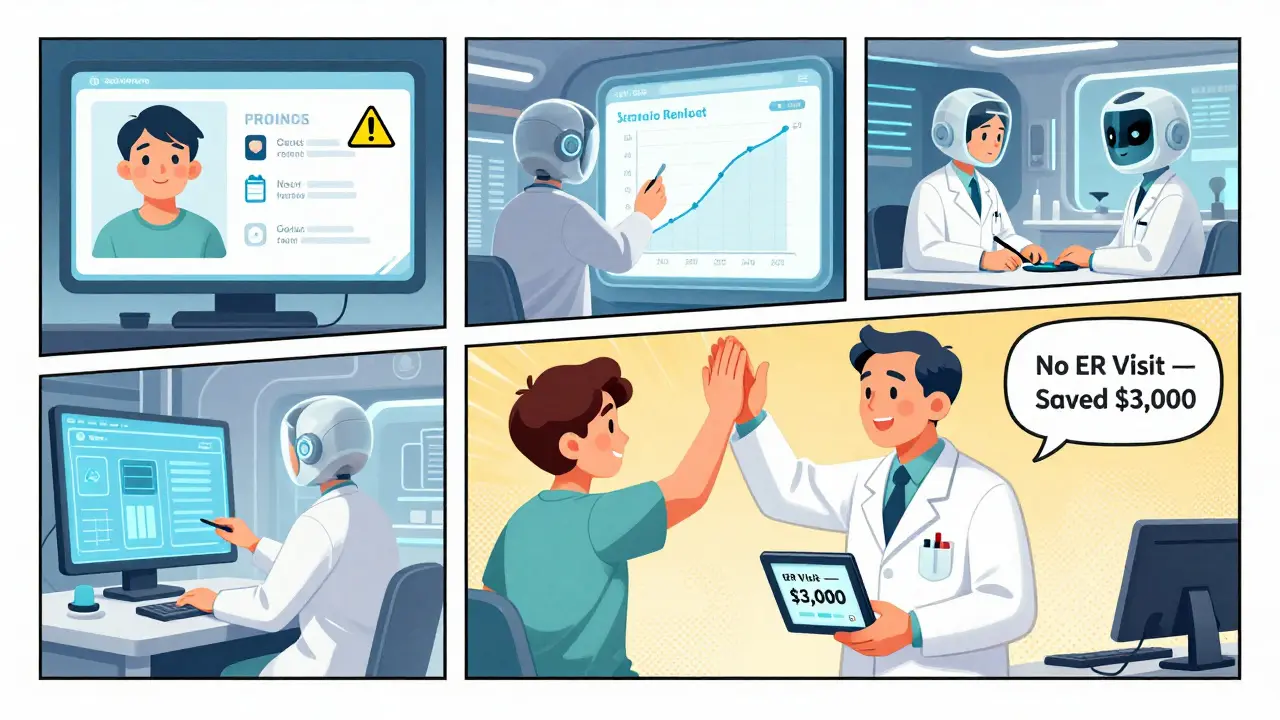
Successful HEOR programs follow a clear path:
- Define the question: Are we saving money by switching to generic statins for our 65+ population?
- Gather evidence: Pull data from claims, EHRs, and patient surveys.
- Analyze: Run cost-effectiveness and budget impact models.
- Act: Update formularies, train staff, and communicate changes to patients.
Organizations that do this well - like large hospital networks and national insurers - see 25-35% faster adoption of generics and 15-20% greater savings than those relying on outdated formulary rules. They don’t just pick the cheapest pill. They pick the one that keeps people healthy, reduces ER visits, and fits into daily life.
AI is now helping. Platforms like Komodo Health use machine learning to predict which patients are most likely to have adverse reactions or non-adherence after switching. That lets providers target support where it’s needed most - not blanket-switch everyone.
The Future: Where Generics and HEOR Are Headed
By 2027, KLAS Research predicts 85% of U.S. health systems will require HEOR evidence before adding any new drug to their formulary - up from 65% in 2023. That’s because Medicare Advantage plans are now required by CMS to use value-based assessments. Generics aren’t just cheaper alternatives anymore - they’re central to value-based care.
Regulators are catching up too. The FDA’s September 2024 draft guidance on complex generics (like topical creams or extended-release pills) will require more real-world data. And with biosimilars entering the market, HEOR is evolving to handle even more complexity.
But the biggest shift? The focus is moving from ‘Is it equivalent?’ to ‘Who benefits, and how?’ HEOR is no longer just for payers. Patients, doctors, and pharmacists are demanding transparency. They want to know: Will this help me stay out of the hospital? Will I feel better? Can I afford it long-term?
Generics aren’t perfect. But when used right - with real data, patient input, and thoughtful implementation - they’re one of the most powerful tools we have to make healthcare more affordable without sacrificing quality.
Are generic drugs really as effective as brand-name drugs?
Yes, for the vast majority of medications, generics are just as effective. The FDA requires them to have the same active ingredient, strength, dosage form, and route of administration as the brand-name drug. They must also meet strict bioequivalence standards - meaning they’re absorbed into the body at the same rate and amount. Studies show no significant difference in clinical outcomes for most conditions. However, for narrow therapeutic index drugs like warfarin or levothyroxine, some providers prefer to stick with the brand due to small variations in absorption, even if they’re within legal limits.
Why do some patients say generics don’t work as well?
Patients sometimes report differences because of inactive ingredients - like dyes, fillers, or coatings - which can affect how the pill feels or tastes. In rare cases, these can trigger minor side effects like nausea or headaches. Psychological factors also play a role: if someone believes they’re on a cheaper drug, they may interpret normal sensations as side effects. Studies show that when patients are told they’re taking a brand-name drug (even if it’s a generic), they report better outcomes. This is called the therapeutic misconception. HEOR now tracks these perceptions to better understand patient experience.
Do generics increase the risk of hospital visits?
No - in fact, the opposite is true. Because generics are more affordable, patients are more likely to take them consistently. Higher adherence leads to better disease control, fewer complications, and fewer hospitalizations. Studies show that when generic use reaches 70% or higher in a population, total treatment costs for chronic conditions drop by 12-18%, largely due to reduced ER visits and hospital stays. The key isn’t the drug itself - it’s whether patients can afford to take it every day.
Why do some doctors hesitate to prescribe generics?
Doctors are more cautious with drugs that have a narrow therapeutic index - where small changes in blood levels can cause harm. Examples include warfarin, lithium, levothyroxine, and some seizure medications. Even though generics meet FDA standards, doctors worry about subtle differences in absorption or patient perception. Also, some patients have had negative experiences switching in the past, and doctors want to avoid triggering those reactions. But for most other medications - antibiotics, blood pressure pills, statins - over 80% of primary care physicians strongly support generics.
Is HEOR just for big insurers and hospitals?
Right now, yes - most HEOR work is done by PBMs, Medicare plans, and large health systems because it requires specialized data, analysts, and time. But the tools are becoming more accessible. AI-powered platforms are making it easier for smaller clinics to use real-world data to guide prescribing. In the next few years, we’ll see more patient-facing tools that show how switching to a generic could lower your out-of-pocket costs and reduce your risk of hospitalization. HEOR is moving from behind-the-scenes analysis to frontline decision-making.
8 Comments

Timothy Davis
January 28, 2026 at 13:06 PM
Let’s be real-HEOR is just fancy accounting dressed up in lab coats. The FDA’s bioequivalence standards are laughably outdated. 80-125%? That’s a 45% swing. If your blood pressure med varies that much, you’re playing Russian roulette with your arteries. And don’t get me started on how PBMs force switches to maximize rebates, not outcomes. This isn’t science-it’s corporate arbitrage with a PowerPoint.

Lexi Karuzis
January 29, 2026 at 01:48 AM
Wait… so you’re telling me that the SAME DRUG, with the SAME active ingredient, but a different dye or filler, can make me feel like I’m being slowly poisoned? And we’re supposed to trust this? Who’s testing the fillers? Who’s paying for the 3am panic attacks when your heart races after switching? And why does Big Pharma still profit off the brand-name version while the generic is sold for pennies? This isn’t healthcare-it’s a psychological experiment on the working class. I’m not taking another generic until I get a full ingredient disclosure. And no, ‘inactive’ doesn’t mean ‘harmless.’

Brittany Fiddes
January 30, 2026 at 02:17 AM
Oh please. America’s obsession with generics is just another form of economic nationalism. In the UK, we don’t have this drama-NHS prescribes generics without fanfare because they’ve got actual clinical guidelines, not corporate-driven formularies. Here, you’ve got patients terrified of pills because they’ve been sold a narrative that cheaper = worse. Meanwhile, our NHS saves millions annually and patients live longer. It’s not the drug-it’s the culture of fear you’ve been fed. You’re not saving money-you’re paying for anxiety.

Colin Pierce
January 31, 2026 at 09:18 AM
As a pharmacist, I see this every day. Most people do fine switching-like, 95%+. But for the 5% who feel weird? It’s real. Not because the drug doesn’t work, but because their brain thinks it should. I always tell patients: ‘If you feel off after switching, call me. We can try a different generic manufacturer-some use different fillers. Or we can go back to brand if it’s critical.’ It’s not about distrust-it’s about listening. And yeah, for warfarin? I don’t touch the switch unless the patient’s been stable for a year and their doc is on board. No rush.

Amber Daugs
February 1, 2026 at 21:21 PM
People who defend generics like they’re saints are either on pharma payroll or just don’t have chronic illness. I switched from brand levothyroxine to generic and went from feeling normal to exhausted, brain-fogged, and depressed for six months. My TSH was ‘in range’-but I wasn’t. Doctors don’t care. They just check labs. They don’t ask how you FEEL. And now I pay out of pocket because I refuse to be a lab rat for corporate cost-cutting. Your ‘HEOR’ doesn’t measure suffering. It measures spreadsheets.

Ambrose Curtis
February 2, 2026 at 05:46 AM
Y’all are overcomplicating this. Most generics are fine. I’ve been on generic metformin for 8 years, no issues. But yeah, for some meds-like seizure stuff or thyroid-it’s a gamble. I’ve seen patients crash after switching. So here’s the real fix: don’t force-switch. Let docs and patients choose. And if a patient says ‘this feels different,’ BELIEVE THEM. You don’t need a $2M HEOR study to know that. Just listen. Also, the placebo effect is real-so if labeling a pill as ‘brand’ makes people feel better, maybe we should stop lying to them about what they’re taking. Just say ‘this is the same active ingredient, different maker.’ No hype. No fear. Just facts.

Linda O'neil
February 2, 2026 at 08:56 AM
My grandma’s on generic blood pressure meds and she’s never been healthier. She takes them every day because she can afford them. That’s the whole point. HEOR isn’t about corporate greed-it’s about making sure people don’t die because they skipped a dose to buy groceries. If you’re lucky enough to afford brand-name drugs, cool. But millions aren’t. Stop making this about your personal experience and look at the data: fewer ER visits, more lives saved. That’s the win.

Rhiannon Bosse
January 27, 2026 at 20:35 PM
Okay but have y’all seen the FDA’s ‘bioequivalence’ loophole? They let generics vary by up to 25% in absorption and call it ‘within range’-but if you’re on warfarin and your INR spikes because your generic pill has a different filler that slows dissolution? Congrats, you just got a free ER trip. And who pays? YOU. The system ‘saves’ money, but your kidneys? Your insurance deductible? Nah, those are just collateral damage. 😘