
Age-Related Macular Degeneration: Causes, Risks, and What You Can Do
When you think about aging and vision, age-related macular degeneration, a leading cause of vision loss in people over 50 that damages the macula, the part of the eye responsible for sharp central vision. It's not just blurry vision—it's the slow loss of the ability to read, drive, or even recognize faces. Unlike cataracts, which can be fixed with surgery, AMD eats away at the retina’s most important cells, and once they're gone, they don’t come back.
There are two main types: dry and wet. Dry AMD is far more common, developing slowly as yellow deposits called drusen build up under the macula. Wet AMD is rarer but more dangerous—it happens when abnormal blood vessels grow under the retina and leak fluid or blood, causing rapid vision loss. Both types can start without symptoms, which is why regular eye exams after 50 are non-negotiable. People who smoke, have high blood pressure, or carry certain genes are at higher risk. Diet matters too—studies show that those who eat leafy greens, fish rich in omega-3s, and nuts have slower progression.
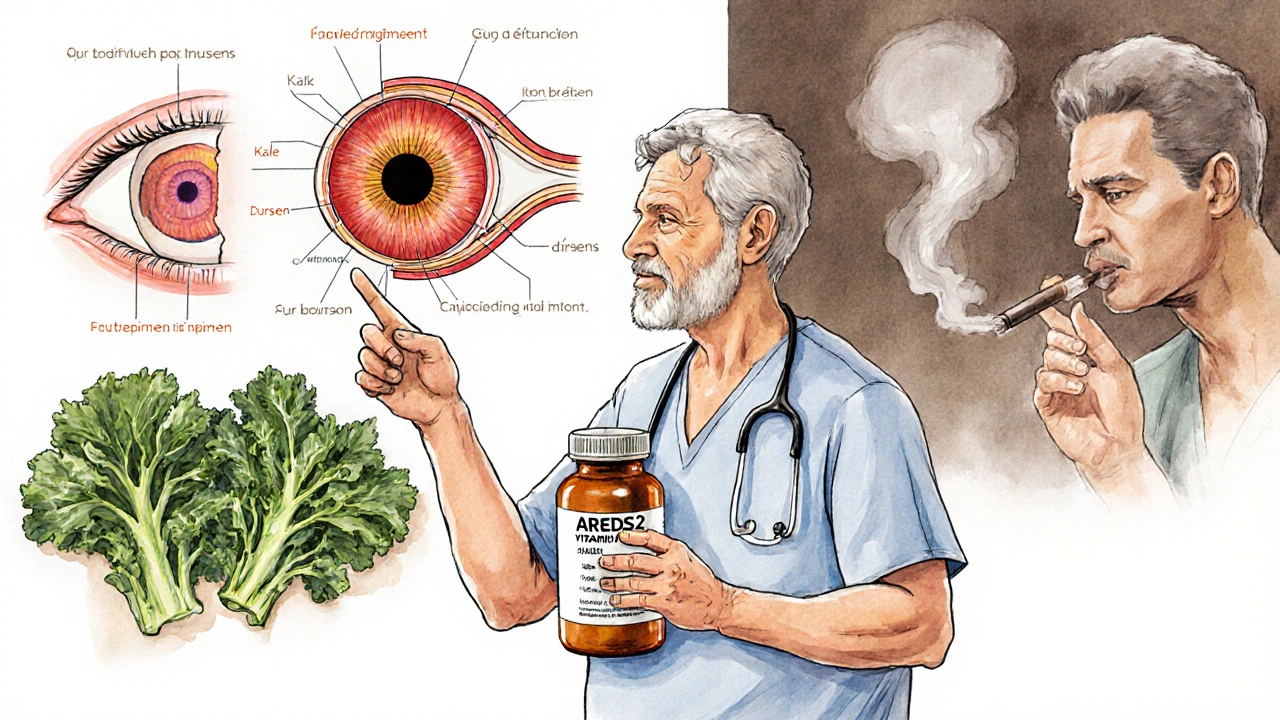
AREDS2 supplements, a specific formula of vitamins and minerals proven to reduce the risk of advanced AMD in certain patients are often recommended by eye doctors for those with intermediate dry AMD. But they’re not magic pills—they work only for specific stages and won’t restore lost vision. anti-VEGF injections, a treatment for wet AMD that stops abnormal blood vessel growth can stabilize vision in many cases, and some patients even see improvement. These treatments require ongoing visits to a retina specialist, which many people delay because they’re expensive or inconvenient.
There’s no cure, but there’s plenty you can control. Quitting smoking cuts your risk in half. Wearing UV-blocking sunglasses every day helps. Monitoring your vision at home with an Amsler grid can catch wet AMD early—before it’s too late. And if you’re on long-term medications like steroids or certain blood pressure drugs, talk to your doctor about eye health. Many people assume vision loss is just part of getting older. It’s not. It’s a condition with real warning signs, real risks, and real ways to act.
Below, you’ll find real, practical advice from people who’ve lived with this condition, doctors who treat it, and studies that show what actually works. No fluff. No hype. Just what you need to know to protect your sight.
AMD Vitamins: What the AREDS2 Evidence Says and Who Should Take Them
AREDS2 vitamins are proven to slow progression of intermediate and late-stage age-related macular degeneration-but only for specific patients. Learn who should take them, who shouldn't, and what actually works for eye health.
View More