
AMD Supplements: What Works, What Doesn't, and What to Avoid
When it comes to age-related macular degeneration (AMD), a leading cause of vision loss in people over 50 that damages the central part of the retina. Also known as macular degeneration, it doesn't cause total blindness—but it can make reading, driving, and recognizing faces nearly impossible. The good news? Certain AMD supplements, specific vitamins and minerals shown in clinical trials to slow progression of intermediate to advanced AMD may help preserve your sight longer.
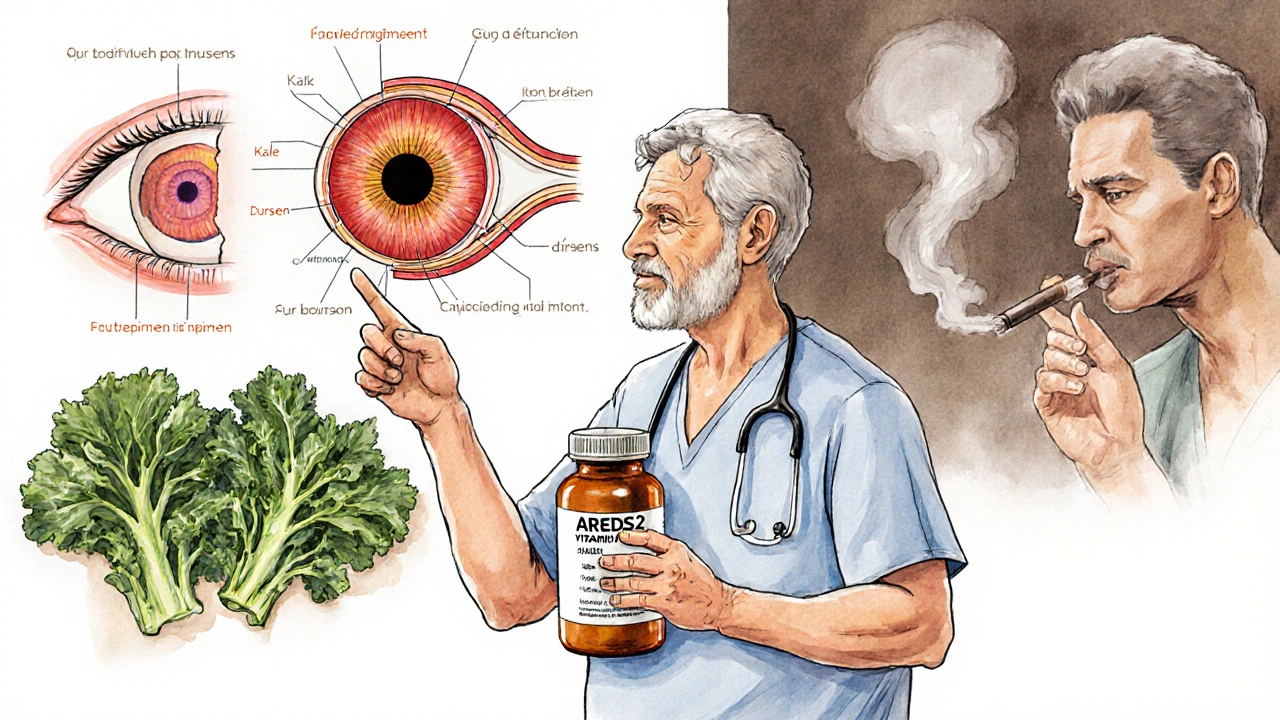
The AREDS2 formula, a scientifically tested combination of nutrients developed by the National Eye Institute is the only supplement regimen backed by solid, repeatable research. It includes lutein, zeaxanthin, vitamin C, vitamin E, zinc, and copper. Not all supplements are created equal. Many brands claim to support eye health, but only those matching the AREDS2 profile have proven results. Skip products with beta-carotene—it increases lung cancer risk in former smokers. Also avoid high-dose vitamin E or copper-free formulas; they either don’t work or could harm you.
Lutein and zeaxanthin, two carotenoids found in green leafy vegetables, are the stars of the formula. They act like natural sunglasses for your retina, filtering out harmful blue light. Studies show people who take these daily, especially those with low dietary intake, reduce their risk of advanced AMD by about 25%. Zinc helps maintain retinal health, but too much can cause stomach issues. That’s why the AREDS2 version uses a moderate, safe dose. Vitamin C and E are antioxidants that fight oxidative stress, a key driver of retinal damage.
Here’s the hard truth: AMD supplements won’t restore lost vision or cure the disease. They’re not magic pills. But if you have intermediate AMD—or advanced AMD in one eye—they can delay progression to the point where you lose central vision. That’s not a small thing. It means keeping your independence longer. People who take them consistently are more likely to still drive, read the newspaper, or see their grandkids’ faces years later.
What about other popular eye supplements? Omega-3s from fish oil? They sound great, but large trials found no added benefit beyond AREDS2. Bilberry? No solid proof. Astaxanthin? Promising in labs, but not yet proven in humans. Stick to what’s tested. And don’t assume more is better—taking double the dose won’t give you double the protection. It might just give you a headache or kidney stones.
If you’re over 50 and have been diagnosed with early signs of AMD, talk to your doctor before starting anything. Some supplements interfere with blood thinners or affect how your body absorbs other medications. Your eye doctor can tell you if you’re in the right stage to benefit—and which exact formula to choose. Don’t rely on store shelves or ads. The right blend matters.
Below, you’ll find real-world breakdowns of what works, what doesn’t, and how to pick the right product without falling for marketing hype. No fluff. Just what the science says—and what you need to know to protect your vision.
AMD Vitamins: What the AREDS2 Evidence Says and Who Should Take Them
AREDS2 vitamins are proven to slow progression of intermediate and late-stage age-related macular degeneration-but only for specific patients. Learn who should take them, who shouldn't, and what actually works for eye health.
View More