
AREDS2 Vitamins: What They Are, Who Needs Them, and What the Science Says
When it comes to protecting your vision as you age, AREDS2 vitamins, a specific blend of antioxidants and minerals proven in clinical trials to slow the progression of age-related macular degeneration. Also known as Age-Related Eye Disease Study 2 formula, it’s not just another supplement—it’s one of the few eye health products backed by large-scale, peer-reviewed research. Unlike generic multivitamins, AREDS2 was designed by scientists after testing over 4,000 people with moderate to advanced macular degeneration. The results? A 25% reduction in progression to severe vision loss.
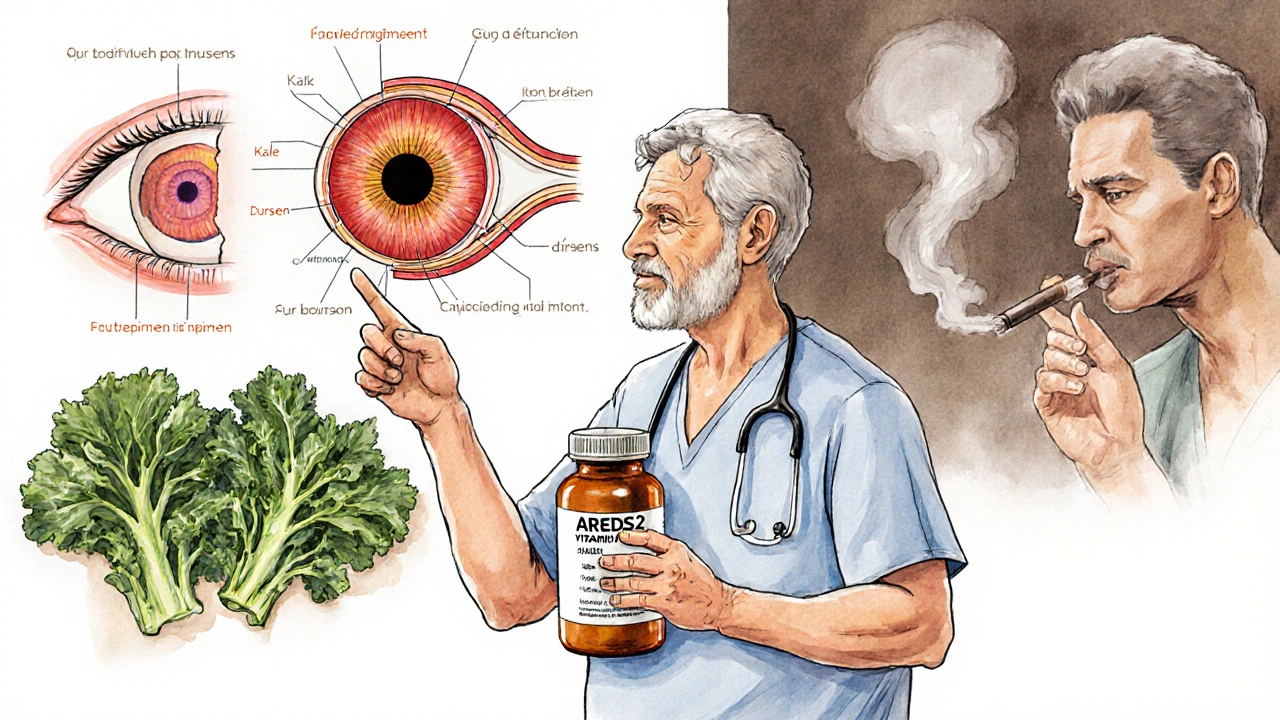
The formula isn’t complicated, but the details matter. It includes lutein, a carotenoid found in leafy greens that filters harmful blue light and protects the retina, and zeaxanthin, a close cousin of lutein that concentrates in the central part of the macula. Together, they replaced beta-carotene in the original AREDS formula because studies showed beta-carotene increased lung cancer risk in smokers. AREDS2 also contains vitamin C, vitamin E, zinc, and copper—each chosen for its role in neutralizing oxidative stress, which damages eye cells over time.
These vitamins don’t restore lost vision. They don’t prevent macular degeneration from starting. But if you’ve been diagnosed with intermediate or advanced dry AMD, taking AREDS2 daily can make a real difference in keeping your sight longer. People with early signs or no disease at all don’t benefit—and may even be at risk from excess zinc or vitamins. That’s why you shouldn’t grab any bottle labeled "eye health" off the shelf. Only the exact AREDS2 formulation, with the right doses, has been tested and proven.
What you won’t find in AREDS2? Omega-3s. Early studies looked at fish oil, but the final trial showed no added benefit. What you will find? A clear, science-backed recipe. The National Eye Institute, part of the NIH, still recommends it. Doctors still prescribe it. And millions of people over 50 take it every day—not because it’s trendy, but because it works.
Some people wonder if buying generic brands is okay. The answer is yes—if they match the exact amounts: 10 mg lutein, 2 mg zeaxanthin, 500 mg vitamin C, 400 IU vitamin E, 80 mg zinc, and 2 mg copper. Anything less, and you’re not getting the tested dose. Anything more, and you could be risking side effects.
Below, you’ll find real discussions from people managing eye health, comparing supplements, and asking what works after diagnosis. These aren’t ads. They’re questions from patients, caregivers, and those trying to make sense of a confusing market. Whether you’re newly diagnosed, helping a parent, or just curious about what science says about eye vitamins, the posts here cut through the noise.
AMD Vitamins: What the AREDS2 Evidence Says and Who Should Take Them
AREDS2 vitamins are proven to slow progression of intermediate and late-stage age-related macular degeneration-but only for specific patients. Learn who should take them, who shouldn't, and what actually works for eye health.
View More