
Eye Health Vitamins: What Really Works for Vision and Long-Term Eye Care
When it comes to keeping your eyes sharp as you age, eye health vitamins, nutrients specifically linked to maintaining vision and reducing risk of age-related eye conditions. Also known as vision-supporting supplements, they’re not magic pills—but they can make a real difference when used the right way. Your eyes don’t just need good lighting and screen breaks. They need specific nutrients that your body can’t make on its own, and that most diets don’t provide in enough amounts.
Lutein, a carotenoid pigment found in green leafy vegetables that filters harmful blue light and protects the retina. It’s one of the most studied compounds for eye health. Zeaxanthin, a close cousin of lutein that concentrates in the macula to shield central vision. Together, they form a natural shield against sunlight damage. Studies show people who get enough of both have a lower chance of developing macular degeneration. You won’t find these in your average multivitamin—they need to be taken in specific doses, usually 10–20 mg of lutein and 2 mg of zeaxanthin daily.
Then there’s omega-3 fatty acids, essential fats that reduce inflammation in the eyes and help with dry eye symptoms. Found in fatty fish like salmon and sardines, or in fish oil supplements, they’re not just for your heart. If you’re constantly rubbing your eyes or feeling gritty, dryness might be your body telling you it needs more omega-3s. And don’t overlook zinc—it helps your body absorb vitamin A, which is critical for night vision. Vitamin C and E? They’re antioxidants that team up to fight free radicals that damage eye tissue over time.
But here’s the catch: taking random supplements won’t fix poor habits. If you’re on your phone all day, skipping veggies, or smoking, no pill will fully protect you. Eye health vitamins work best as part of a bigger picture—good nutrition, regular eye exams, and protecting your eyes from UV light. They’re not a cure, but they’re one of the few proven tools you can use to slow down vision loss before it starts.
What you’ll find below are real, no-fluff breakdowns of what actually helps, what doesn’t, and which products or dosages are backed by science—not marketing. From comparing lutein brands to understanding why some supplements fail, these posts give you the facts you need to make smarter choices for your eyes.
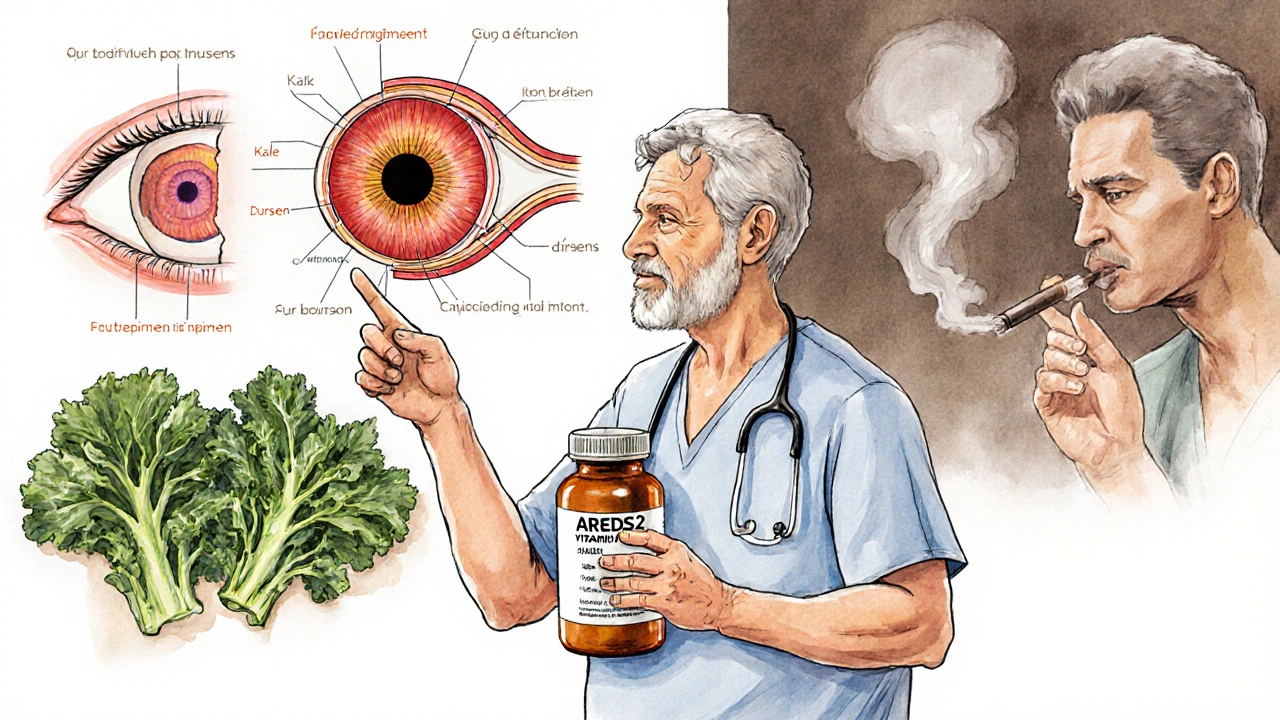
AMD Vitamins: What the AREDS2 Evidence Says and Who Should Take Them
AREDS2 vitamins are proven to slow progression of intermediate and late-stage age-related macular degeneration-but only for specific patients. Learn who should take them, who shouldn't, and what actually works for eye health.
View More