
Lutein and Zeaxanthin: What They Do for Your Eyes and Why You Need Them
When you think about eye health, you probably think about glasses or eye exams. But there’s something deeper going on inside your eyes — something your eyes can’t make on their own. Lutein, a yellow carotenoid pigment found in leafy greens and egg yolks. Also known as macular pigment, it collects in the macula, the part of your eye that handles sharp central vision. Alongside zeaxanthin, a closely related compound that works hand-in-hand with lutein. Together, they form a natural shield against damaging blue light from screens and sunlight. These aren’t just supplements — they’re essential nutrients your body can’t produce, so you have to get them from food or pills.
What makes lutein and zeaxanthin different from other antioxidants? They don’t just float around in your blood. They actually settle into your retina, acting like internal sunglasses. Studies show people with higher levels of these pigments have a 40% lower risk of developing advanced age-related macular degeneration — the leading cause of vision loss in people over 60. And it’s not just about aging. If you spend hours staring at phones, laptops, or LED screens, these two compounds help reduce digital eye strain by filtering out the harshest wavelengths of light. They also fight oxidative stress, which is linked to cataracts and other eye conditions. You won’t feel them working, but if you’re over 40 or have a family history of vision problems, skipping them is like driving without seatbelts.
Where do you get them? Spinach, kale, collard greens, and Swiss chard are top sources — a single cup of cooked spinach gives you more than 20 milligrams of lutein and zeaxanthin combined. Egg yolks are another great source because the fat helps your body absorb them better. Supplements exist, but food first. Most people don’t get even 2 milligrams a day, while research suggests 10 milligrams of lutein and 2 milligrams of zeaxanthin daily offer the best protection. You don’t need fancy pills — just more greens on your plate. And if you’re taking other supplements, know this: lutein and zeaxanthin don’t clash with most medications. They play nice with blood pressure drugs, statins, even diabetes meds. No dangerous interactions here.
What you’ll find in the posts below isn’t just a list of articles. It’s a practical guide to how these nutrients fit into real life — from what foods actually work, to how they interact with other supplements, to what science says about dosing and long-term use. No fluff. No hype. Just what you need to know to protect your vision before it’s too late.
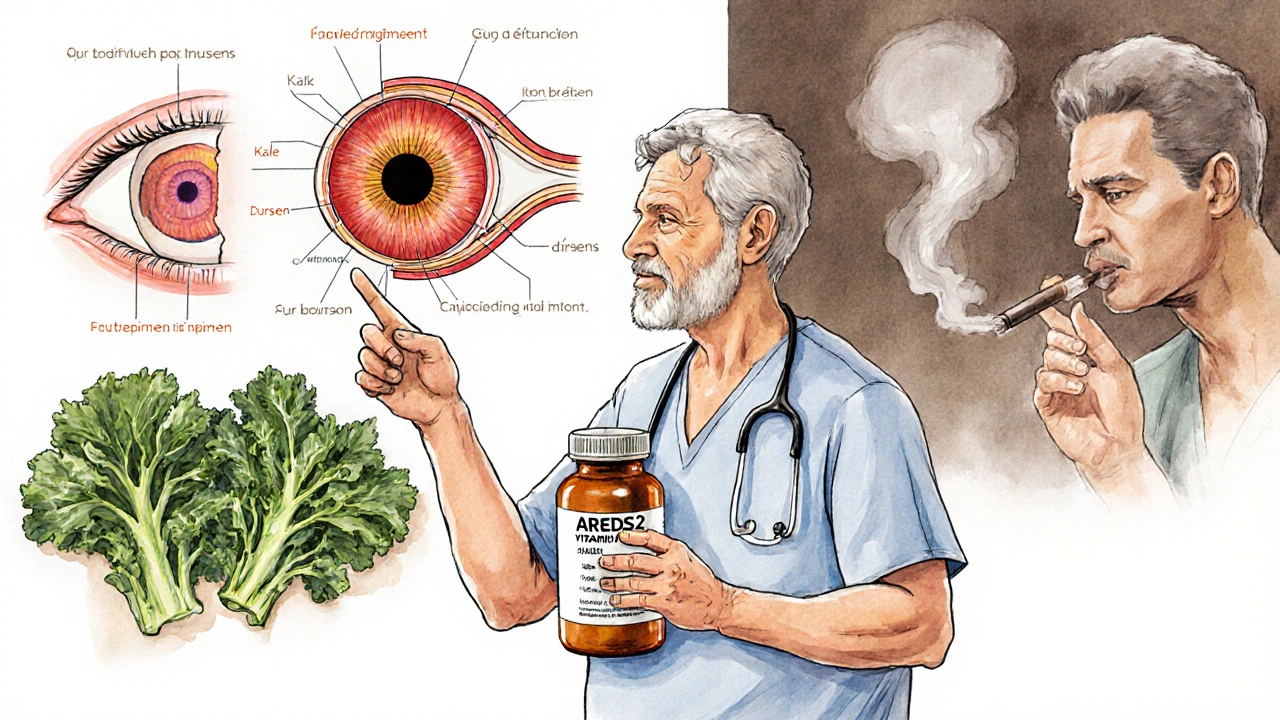
AMD Vitamins: What the AREDS2 Evidence Says and Who Should Take Them
AREDS2 vitamins are proven to slow progression of intermediate and late-stage age-related macular degeneration-but only for specific patients. Learn who should take them, who shouldn't, and what actually works for eye health.
View More