
What’s the real difference between a cold and the flu?
You wake up with a sore throat, a runny nose, and a headache. Is it just a cold, or could it be the flu? Many people treat them the same way - rest, fluids, maybe some zinc lozenges. But the truth is, flu and the common cold are not the same illness. They’re caused by different viruses, behave differently in your body, and require completely different responses. Mixing them up can cost you time, money, and even your health.
How symptoms show up - fast or slow?
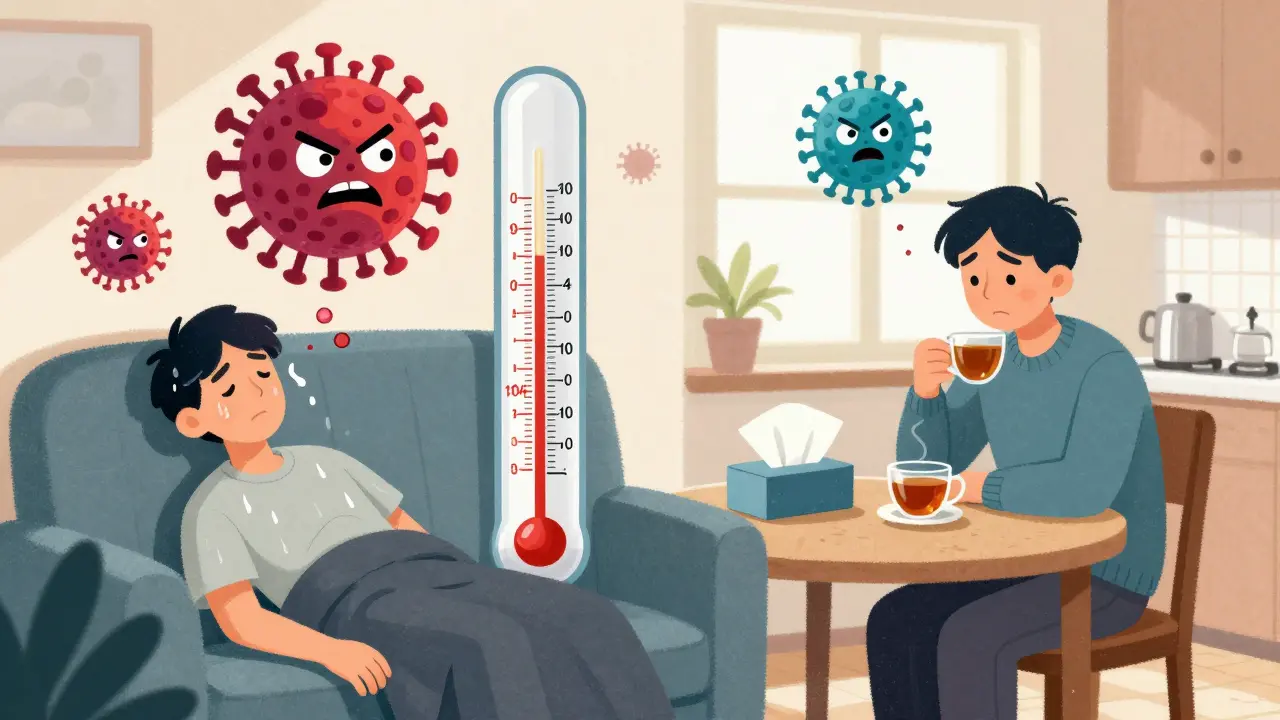
Flu hits like a truck. One moment you’re fine, the next you’re feverish, achy, and too tired to get out of bed. Symptoms usually appear within 1 to 4 days after exposure, often within 24 hours. Fever? Common - around 85% of flu cases have a fever over 100°F (37.8°C), sometimes spiking to 104°F (40°C). Muscle pain? Nearly 80% of people feel it. Headache? 75%. Fatigue? That’s the big one. You don’t just feel tired - you feel drained, like your bones are heavy, and it can last for weeks.
Now, a cold? It creeps in. Over two or three days, you notice a scratchy throat, then a stuffy nose, maybe a mild cough. Fever? Rare in adults - only 15 to 20% get one, and if they do, it’s usually under 100°F. You might feel a little off, but you can still function. Most colds resolve in 7 to 10 days. The worst part? The constant drip, the blocked nose, the need to blow your nose every five minutes.
Why fatigue matters - and why it’s a red flag
Extreme exhaustion is the single biggest clue that you’ve got the flu, not a cold. In fact, 60% of flu patients report this level of fatigue - and it’s never seen in true cold cases. If you’re lying on the couch and can’t muster the energy to check your phone, that’s not just being lazy. That’s your body fighting a serious viral invasion.
Flu also commonly causes chest discomfort - a tightness or deep cough that feels like it’s coming from your lungs. That’s not normal with a cold. In colds, coughs are usually mild and come from the throat. In flu, it’s deeper, wetter, and more persistent. If your chest hurts when you breathe or cough, don’t wait. Get checked.
Complications: When a cold turns dangerous
Most colds end with you blowing your last tissue and going back to life. But flu? It can turn deadly. Each year in the U.S., flu leads to 140,000 to 710,000 hospitalizations and 12,000 to 52,000 deaths. That’s not a small number - it’s bigger than most car accident fatalities.
The biggest risk? Pneumonia. Flu weakens your lungs, making it easy for bacteria to move in. About 15 to 30% of people hospitalized for flu develop pneumonia. Other complications include heart inflammation, brain swelling, and worsening of chronic conditions like asthma or diabetes.
Colds rarely cause serious problems. The most common complication is a sinus infection (5% of cases) or an ear infection (10% in kids). These are usually mild and treatable with antibiotics if they turn bacterial. But if you’ve got the flu and your symptoms get worse after day 3 - higher fever, shortness of breath, confusion - that’s not normal. That’s a warning sign.
Who’s at highest risk?
Flu doesn’t care who you are - but it hits some people harder. Adults over 65 account for 70 to 85% of flu-related deaths. Pregnant women are three times more likely to be hospitalized. People with weakened immune systems - from cancer treatment, HIV, or organ transplants - are also at serious risk. Even healthy kids under 5 can get dangerously ill.
And here’s something most people don’t realize: flu can cause vomiting and diarrhea. In the 2022-2023 season, nearly half of flu patients reported gastrointestinal symptoms. That’s why some people think they’ve got the stomach flu - but that’s not a real thing. It’s just flu messing with your gut.
Antivirals: What they can - and can’t - do
There are four FDA-approved antiviral drugs for flu: oseltamivir (Tamiflu), zanamivir (Relenza), peramivir (Rapivab), and baloxavir (Xofluza). None of them work for the common cold. None. Ever. Taking antivirals for a cold is like using a fire extinguisher on a candle - pointless and wasteful.
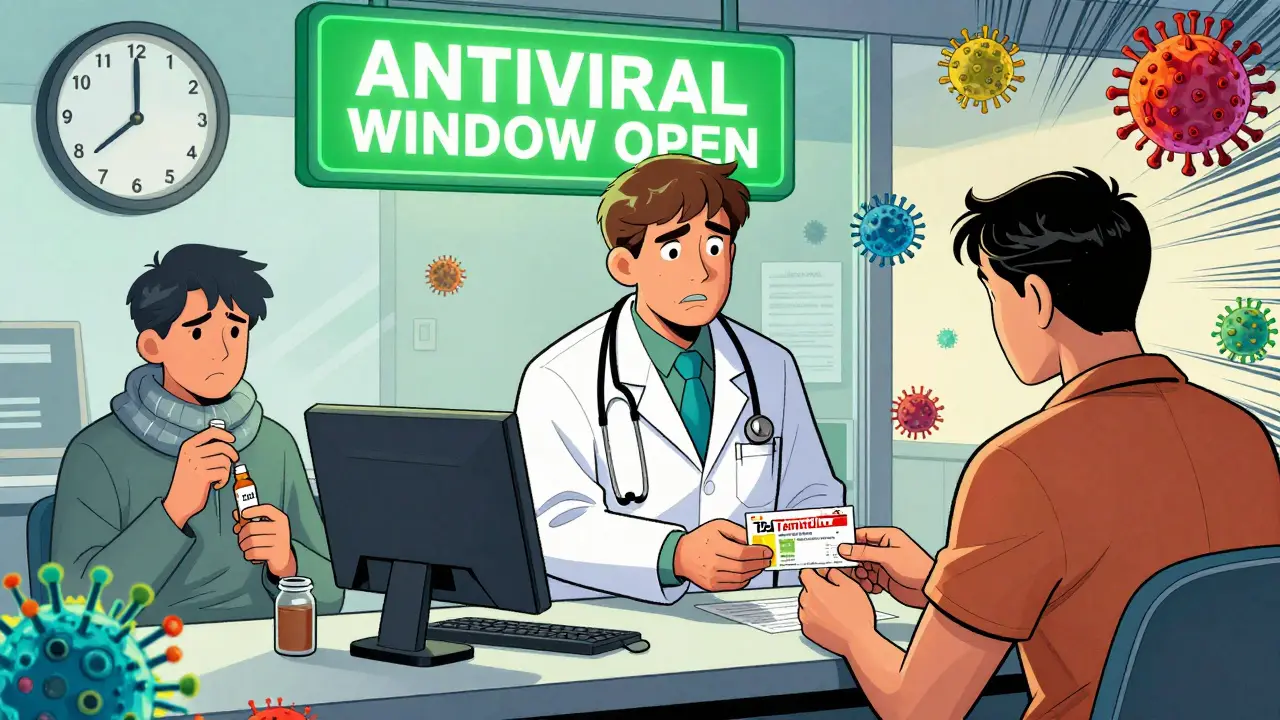
But for flu? They’re powerful. If you start them within 48 hours of symptoms, they can shorten your illness by 1 to 2 days and cut your risk of hospitalization by up to 35%. That’s huge. One patient in Sydney told me: “I got Tamiflu 12 hours after my fever hit. I was back at work in three days instead of seven.”
Here’s the catch: timing matters. If you wait three days, the window closes. The virus has already done most of its damage. That’s why so many people miss out - they don’t realize how fast flu moves.
Cost is another issue. Generic oseltamivir runs $15-$30. Brand-name Tamiflu? $100-$160 without insurance. Xofluza? One pill, $150-$200. Insurance helps, but not everyone can afford it. Some people skip it because they think their case is “mild.” But mild flu can still turn severe - especially if you’re over 65 or have asthma.
What about cold treatments?
There’s no cure for the common cold. No antiviral. No vaccine. Just symptom relief. Decongestants like pseudoephedrine reduce nasal stuffiness by 30-40%. Acetaminophen lowers fever and eases aches. Zinc lozenges? Some studies say they can cut cold duration by 1.6 days if you start them within 24 hours of symptoms. But they come with a nasty side effect - metallic taste. One user on Reddit said, “I gagged after the first lozenge. Couldn’t finish the pack.”
And don’t fall for the “vitamin C cures colds” myth. Studies show it might shave off half a day at most - and only if you take it daily before you get sick. Taking it after symptoms start? No benefit.

Flu vs. COVID-19: How to tell them apart
With COVID-19 still around, it’s harder than ever to guess what’s causing your symptoms. Flu and COVID share cough, fever, fatigue, and sore throat. But there’s one key difference: loss of taste or smell. That was a hallmark of early COVID cases - present in 80% of people. It’s less common now, but still more likely with COVID than flu.
Also, flu hits harder and faster. COVID symptoms often build over several days. Flu? You’re down in hours. If you’re unsure, get tested. Rapid flu tests give results in 15 minutes. They’re not perfect - but they’re better than guessing.
When to see a doctor
You don’t need to run to the clinic for a cold. But for flu, timing is everything. Call your doctor if:
- Your fever stays above 102°F (38.9°C) for more than two days
- You’re having trouble breathing or feel short of breath
- Your chest pain is sharp or constant
- You’re confused, dizzy, or can’t stay awake
- You’re in a high-risk group (over 65, pregnant, diabetic, etc.)
Don’t wait for symptoms to get worse. If you think it’s flu and you’re eligible for antivirals, ask for them on day one. Don’t wait for a test. Many doctors will prescribe based on symptoms alone during flu season.
What’s new in flu treatment and prevention
The 2023-2024 flu vaccine covers four strains, including two new ones: A/Victoria/4897/2022 and A/Darwin/9/2021. It’s the best tool we have - but it’s not perfect. Effectiveness varies from 40% to 60% each year. That’s why antivirals still matter.
Future vaccines are coming. Moderna’s mRNA flu vaccine is in late-stage trials. If it works, it could be more effective and faster to produce. Researchers are also working on a “universal” flu vaccine that targets parts of the virus that don’t change every year. Early animal studies show 70% protection across strains.
Meanwhile, resistance is growing. About 1.5% of H1N1 flu strains are now resistant to oseltamivir. That’s why having multiple antiviral options matters.
Bottom line: Know the signs, act fast
Flu isn’t just a bad cold. It’s a serious illness that can kill. The common cold? Annoying, but rarely dangerous. The difference isn’t just in symptoms - it’s in what you do next.
If you feel sudden, severe illness with fever and body aches - don’t wait. Get tested. Ask about antivirals. If you’re over 65, pregnant, or have a chronic condition, this is non-negotiable.
If it’s a slow-starting runny nose and scratchy throat - rest, hydrate, and skip the antivirals. They won’t help. And if you’re unsure? Call your doctor. Better safe than sorry.
Flu season doesn’t end in March. In Australia, it peaks between June and August. Stay alert. Stay informed. And don’t let a simple misunderstanding cost you your health.
Can you get the flu and a cold at the same time?
Yes, it’s possible - though rare. Your immune system can fight multiple viruses at once. But if you’re sick with both, symptoms will likely be more severe and last longer. The flu will dominate the picture, so focus on treating flu first. If symptoms don’t improve after a week, see a doctor to rule out secondary infections.
Do antivirals prevent the flu if you’ve been exposed?
Yes - but only in specific cases. Antivirals like oseltamivir can be used for post-exposure prevention in high-risk people (like those in nursing homes or with weakened immune systems) if taken within 48 hours of contact with someone who has the flu. This is called chemoprophylaxis. It’s not for healthy adults or general use - it’s reserved for those at serious risk of complications.
Is the flu shot worth it if antivirals exist?
Absolutely. The flu shot reduces your chance of getting sick by 40-60% and cuts your risk of hospitalization by half if you do get infected. Antivirals treat the illness after it starts - the vaccine stops it before it begins. They’re not alternatives. They’re partners. Use both.
Why can’t we make an antiviral for the common cold?
There are over 160 different strains of rhinovirus - the main cause of colds. Each one is slightly different. Creating a drug that works against all of them is like trying to build one key that opens 160 different locks. It’s scientifically possible, but not economically feasible. Pharmaceutical companies focus on flu because it’s more dangerous and has fewer strains.
Can zinc really shorten a cold?
Some studies say yes - if you take 75mg of elemental zinc within 24 hours of symptoms starting. But results are mixed. Some people get relief. Others get nausea or a bad taste. Long-term use can cause copper deficiency. It’s not a magic bullet, but for some, it’s worth a try - just don’t expect miracles.
Should I go to work if I have a cold?
If your symptoms are mild - runny nose, slight cough, no fever - you can probably work. But if you’re coughing, sneezing, or blowing your nose constantly, you’re spreading germs. Most workplaces have policies for this for a reason. Stay home if you can. It’s better for you, your coworkers, and your boss.
15 Comments

Adarsh Uttral
February 2, 2026 at 01:40 AM
bro i took zink lozenges for a cold and my mouth felt like i licked a battery. still got sick for 10 days. waste of money.

Sheila Garfield
February 3, 2026 at 02:10 AM
I’ve had both flu and a cold this winter. Flu felt like someone punched me in the chest and then set my insides on fire. Cold? More like a persistent, annoying roommate. The fatigue difference is real. You can’t fake being that wiped.

Sarah Blevins
February 4, 2026 at 04:55 AM
The article cites outdated CDC data. The 2023-2024 flu hospitalization estimates were revised downward by 18% in the MMWR supplement. Also, zinc lozenge efficacy is statistically insignificant in meta-analyses after controlling for publication bias.

Jason Xin
February 4, 2026 at 05:12 AM
So let me get this straight - you’re telling me I should pay $200 for a single pill to maybe shave off a day of feeling like garbage... while I’m already on a 12-hour shift? Sounds like a pharmaceutical marketing scheme dressed up as medicine.

Bobbi Van Riet
February 5, 2026 at 21:58 PM
I’m a nurse and I’ve seen this a hundred times - people wait until day 4 to come in because they think it’s just a cold, then they’re gasping for air by day 5. Antivirals aren’t magic, but they’re the closest thing we’ve got. And honestly, if you’re over 50 or have asthma, you’re not being ‘dramatic’ if you ask for them on day one. You’re being smart. I had a 72-year-old patient last week who got Tamiflu at 36 hours - she was back gardening in four days. Her neighbor waited, got pneumonia, and spent a month in rehab. It’s not fearmongering. It’s facts.

Holly Robin
February 7, 2026 at 13:59 PM
They’re lying about the flu vaccine. The CDC admits it’s only 40% effective, but they still push it like it’s a miracle cure. And antivirals? Big Pharma’s way to keep you dependent. I got the flu last year and just drank apple cider vinegar and garlic tea. Back to work in 2 days. No drugs needed. The system wants you weak and buying pills.

KATHRYN JOHNSON
February 8, 2026 at 07:38 AM
If you’re too lazy to get a flu shot, don’t blame the system when you end up in the hospital. Americans think rest and fluids are a cure-all. They’re not. This is why our healthcare costs are insane.

Kelly Weinhold
February 9, 2026 at 07:33 AM
You guys are overthinking this. If you feel off, rest. Drink water. Eat soup. If it gets worse, call your doc. No need to panic. The body’s amazing at healing itself - if you let it. I’ve never taken antivirals and I’m 62. Still hiking every weekend. Trust your body, not the ads.

Eliana Botelho
February 11, 2026 at 02:26 AM
Wait - so if I get a cold and take zinc, I might get a metallic taste and still be sick for 7 days? But if I get the flu, I can take a pill and be back in 3 days? So the flu is somehow easier to treat than a cold? That doesn’t make sense. Why do we even have colds if we can’t treat them? Sounds like a scam to me.

Diksha Srivastava
February 12, 2026 at 09:29 AM
I'm from India and we don't have access to Tamiflu here unless you're rich. But we know the signs - if you can't get up to pee, it's flu. Rest, ginger tea, and steam. We've been doing this for generations. No need for fancy pills.

Shawn Peck
February 13, 2026 at 22:27 PM
Zinc? No. Vitamin C? No. Antivirals? Only if you're old or weak. The real fix? Sleep. 8 hours. Every night. That’s it. You think science is magic? Nah. It’s just rest. Stop buying stuff.

Diana Dougan
February 15, 2026 at 09:34 AM
So the article says flu hits fast... but also says it can take 4 days? Which is it? And why does it say ‘chest discomfort’ is a flu thing but then says colds can cause cough? That’s not a distinction, that’s a contradiction. Also, ‘stomach flu’ isn’t real? Says who? My cousin threw up for 3 days last year and called it stomach flu. He wasn’t wrong.

Lily Steele
February 16, 2026 at 21:05 PM
I just want to say thank you for writing this. I had no idea the fatigue was such a red flag. Last week I brushed off my symptoms as stress. Now I know I had flu. Got antivirals on day 2. Made all the difference. You saved me a week of misery.

Gaurav Meena
February 18, 2026 at 00:39 AM
This is gold. Sharing with my family in Delhi. We always mix up cold and flu. Now we know - if you can't move, it's flu. If you can still scroll TikTok, it's a cold. And yes, zinc tastes like regret 😅 Stay safe, everyone!
Sidhanth SY
January 31, 2026 at 11:12 AM
I got hit with flu last year and thought it was just a bad cold. Ended up in the ER. Don't wait. If you feel like your bones are made of lead, get tested. Antivirals saved me.