
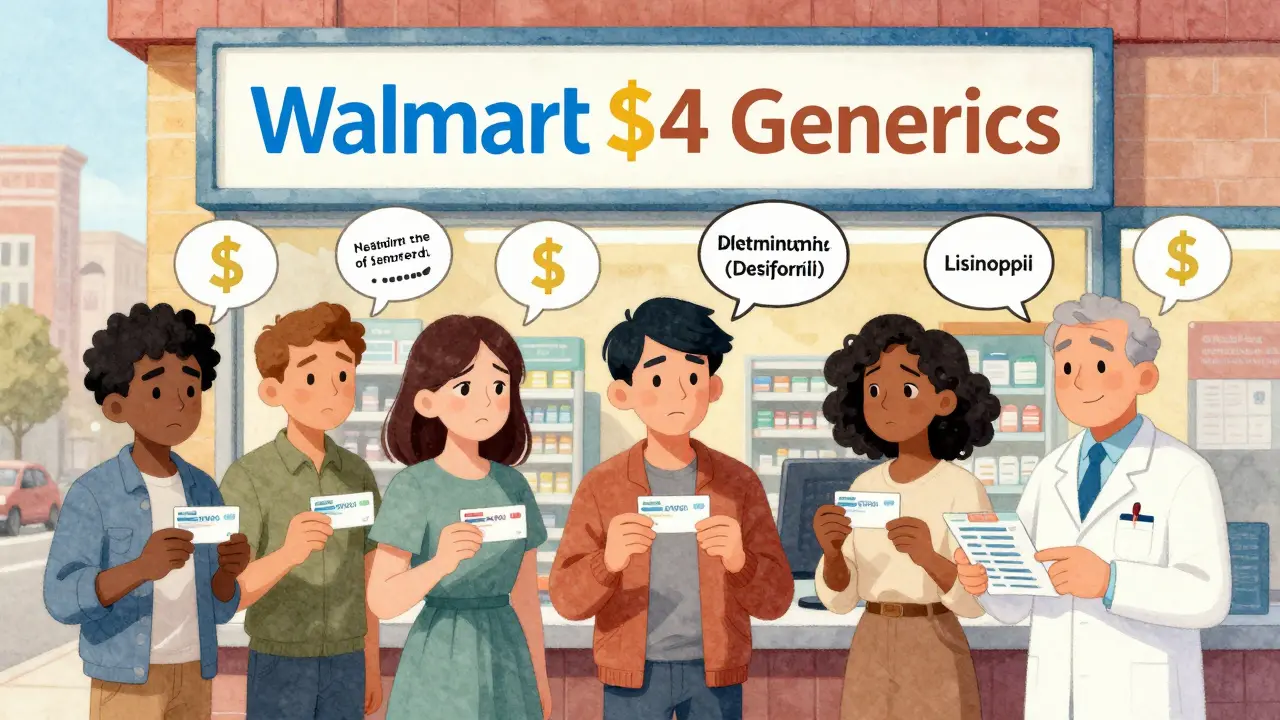
Many people assume that because generic medications are cheaper, they don’t need financial help. But that’s not true. Even though generics cost 80-85% less than brand-name drugs, many Americans still struggle to pay for them-especially those who earn too much for Medicaid but not enough to afford monthly copays. If you’re taking levothyroxine, metformin, lisinopril, or any other common generic, you’re not alone. In 2023, nearly 26% of U.S. adults said they had trouble affording their prescriptions, and almost half take at least one prescription drug every month. The good news? Help exists. The hard part is knowing where to look.
Why Generics Still Cost Too Much
Generic drugs aren’t free. Even with insurance, your copay might be $10, $15, or even $20 per prescription. For someone taking three or four generics a month, that adds up to $60-$80 before taxes. Multiply that by 12 months, and you’re spending $720-$960 a year just on medications that should be affordable. For seniors on fixed incomes, or workers juggling two jobs, that’s not a small expense-it’s a burden. The problem isn’t the price of the drug. It’s how the system works. Brand-name drug makers often offer copay cards that can cut your cost to $0 or $5. But generic manufacturers? They don’t. Their profit margins are razor-thin. They can’t afford to subsidize patients. So the help doesn’t come from the drug company. It comes from elsewhere: pharmacies, government programs, nonprofits.Medicare’s Extra Help Program: The Best Option for Seniors
If you’re on Medicare and your income is low, Extra Help (also called the Low-Income Subsidy) is your most powerful tool. Starting in 2025, this program will cap your generic copay at exactly $4.90 per prescription. That’s it. No more, no less. For brand-name drugs, it’s $12.15. And if you qualify, you won’t pay any deductible at all. To qualify, your annual income must be below $22,590 for a single person or $30,660 for a couple (2025 limits). You automatically qualify if you get Medicaid, Supplemental Security Income (SSI), or a Medicare Savings Program. But even if you don’t, you can still apply. The process takes 45-90 days. You’ll need your tax return, bank statements, and proof of income. Don’t wait-apply early. Thousands of seniors miss out because they think they make “too much,” but the income limits are higher than most people realize. One user on the Medicare Rights Center forum said: “Before Extra Help, I was paying $45 a month for five generics. After? $24.50 total. That’s the difference between eating right and skipping meals.”Pharmacy Discount Programs: No Application Needed
You don’t need insurance to use pharmacy discount programs. These are cash-price deals offered by major chains and independent pharmacies. They’re simple: show a coupon, pay the discounted price, and walk out. - Walmart: $4 for 30-day supply, $10 for 90-day supply on over 150 generics. Includes metformin, lisinopril, atorvastatin, levothyroxine. - Kroger: $15 for 30-day supply on 100+ generics. Includes albuterol, omeprazole, sertraline. - Costco: No membership needed for prescriptions. Generics start at $7-$12. - SingleCare: Free app and website. Shows real-time prices at nearby pharmacies. Saved users $1.2 billion in 2023. These aren’t insurance. They’re cash discounts. You can’t combine them with your insurance copay-so if your insurance charges $10 and Walmart charges $4, use Walmart. But if your insurance covers it at $5, stick with insurance. Always compare. A 2024 study found that 62% of patients don’t even ask about these discounts. Pharmacists say it’s because people assume the price on their insurance statement is the lowest. It’s not.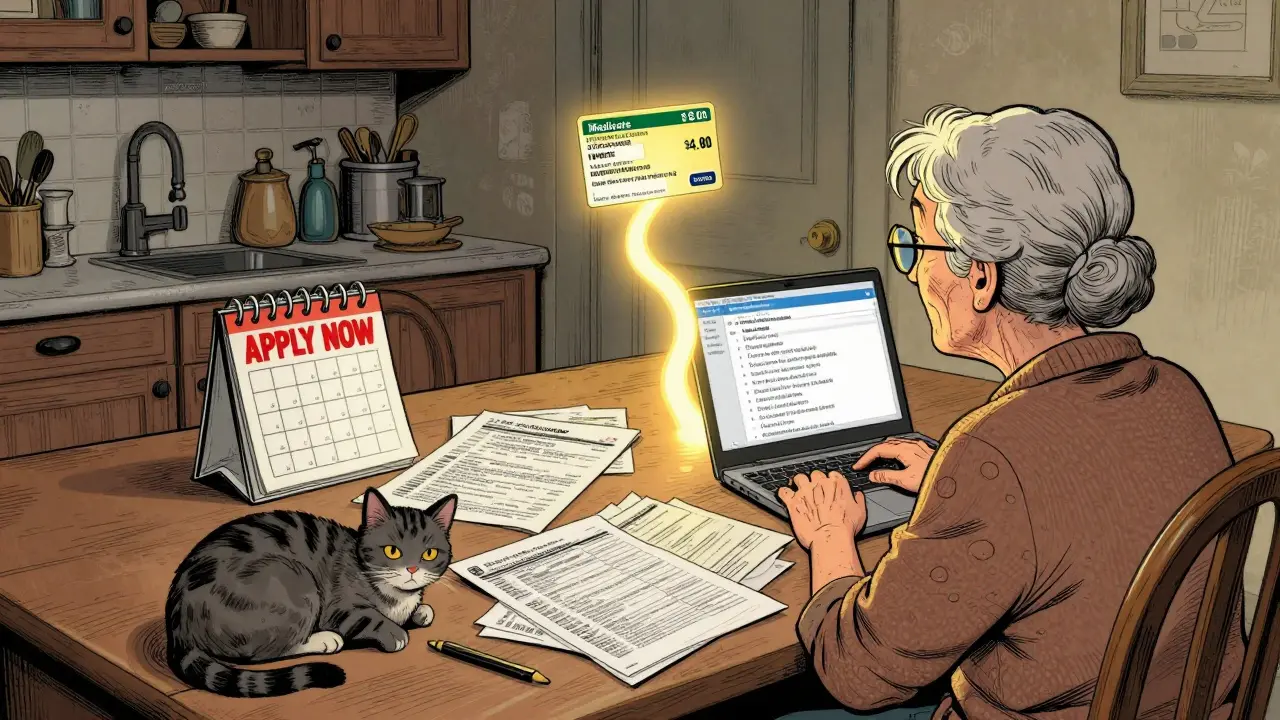
The Assistance Gap: Who Gets Left Behind
The biggest problem isn’t the poor. It’s the near-poor. Someone making $2,100 a month ($25,200 a year) might earn just above Medicaid limits. They don’t qualify for Extra Help. They don’t get manufacturer copay cards. Their insurance charges $16 for levothyroxine, $10 for metformin, $6 for lisinopril. That’s $32 a month. It’s not $100. But it’s still too much when rent, food, and car payments are eating up the rest. This group-earning between 250% and 400% of the federal poverty level-is stuck in what experts call the “assistance gap.” In 2023, nonprofit NeedyMeds approved only 12% of applications from this group. The rest were turned away because they didn’t meet strict income cutoffs. Dr. Erin Trish from USC put it plainly: “The absence of targeted copay assistance for generics creates a hidden burden for low-wage workers who fall through the cracks.”Nonprofit Assistance: PAN Foundation and Others
Organizations like the PAN Foundation, Patient Access Network (PAN), and HealthWell Foundation offer grants to help with copays. But they’re picky. Most only help with drugs used to treat specific chronic conditions-like diabetes, heart disease, or rheumatoid arthritis. If your generic is for high blood pressure or thyroid issues, you’re in luck. If it’s for mild depression or occasional pain, you’re out of luck. As of June 2024, only 17 of PAN’s 72 programs covered drugs that are mostly generic. And approval takes 3 weeks. You need a doctor’s note, proof of income, and your insurance details. It’s not fast, but it works. In 2023, 78% of applicants below 250% of the poverty level got help. Only 12% above that level did.What’s Changing in 2025
Big changes are coming January 1, 2025, thanks to the Inflation Reduction Act. - Medicare Part D patients will hit a hard $2,000 annual out-of-pocket cap (down from $8,300 in 2024). - Extra Help recipients will pay $0 deductible for all drugs. - Insulin (even generic) will cost no more than $2.00 per month. - All Part D plans must now cap quarterly generic costs at $100 during the coverage gap. These changes will cut generic costs for Medicare beneficiaries by 57%, according to CMS projections. That’s huge. But it doesn’t fix the problem for people under 65 with private insurance. They still get no manufacturer assistance. They still pay full copays. They still can’t combine discount cards with insurance.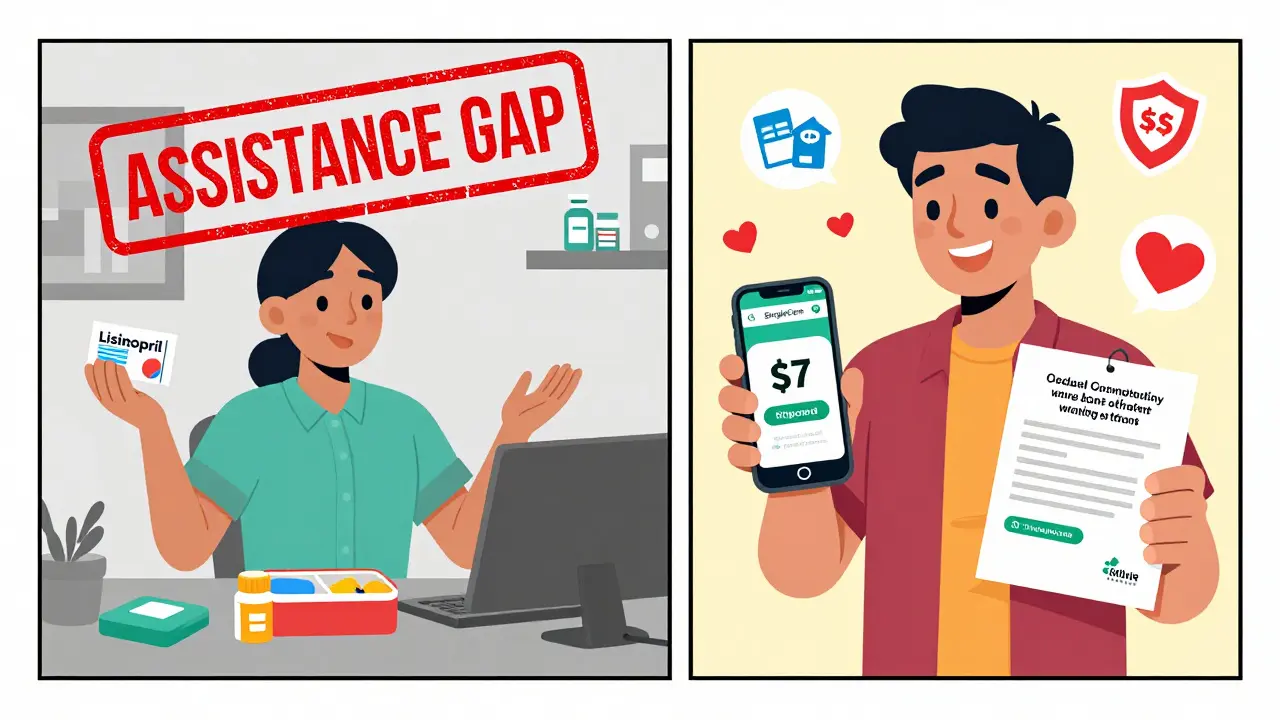
How to Get Help: A Step-by-Step Plan
1. Check your current copay. Write down the cost of each generic you take each month. 2. Search for pharmacy discounts. Go to SingleCare.com or visit Walmart, Kroger, or Costco. Compare their cash prices to your insurance copay. Use the lower one. 3. Apply for Extra Help if you’re on Medicare. Go to SSA.gov/extrahelp. Even if you think you make too much, apply anyway. 4. Check nonprofit programs. Visit NeedyMeds.org or PANFoundation.org. Search by drug name and income level. 5. Ask your pharmacist. They know what discounts are active. They’ve seen this before. 6. Apply for multiple programs. Successful applicants use an average of 2.3 assistance sources. Don’t settle for one.Common Mistakes to Avoid
- Assuming generics don’t need help. A 2023 study found 38% of people skipped doses because they thought the cost was too high-even though they could’ve paid $4 at Walmart. - Using discount cards with insurance. You can’t combine them. Pick one or the other. - Waiting until you can’t afford it. Apply for Extra Help or nonprofit aid before you run out. Processing takes weeks. - Ignoring state programs. Some states offer additional assistance for low-income residents. Call your State Health Insurance Assistance Program (SHIP). They help for free.Final Thought: You’re Not Alone
You don’t have to choose between medicine and groceries. The system is broken, but help is out there. It’s not perfect. It’s not easy. But it exists. Whether you’re on Medicare, have private insurance, or pay cash, there’s a path to lower your costs. Start with your pharmacy. Then call your local SHIP office. Then check NeedyMeds. Don’t wait until your pills are gone. Take action now.Can I use a pharmacy discount card with my insurance?
No. Pharmacy discount cards like Walmart’s $4 list or SingleCare are cash-price deals. You can’t use them with insurance. You must choose: pay your insurance copay, or pay the discounted cash price. Always compare both before you pay.
Do generic drug manufacturers offer copay cards?
Almost never. Generic manufacturers operate on very thin profit margins and don’t have the funds to offer copay assistance like brand-name drug companies do. Help for generics comes from pharmacies, government programs, and nonprofits-not drug makers.
What if I make too much for Medicaid but still can’t afford my generics?
You’re in what’s called the ‘assistance gap.’ Apply for pharmacy discounts, check nonprofit programs like PAN Foundation, and see if you qualify for Extra Help if you’re on Medicare. Even if you earn above Medicaid limits, you might still qualify for other aid. Don’t assume you’re out of options.
Is the $2,000 out-of-pocket cap in 2025 only for Medicare?
Yes. The $2,000 annual out-of-pocket cap for prescription drugs applies only to Medicare Part D beneficiaries starting January 1, 2025. People with private insurance still face higher costs and no federal cap. However, some employers and state programs may offer their own limits.
How do I know if I qualify for Extra Help?
You qualify if your income is below $22,590/year (single) or $30,660/year (couple) in 2025, and your assets are under $17,220 (single) or $34,360 (couple). You automatically qualify if you get Medicaid, SSI, or a Medicare Savings Program. Apply at SSA.gov/extrahelp-even if you think you don’t qualify. Many people are approved who thought they wouldn’t be.
11 Comments

Amy Lesleighter (Wales)
December 27, 2025 at 02:21 AM
generic meds arent free but they should be. why do we let big pharma and insurance companies play us like this? i skip doses sometimes just to make it last. not proud but its real. walmart $4 program saved my life. no joke. also check out neeedy meds dot org. they help even if you make too much for medicaid. just apply. dont overthink it.

Becky Baker
December 28, 2025 at 16:28 PM
Ugh. Another article telling Americans how to beg for medicine. We’re the richest country on earth. Why are we still letting people choose between insulin and rent? This isn’t a personal responsibility issue - it’s a national disgrace.

Rajni Jain
December 29, 2025 at 23:22 PM
i live in india so i dont get this struggle but my cousin in texas told me she pays $12 for metformin and its killing her budget. i told her to try singlecare app - she did and now pays $7. she cried. not because she was happy but because she felt guilty for not knowing sooner. we need to talk more about this. its not shame its survival.

Sumler Luu
December 30, 2025 at 03:58 AM
Thank you for writing this. I’ve been quietly using pharmacy discounts for years but never knew how many others were struggling in silence. I always tell people to ask their pharmacist - they’re the unsung heroes of this system. No judgment, no paperwork, just help.

sakshi nagpal
December 31, 2025 at 20:34 PM
As someone from India, I find it astonishing that even generic drugs are unaffordable in the U.S. In my country, even branded medications are sold at a fraction of the cost. I hope this awareness spreads - and that policy changes follow. No one should have to ration medicine.

Sophia Daniels
January 1, 2026 at 19:18 PM
Oh sweet mercy. Another ‘here’s how to survive capitalism’ guide. 🙄 You know what’s really broken? The entire system that makes a thyroid pill cost $16 when it costs 2 cents to produce. And now we’re supposed to be grateful for $4 at Walmart like it’s a gift? The pharmaceutical industry is a cartel. The government is complicit. And you? You’re just a cog. Keep comparing prices, honey. It’s cute.

Nikki Brown
January 3, 2026 at 02:25 AM
My mom got Extra Help last year. She thought she made too much - $24k/year. Turned out she qualified. Now her 5 meds cost $24.50/month. Before? $220. She cried. I cried. We didn’t even know you could apply after you turned 65. Why isn’t this on TV? Why isn’t every doctor shouting it from the roof?

Peter sullen
January 3, 2026 at 20:09 PM
It is imperative to underscore that the structural inefficiencies within the pharmaceutical reimbursement paradigm necessitate a multi-pronged, system-level intervention. The absence of manufacturer-sponsored copay assistance for generic therapeutics represents a critical market failure, particularly for the near-poor demographic, who are excluded from both public subsidies and private relief mechanisms. Proactive engagement with state-level SHIP programs and federally subsidized programs such as Extra Help is not merely advisable - it is clinically and ethically obligatory.

Natasha Sandra
January 4, 2026 at 10:16 AM
OMG I just applied for Extra Help yesterday!! 🥹 I thought I made too much but my income is $23k and I got approved in 3 weeks!! Now my lisinopril is $4.90. I’m not crying, you’re crying. 😭💖

Steven Destiny
January 5, 2026 at 02:46 AM
Stop being passive. If you’re paying more than $10 for a generic, you’re being robbed. Go to Walmart. Use SingleCare. Call your SHIP office. Apply for everything. Don’t wait. Don’t apologize. You deserve to live. This isn’t charity - it’s your right.
Fabio Raphael
December 25, 2025 at 13:02 PM
Just last month I was paying $18 for my levothyroxine until I found out Walmart has it for $4. I felt like an idiot for not asking sooner. Pharmacist didn’t even blink when I asked - just handed me the coupon like it was normal. Why do we all assume the insurance price is the only option?