
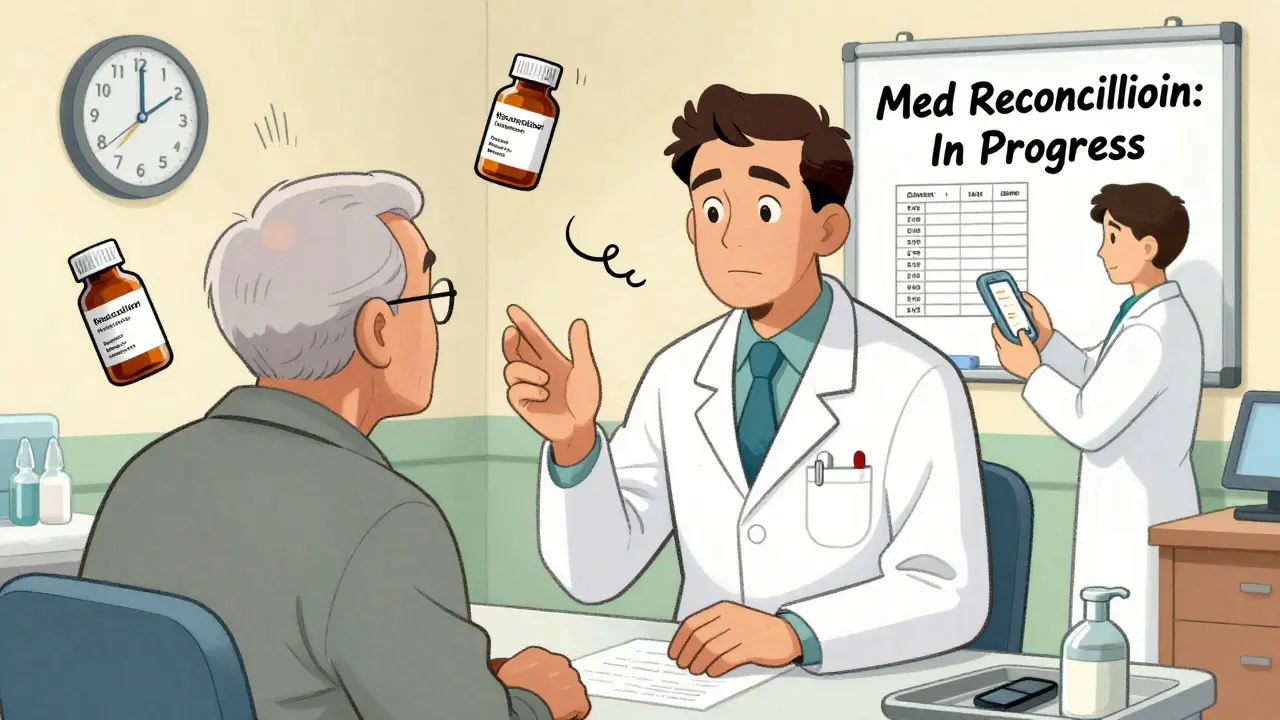
When patients move from hospital to home, something dangerous often gets lost: their correct medication list. A patient might be taking five drugs at home, but only three get recorded in the hospital system. One of those missing drugs could be a blood thinner. Another could be a diabetes pill they’ve been on for ten years. Without knowing the full picture, doctors might accidentally stop something vital-or prescribe something that clashes dangerously. This isn’t rare. It happens in nearly every hospital admission. And that’s where pharmacist-led substitution programs step in.
What Exactly Is a Pharmacist-Led Substitution Program?
It’s not just about swapping one drug for another. It’s a full clinical process led by pharmacists to fix medication errors before they hurt patients. These programs start the moment a patient walks into the ER or gets admitted. A pharmacist, often with trained technicians, sits down with the patient-or their family-and asks: What are you really taking? When? Why? Have you skipped any?
They compare that list to what’s in the hospital’s electronic records. They find mismatches. Maybe the patient says they take lisinopril 10 mg daily, but the chart says 20 mg. Maybe they stopped their statin two months ago because of muscle pain, but no one documented it. These aren’t small mistakes. They’re red flags.
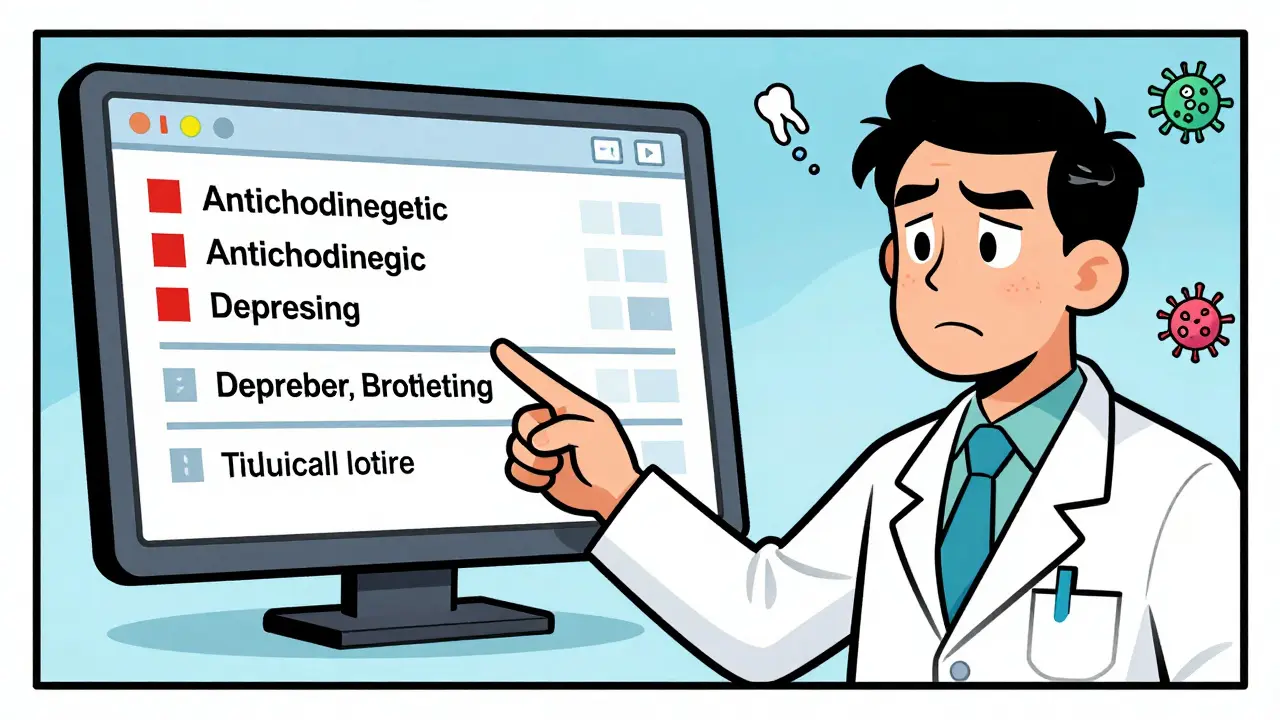
Once the real list is confirmed, pharmacists don’t just note the problem. They act. If a drug isn’t on the hospital’s formulary, they suggest a safe, effective alternative. If a patient is on five drugs that all affect the same system-like blood pressure, kidneys, or the brain-they look for ones that can be safely stopped. This is called deprescribing. It’s not about cutting drugs just to cut them. It’s about removing ones that do more harm than good, especially in older adults.
Why Pharmacists? Why Not Doctors or Nurses?
Doctors are busy. Nurses are stretched thin. Pharmacists are the only clinicians trained to know every drug’s chemical behavior, interactions, dosing pitfalls, and how they behave in real people-not just in clinical trials.
Studies show pharmacist-led programs cut adverse drug events by nearly half. In one major analysis, 89% of pharmacy-led initiatives reduced 30-day hospital readmissions. Compare that to non-pharmacy efforts, where only 37% showed any improvement. The difference? Pharmacists don’t just spot errors. They fix them in real time.
Take a 78-year-old with heart failure, diabetes, and chronic pain. She’s on eight medications. Three are anticholinergics-drugs linked to confusion and falls. A pharmacist spots this. She recommends stopping two of them. The doctor agrees. Two weeks later, the patient’s balance improves. She doesn’t fall. She doesn’t go back to the hospital. That’s the outcome.
How These Programs Are Built-Step by Step
Successful programs don’t happen by accident. They’re built with structure.
- Staffing: One pharmacist typically works with three to four medication history technicians. Technicians gather the initial list-interviewing patients, calling pharmacies, checking old records. Pharmacists focus on the clinical decisions.
- Timing: Programs run 7 a.m. to 8 p.m. in most hospitals. In trauma centers, they’re on 24/7. Weekend coverage often comes from interns or part-time staff.
- Training: Technicians need at least two hours of classroom training and five eight-hour supervised shifts before working alone. After training, they get 92.3% accuracy in collecting medication histories.
- Technology: Electronic health records are key. Systems flag non-formulary drugs, potential interactions, and high-risk medications like benzodiazepines or proton pump inhibitors in seniors.
- Documentation: Every discrepancy, every substitution, every reason for stopping a drug is recorded. On average, it takes 12.7 minutes per patient to document everything properly.
One hospital in Ohio used to have 12 medication errors per day. After launching their pharmacist-led program, that dropped to two. Not because staff became better. Because the system made it impossible to miss.
The Real Results: Numbers That Matter
Let’s look at what these programs actually do:
- 49% reduction in adverse drug events-that’s nearly half the number of patients getting hurt by their own meds.
- 11% drop in 30-day readmissions, with some high-risk groups seeing up to 22% fewer returns.
- $1,200 to $3,500 saved per patient-mostly from avoiding one preventable hospital stay.
- 52% of recommendations in deprescribing programs focus on stopping unnecessary drugs.
These aren’t theoretical numbers. They come from real hospitals, real patients, real data. The OPTIMIST trial found that for every 12 patients who got a full pharmacist intervention, one hospital readmission was prevented. That’s a powerful return on investment.
And it’s not just hospitals. Skilled nursing homes are catching on. In 2020, only 18% had pharmacist-led deprescribing programs. By 2023, that jumped to 42%. Why? Because nursing home patients are often on 10+ drugs. Many are on drugs that don’t help anymore-like long-term proton pump inhibitors for heartburn, which actually raise the risk of pneumonia and C. diff infections. Stopping those cuts infections by nearly a third.
Barriers-And How the Best Programs Beat Them
It’s not all smooth sailing.
Physician resistance is the biggest hurdle. In 43% of hospitals, doctors ignore pharmacist recommendations. Why? Some think pharmacists are overstepping. Others don’t have time to review suggestions. The fix? Integration. When substitution alerts pop up automatically in the EHR-right next to the prescription screen-doctors are 3x more likely to accept them. Programs that embed pharmacists into rounding teams also see better buy-in.
Time is the enemy. A full reconciliation takes 67 minutes per patient. That’s a lot in a busy ER. The solution? Split the work. Technicians collect data. Pharmacists review and decide. This model cuts pharmacist time in half without losing accuracy.
Reimbursement is broken. Medicare Part D covers medication therapy management for 28.7 million people-but the paperwork is so complex, many pharmacists don’t bother. Only 32 states fully reimburse these services through Medicaid. That’s why 68% of community pharmacy programs struggle to stay funded. The 2022 federal law requiring medication reconciliation for Medicare Advantage patients could change that. It’s creating a $420 million market opportunity.
The Future: AI, Policy, and Expansion
Pharmacist-led substitution isn’t slowing down-it’s accelerating.
AI tools are now being tested to auto-populate medication lists from pharmacy records, patient portals, and even voice interviews. One pilot cut data collection time by 35%. That means pharmacists can see more patients, faster.
CMS is updating its rules to recognize pharmacist documentation as part of prior authorization and discharge planning. If passed, reimbursement could rise 18-22%. That’s huge.
Research is now targeting high-risk drugs. Stopping anticholinergics in seniors cuts falls by 41%. Discontinuing long-term PPIs reduces C. diff by 29%. These aren’t minor wins. They’re life-changing.
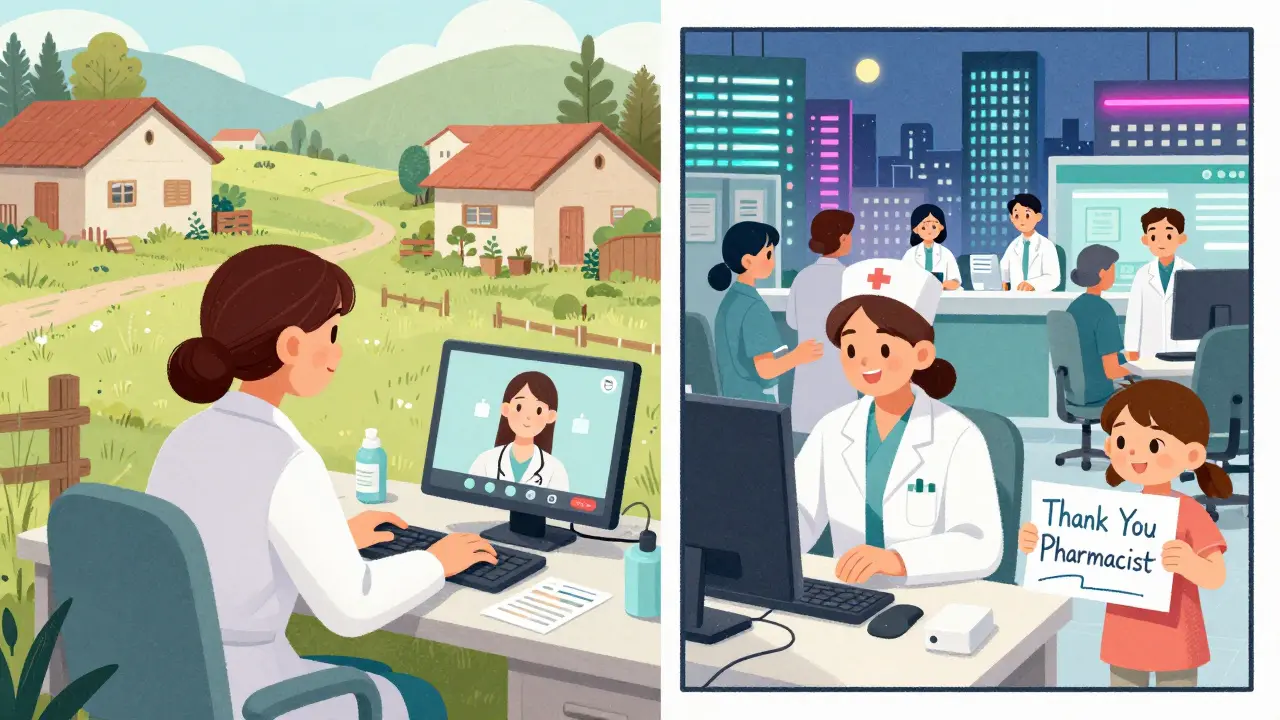
The biggest gap? Rural areas. Only 22% of critical access hospitals have full programs. Urban academic centers? 89%. The problem isn’t interest-it’s access to trained pharmacists. Telepharmacy and mobile units are starting to bridge that gap.
By 2027, the market for these services is projected to hit $3.24 billion. That’s not because it’s trendy. It’s because the data proves it works.
What This Means for Patients
If you or a loved one is going into the hospital, ask: Will a pharmacist review my medications? If they say no, ask why. You have a right to safe, accurate care.
These programs don’t just save money. They save lives. They prevent confusion, falls, kidney damage, and deadly infections. They give people back their health-without adding more pills.
Pharmacists aren’t just filling prescriptions anymore. They’re the last line of defense before a medication error turns into a tragedy. And for the first time, the system is finally giving them the tools-and the authority-to do their job right.
What is a pharmacist-led substitution program?
A pharmacist-led substitution program is a structured clinical service where pharmacists review a patient’s complete medication list at key transition points-like hospital admission or discharge-and make evidence-based changes to improve safety and effectiveness. This includes correcting errors, switching to formulary-appropriate drugs, and stopping unnecessary or harmful medications, especially in older adults.
How do these programs reduce hospital readmissions?
They reduce readmissions by preventing adverse drug events caused by medication errors. Studies show these programs cut 30-day readmissions by an average of 11%, and up to 22% in high-risk patients like those with polypharmacy or poor health literacy. By ensuring patients leave the hospital on the right medications-and understanding how to take them-the risk of dangerous complications drops sharply.
Are pharmacist-led programs better than doctor-led ones?
Yes, in practice. A systematic review of 123 studies found that 89% of pharmacy-led initiatives reduced readmissions, compared to only 37% of non-pharmacy efforts. Pharmacists have specialized training in drug interactions, dosing, and deprescribing that most physicians don’t receive in depth. Their focused role allows them to catch errors others miss.
What is deprescribing, and why is it part of these programs?
Deprescribing is the process of safely stopping medications that are no longer needed-or that do more harm than good. In older adults, drugs like benzodiazepines, anticholinergics, or long-term proton pump inhibitors increase fall risk, confusion, and infections. Pharmacist-led programs identify these drugs and recommend stopping them. In one study, over half of pharmacist recommendations focused on deprescribing, leading to fewer side effects and better outcomes.
Why aren’t these programs in every hospital?
Main barriers are staffing, time, and reimbursement. A full program needs trained pharmacists and technicians, and takes about 67 minutes per patient. Many hospitals lack funding because Medicare and Medicaid reimbursement is inconsistent. Only 32 states fully pay for these services. Rural hospitals face additional challenges due to pharmacist shortages. But adoption is growing fast, especially as value-based care models reward lower readmissions.
Can pharmacists legally change a patient’s medication?
They can recommend changes-but final approval usually rests with the prescribing physician. However, in many states, pharmacists have collaborative practice agreements that allow them to make substitutions directly, especially for formulary alternatives or deprescribing. In hospital settings, their recommendations are often automatically integrated into the EHR and accepted if they follow evidence-based protocols.
10 Comments

Dan Alatepe
December 29, 2025 at 23:53 PM
brooooooo 🤯 this is like the superhero origin story we didn’t know we needed 😭
pharmacists are the real life ‘Dr. Strange’ of meds-spinning through timelines, fixing mistakes before they turn into multiverse disasters. one wrong pill and boom-grandma forgets her own name. but with these programs? she remembers. she walks. she lives.
why aren’t we making this mandatory?! this isn’t ‘nice to have’-this is survival. 🙏💊

Jay Ara
December 31, 2025 at 02:59 AM
this is so true i had a uncle who was on like 12 meds and no one checked if they even made sense together until a pharmacist sat down with him and his daughter and just asked simple questions like hey did you take that blue pill yesterday and turns out he stopped it cause he thought it was for high blood pressure but it was for anxiety and he was scared of side effects
they took away 3 pills and he felt better immediately no more dizziness no more confusion just calm
why dont more hospitals do this its not hard just listen

Michael Bond
December 31, 2025 at 18:12 PM
Simple. Better outcomes. Lower costs. Less suffering.
Why isn’t this standard everywhere?

Kuldipsinh Rathod
January 2, 2026 at 15:50 PM
i work in a small clinic in rural india and we dont even have a pharmacist on staff most days
but when we do get one for a day its like magic
people stop getting sick from their own meds
we need this everywhere not just in usa

SHAKTI BHARDWAJ
January 2, 2026 at 19:14 PM
this is just more government waste disguised as ‘innovation’
pharmacists dont need to be doctors
why are we paying extra people to tell doctors what to do
doctors are already overworked why add another layer of bureaucracy
also who says the pharmacist is always right what if they dont know the patients full history
its just more red tape for the same result

Matthew Ingersoll
January 4, 2026 at 02:07 AM
The data here is undeniable. 89% of pharmacy-led programs reduce readmissions versus 37% elsewhere. That’s not anecdotal. That’s peer-reviewed, large-scale, real-world evidence.
And the cost savings? $1,200–$3,500 per patient? That’s not a line item-it’s a lifeline.
This isn’t about expanding roles. It’s about correcting a systemic failure we’ve ignored for decades. Pharmacists were always the safety net. Now we’re finally giving them a net to stand on.

carissa projo
January 4, 2026 at 07:13 AM
There’s something deeply human about this work.
It’s not just about checking boxes or swapping pills. It’s about sitting with someone who’s confused, scared, overwhelmed-and saying: ‘Let’s figure this out together.’
Older adults aren’t just ‘patients’-they’re people who’ve lived through wars, raised kids, lost spouses, watched their bodies change. Their medication lists are maps of their lives. And too often, those maps get torn up in the hospital.
Pharmacists don’t just fix errors. They restore dignity.
And maybe that’s the real magic here-not the stats, not the savings-but the quiet, steady act of listening.
That’s care. That’s healing. That’s what we keep forgetting to pay for.

josue robert figueroa salazar
January 4, 2026 at 13:36 PM
this is all just feel good nonsense
you think pharmacists are gods now?
they're just glorified cashiers with a degree
the real problem is doctors don't have time to manage meds
so now we're outsourcing responsibility to people who didn't go to med school
and you call this progress?
it's just another way to avoid fixing the real issue: underfunded hospitals and overworked staff

david jackson
January 5, 2026 at 06:57 AM
Let’s go deeper. This isn’t just about medication reconciliation-it’s about redefining the entire hierarchy of healthcare.
For over a century, doctors have been the unquestioned gatekeepers. Nurses coordinate. Pharmacists dispense. Patients obey.
But what if the most critical clinical decision-making in chronic disease management doesn’t belong to the MD at all?
What if the person who knows the pharmacokinetics of every drug on the formulary, who can tell you why a 78-year-old with CKD can’t take metformin anymore, who remembers that lisinopril causes a dry cough in 20% of patients and that’s why grandma stopped it-but no one documented it-what if that person is the *real* clinical expert here?
And what if the doctor’s job isn’t to prescribe blindly, but to *review, validate, and collaborate* with someone who’s spent 10,000 hours mastering the chemistry of human survival?
This isn’t about substitution.
This is about evolution.
And if you’re still resisting it?
You’re not protecting the system.
You’re protecting your ego.
And that’s not leadership.
That’s obsolescence.
Zina Constantin
December 28, 2025 at 03:30 AM
This is exactly what healthcare needs more of-pharmacists as frontline clinicians, not just pill dispensers. I’ve seen my grandmother’s meds get mixed up three times in two years. Each time, a pharmacist caught it before she ended up in the ER. They know the drugs better than most doctors. It’s not just about substitutions-it’s about dignity, safety, and respect for the patient’s lived experience.
Let’s stop treating pharmacists like clerks. Their training is rigorous, their judgment is sharp, and their impact is measurable. We need this everywhere, not just in fancy academic hospitals.
Also, shoutout to the technicians. They’re the unsung heroes who track down old prescriptions from pharmacies that haven’t updated their records since 2015. They deserve raises, recognition, and maybe a damn coffee machine in every unit.