
Low Blood Sugar: Causes, Symptoms, and What You Can Do
When your low blood sugar, a condition where glucose levels drop below what your body needs to function normally. Also known as hypoglycemia, it’s not just a diabetic issue—it can happen to anyone, especially if you’re taking insulin, sulfonylureas, or even certain heart or antibiotic meds. It doesn’t wait for a convenient time. One minute you’re fine, the next you’re sweating, trembling, or feeling like you’re about to pass out.
Why does this happen? It’s often tied to insulin, a hormone that lowers blood glucose—too much of it, or not enough food after taking it, and your sugar crashes. But it’s not just diabetes. People on metformin, a common diabetes drug sometimes get low sugar too, especially if they skip meals or drink alcohol. Even beta blockers, used for high blood pressure and heart conditions, can hide the warning signs like a fast heartbeat, making low sugar harder to catch.
What does it feel like? Shaking, hunger, dizziness, confusion, cold sweat, blurred vision. In severe cases, you might lose consciousness or have a seizure. If you’re diabetic, you’re probably used to checking your levels. But if you’re not, these symptoms can be mistaken for anxiety, a hangover, or just being tired. That’s dangerous. Quick fixes like juice, glucose tabs, or candy can save your life—but they’re only the first step. You need to know why it happened so it doesn’t happen again.
Some medications make low blood sugar more likely. Sulfonylureas, like glipizide or glyburide, force your pancreas to pump out insulin, even when you don’t need it. That’s why people on these drugs are told to eat regularly. Quinolone antibiotics, like levofloxacin, can also trigger drops in glucose, especially in older adults. Even some migraine meds and heart drugs have been linked to this. It’s not always obvious—so if you’re feeling off after starting a new pill, check your sugar.
You don’t have to live with constant fear. Knowing your triggers—skipping meals, over-exercising, drinking on an empty stomach, or taking meds at the wrong time—lets you take control. Keep fast-acting carbs nearby. Wear a medical ID. Teach someone close to you how to help if you can’t speak. And if this keeps happening, talk to your doctor. It might mean your dose needs adjusting, or you need to switch meds.
Below, you’ll find real guides on how medications like insulin, beta blockers, and antidiabetic drugs interact with your body’s glucose levels. You’ll learn what to watch for, how to respond fast, and how to avoid dangerous drops before they start. This isn’t theory—it’s what people actually use to stay safe every day.
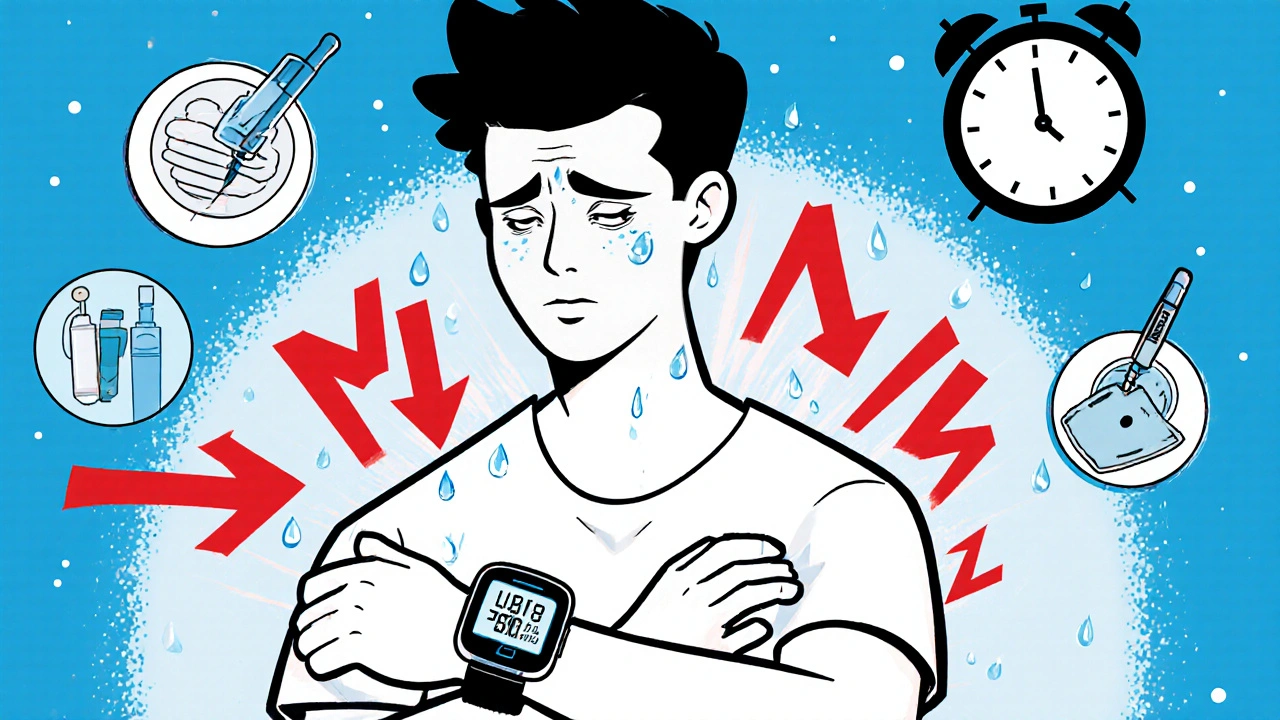
Hypoglycemia: How to Recognize, Treat, and Prevent Low Blood Sugar
Learn how to recognize, treat, and prevent low blood sugar (hypoglycemia) in people with diabetes. Understand symptoms, emergency treatment with glucose and glucagon, and modern prevention tools like CGMs.
View More