
Immunosuppressant Risk Assessment Tool
Understand Your Risk Level
Based on your medications and treatment duration, this tool calculates your personalized infection risk level. Use this information to discuss with your healthcare provider.
When your immune system is weakened-whether by disease, transplant, or long-term medication-you don’t just get sick more often. You get sicker. And the medicines meant to help you can sometimes make things worse. For immunocompromised patients, every pill, every injection, carries hidden risks that most healthy people never think about.
What Does It Mean to Be Immunocompromised?
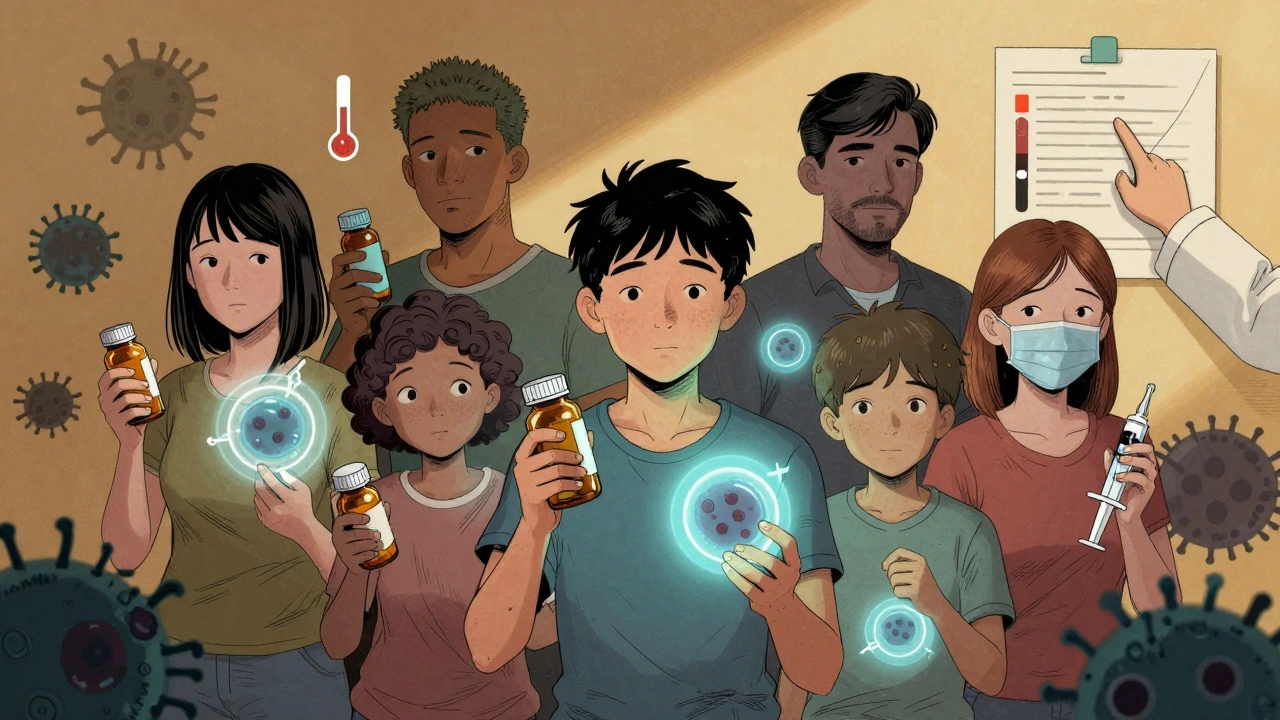
Being immunocompromised means your body’s defense system isn’t working the way it should. You might have an autoimmune disease like rheumatoid arthritis or lupus. You might be waiting for or recovering from a kidney or liver transplant. Or you could be on chemotherapy for cancer. Whatever the cause, your immune system is turned down-not out, but down. That means it can’t fight off germs the way it used to. The Cleveland Clinic defines it simply: "You might get sick more often or more severely than others." That’s not an exaggeration. A common cold can turn into pneumonia. A minor cut can become a serious infection. Even a routine flu shot might not give you the protection it would for someone with a healthy immune system. And here’s the catch: you often won’t feel the usual warning signs. Fever? Maybe not. Redness? Maybe mild. Fatigue? Could just be the medication. That’s because drugs like prednisone can mask the very symptoms doctors rely on to spot trouble early.The Medications That Change Everything
There are dozens of drugs used to suppress the immune system. They’re not all the same. And their risks aren’t equal. Corticosteroids like prednisone, dexamethasone, and methylprednisolone are the most common. They work fast. They reduce inflammation. They help control flare-ups. But they also shut down key parts of your immune response. At doses over 20mg per day (prednisone equivalent), your risk of infection jumps. Studies show users are 1.6 times more likely to get serious infections than people not taking them. And it’s not just about the dose-duration matters too. If you’ve been on steroids for more than two weeks, your body’s defenses are still down, even if you feel fine. Methotrexate, a conventional DMARD, is used for arthritis and other autoimmune conditions. About 70% of people find it effective. But half of them quit within a year because of side effects: nausea, mouth sores, fatigue, hair thinning. It also hits your liver and bone marrow. That’s why monthly blood tests are non-negotiable. Missing one could mean catching a problem too late. Azathioprine cuts down on white blood cells. That’s good for stopping your body from attacking itself. But it also leaves you wide open for bacterial infections, hepatitis B or C flare-ups, and rare but deadly ones like Pneumocystis pneumonia or PML (progressive multifocal leukoencephalopathy). One patient on Reddit described being hospitalized after a simple cough turned into a lung infection while on azathioprine. "I didn’t even have a fever," they wrote. "Just felt tired. That’s all." Biologics-drugs like Humira, Enbrel, and Remicade-are powerful. They target specific parts of the immune system. But they’re also the riskiest. Studies show they’re more likely to cause serious infections than older drugs. Herpes zoster (shingles) reactivation is common. So is tuberculosis. One study found that 1 in 10 patients on biologics developed a serious infection within two years. Cyclosporine and tacrolimus are used after transplants. They prevent rejection. But they’re notorious for triggering viral infections: Epstein-Barr, cytomegalovirus, even rare brain infections from polyomavirus. Patients often need lifelong monitoring. One kidney transplant recipient said tacrolimus was "life-changing," but added, "I check my temperature twice a day. I avoid crowds. I wear a mask in the grocery store. It’s not optional."The Hidden Danger: When Infections Don’t Act Like Infections
Most people know what a fever, a cough, or a sore throat means. But for someone on immunosuppressants, those signs might not show up-or they might show up late. Dr. Francisco Aberra and Dr. David Lichtenstein found that corticosteroids can "blunt the typical clinical features of infection." That means no fever. No chills. No swelling. Just a vague feeling of being "off." That’s dangerous. By the time you realize something’s wrong, the infection might already be spreading. That’s why patients on these drugs are told to treat any change in how they feel like a medical emergency. A headache that won’t go away? A new rash? A sudden drop in energy? Don’t wait. Don’t assume it’s stress or the meds. Call your doctor. Get tested.Combining Drugs = Higher Risk
Taking one immunosuppressant is risky. Taking two? That’s a whole different level. Combining corticosteroids with methotrexate, or biologics with azathioprine, doesn’t just add risk-it multiplies it. The PMC research confirms: "The combination of steroids and other immunosuppressive drugs increases the risk of serious and opportunistic infections beyond the additive effects of single agents." One patient on r/RheumatoidArthritis shared: "I was on methotrexate for three years. Fine. Then they added prednisone for a flare. Two months later, I had pneumonia. I was in the ICU. No one told me the combo was that dangerous." Doctors now know this. That’s why they’re more cautious about stacking drugs. But patients often don’t. If you’re on more than one immunosuppressant, you need to be extra vigilant. Every infection, no matter how small, is a red flag.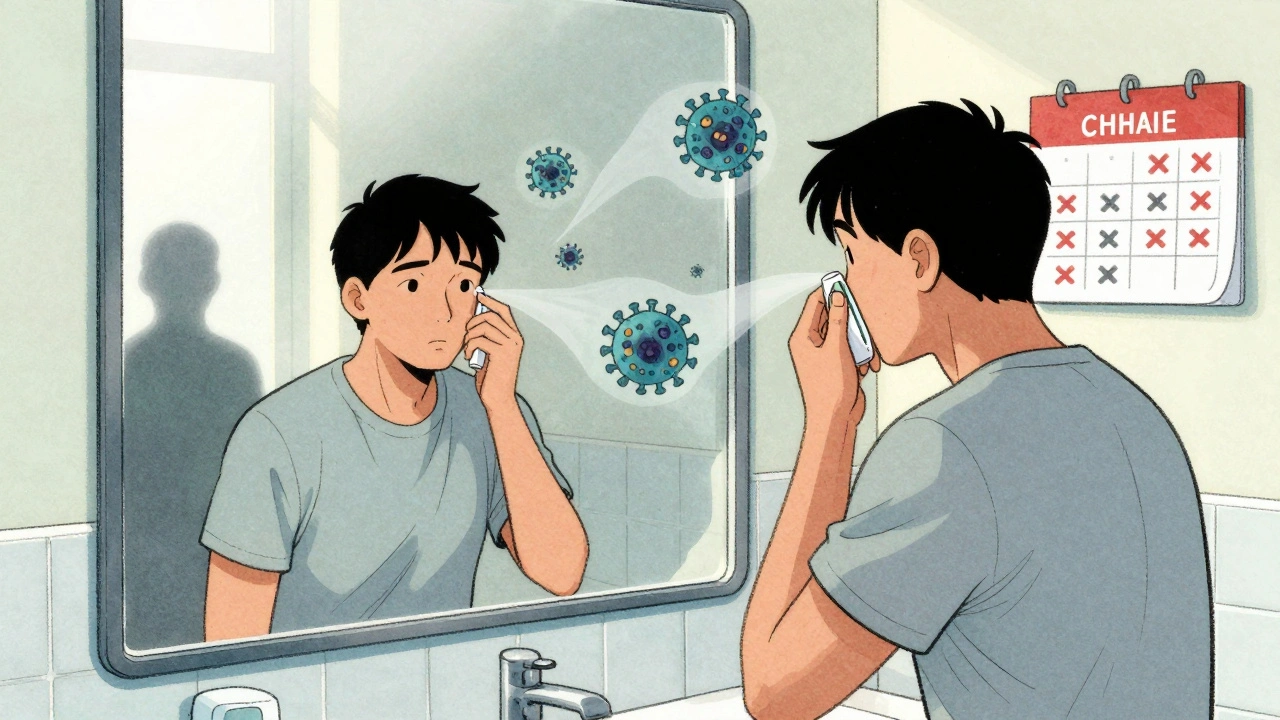
Vaccines: A Lifeline-But Not a Guarantee
Vaccines are your best defense. But they’re not foolproof. The CDC says immunocompromised patients should get vaccines before starting immunosuppressants if possible. Once you’re on these drugs, your body may not respond well. Flu shots? Still recommended. Pneumococcal shots? Yes. But live vaccines-like MMR, varicella, or the nasal flu spray-are off-limits. They can cause the disease they’re meant to prevent. Even inactivated vaccines might not work as well. A 2023 study showed that only 40% of transplant patients developed protective antibodies after a standard COVID-19 vaccine series. That’s why many now get extra doses-sometimes three or four shots just to get a decent immune response. And don’t forget the ones you might overlook: shingles vaccine (Shingrix, not Zostavax), hepatitis B, and pertussis. Talk to your doctor about your vaccine history. Don’t assume you’re protected.Everyday Risks You Can’t Ignore
It’s not just about what’s in your medicine cabinet. Your environment matters too. The CDC warns immunocompromised people are at higher risk from mosquito- and tick-borne diseases. Lyme disease. West Nile. Even Zika. If you live in or travel to areas with these bugs, you need to be extra careful. Wear long sleeves. Use repellent. Check for ticks after being outside. Handwashing isn’t just a suggestion-it’s survival. Wash for at least 20 seconds. Pay attention to your nails, between your fingers, under your thumbs. Use hand sanitizer when soap isn’t available. Avoid crowded places during flu season. Wear a mask in hospitals, clinics, and public transit. Even your food matters. Avoid raw eggs, undercooked meat, unpasteurized cheese, and deli meats. These can carry listeria or salmonella-germs that healthy people shrug off but can be deadly for you.The New Reality: COVID-19 and Changing Views
A few years ago, everyone assumed immunocompromised patients would fare the worst with COVID-19. It made sense. Less immune system = more virus. But in 2021, Johns Hopkins researchers found something surprising. Patients on immunosuppressants didn’t have worse outcomes than those without. In fact, some had milder cases. Why? One theory: their suppressed immune systems didn’t overreact. No cytokine storm. No runaway inflammation. Just controlled viral replication. That doesn’t mean you’re safe. It means the rules changed. You still need to protect yourself. But you also shouldn’t live in fear. The key is balance. Get vaccinated. Follow guidelines. But don’t isolate yourself completely. Your mental health matters too.
Monitoring: Your Daily Lifeline
You can’t rely on how you feel. You need data. Regular blood tests are essential. Complete blood count (CBC) to check for low white cells. Liver and kidney function tests to catch toxicity early. For methotrexate, monthly blood work is standard during the first year. For biologics, every 3-6 months. Keep a symptom journal. Note any fever, rash, cough, joint pain, or unusual fatigue. Bring it to every appointment. Your doctor can’t help if they don’t know what’s happening. And don’t skip appointments. Missing a follow-up isn’t just inconvenient-it’s dangerous.What’s Next? Better Tools on the Horizon
The future is looking more personalized. Researchers are exploring JAK inhibitors-drugs that target specific immune pathways without wiping out your whole system. Pharmacogenomics might one day tell you which drug your body handles best based on your genes. But right now, the best tool you have is awareness. Know your meds. Know your risks. Know your body. And never hesitate to speak up. One patient summed it up: "I didn’t choose to be immunocompromised. But I choose to be smart about it. I ask questions. I track my numbers. I don’t ignore symptoms. That’s how I stay alive."Can immunosuppressants cause cancer?
Yes. Many immunosuppressants carry FDA black box warnings for increased cancer risk, especially skin cancer and lymphoma. Long-term use, especially of drugs like azathioprine or cyclosporine, can raise your risk. Regular skin checks and avoiding UV exposure are critical. Your doctor should monitor you for signs of malignancy during routine visits.
Is it safe to travel while on immunosuppressants?
Travel is possible, but it requires planning. Avoid areas with high rates of infectious diseases like malaria or dengue. Make sure your vaccines are up to date-and get them at least 4-6 weeks before departure. Carry a letter from your doctor explaining your condition and medications. Pack extra doses in case of delays. Avoid raw foods and untreated water. Consider travel insurance that covers medical evacuation.
What should I do if I think I have an infection?
Don’t wait. Call your doctor immediately-even if you don’t have a fever. Describe all your symptoms, no matter how minor. Get tested for common infections like flu, strep, or pneumonia. In some cases, your doctor may start antibiotics before test results come back. Early treatment saves lives.
Can I still get pregnant while on immunosuppressants?
Some immunosuppressants are safe during pregnancy; others are not. Methotrexate and mycophenolate are dangerous and must be stopped months before conception. Azathioprine and certain biologics like adalimumab are considered lower risk. Always talk to your rheumatologist or transplant team before trying to conceive. Pregnancy in immunocompromised patients requires close monitoring but is possible with proper planning.
Are there natural ways to boost immunity while on these drugs?
No. Supplements like echinacea, garlic, or high-dose vitamin C won’t reverse the effects of immunosuppressants-and some can interfere with your meds. The best "natural" support is sleep, balanced nutrition, stress management, and avoiding exposure to germs. Don’t replace medical advice with unproven remedies. Your immune system is being controlled by science-not supplements.
Final Thoughts: Living Well Despite the Risk
Being immunocompromised isn’t a death sentence. It’s a challenge. But millions live full, active lives while managing it. The difference? Awareness. Preparation. And never underestimating the power of small, daily habits. Your medications give you back your life. But they also ask you to be your own health advocate. Ask questions. Track symptoms. Get tested. Speak up. You’re not just a patient. You’re the most important person in your care team.16 Comments

Nikhil Pattni
December 11, 2025 at 05:18 AM
Bro I read this whole thing and I’m just gonna drop some real science here 😎 so you know what’s actually dangerous? Not the meds - it’s the *myth* that immunosuppressants are all bad. Look at the data from the 2021 Johns Hopkins study - the cytokine storm is the real killer, not the virus. That’s why people on biologics sometimes do better than healthy folks - their immune system doesn’t go full nuke mode.
Also, azathioprine? Yeah it’s risky, but did you know it’s used in 70% of transplant cases in India? We don’t have fancy alternatives, so we optimize dosing and monitor like crazy. Monthly CBC? Yes. But also: check your liver enzymes, check your viral loads, check your vitamin D. Vitamin D deficiency is *huge* in South Asia and it makes infections worse - no one talks about this.
And stop with the ‘avoid crowds’ nonsense. I’ve been on tacrolimus for 8 years. I go to temples, I ride the metro, I hug my nephews. I just don’t touch my face. That’s it. You’re not a germ magnet. You’re a human with a medical condition. Treat it like one, not a curse.
Also, Shingrix? 100% yes. Zostavax? Never. Ever. It’s a live vaccine and it’s basically asking for trouble. I had my dad get it after transplant - he got shingles in his eye. Never again.
And if you’re on methotrexate and not getting liver scans? You’re playing Russian roulette with your pancreas. Stop it.
Also - no, garlic supplements won’t help. I’ve seen patients take 10 garlic pills a day and still get pneumonia. It’s not magic. It’s biology. Learn it.

Arun Kumar Raut
December 12, 2025 at 06:45 AM
I just want to say - if you’re reading this and you’re scared, you’re not alone.
I’ve been on azathioprine for 12 years. I’ve had three hospital stays. I’ve missed birthdays. I’ve cried in parking lots before doctor’s appointments.
But I’m still here. And I’m not just surviving - I’m gardening, I’m teaching my niece to cook, I’m dancing in my kitchen.
You don’t need to be perfect. You don’t need to be fearless. You just need to be consistent. Take your blood tests. Call your doctor when something feels off. Even if it’s just ‘I feel weird.’
And please - don’t let anyone make you feel guilty for living your life. You’re not broken. You’re adapting.
One day at a time. That’s all any of us can do.

precious amzy
December 14, 2025 at 04:34 AM
How quaint. A 3,000-word treatise on immunosuppression, as if the mere act of taking medication is a moral failing rather than a clinical reality. The real tragedy here is not the drugs - it’s the performative fear-mongering masquerading as public health advocacy.
One must wonder: who benefits from the perpetual cultivation of medical anxiety? The pharmaceutical industry? The clinic-industrial complex? The influencers monetizing vulnerability?
And yet - we are told to ‘be your own advocate.’ But advocacy implies agency, and agency implies autonomy - both of which are systematically eroded by the very systems that prescribe these drugs.
So I ask - not rhetorically - is autonomy a privilege reserved for those who can afford to read 15-page PDFs on immunocompromised living?
Or is it simply another form of neoliberal victim-blaming dressed in medical jargon?

Carina M
December 15, 2025 at 08:51 AM
It is deeply concerning that the author has chosen to frame immunosuppression as a state of perpetual vulnerability, thereby reinforcing a pathological paradigm that pathologizes normal human existence.
Furthermore, the implicit suggestion that patients must engage in hyper-vigilant behavioral modification - masking, sanitizing, avoiding social interaction - constitutes a form of medicalized social control.
One must ask: who determines the threshold of ‘acceptable risk’? And why is the burden of risk mitigation placed entirely upon the patient, rather than upon the institutions that produce, prescribe, and profit from these therapies?
There is no such thing as ‘living well despite the risk.’ There is only survival under structural constraint.
And yet - we are told to ‘be smart.’
Smart for whom?

Richard Eite
December 16, 2025 at 12:07 PM
Y’all are overthinking this. Just take your meds. Wash your hands. Don’t eat raw chicken. Get the shots. Call your doc if you feel weird. Done.
Stop turning a medical condition into a TED Talk. I’m on 3 immunosuppressants. I hike. I go to bars. I hug my dog. I’m not dying because I didn’t read a 10-page essay.
Life’s short. Don’t let fear live longer than you do.

Katherine Chan
December 16, 2025 at 13:48 PM
I just want to say I’m so proud of everyone reading this who’s still showing up for their life
I know it’s scary I know it’s exhausting I know sometimes you just want to scream at the world
But you’re still here
And that’s not weakness
That’s courage
Every time you take that pill
Every time you call your doctor
Every time you choose to go out even when you’re scared
You’re winning
And I see you
And I’m cheering for you
Now go hug someone you love
And don’t forget to drink water
❤️

Philippa Barraclough
December 18, 2025 at 08:21 AM
The article is comprehensive, yet I find its rhetorical framing problematic in its implicit assumption that immunosuppression is inherently pathological rather than a medically managed condition. The emphasis on fear-based behavioral modification - avoidance of crowds, constant monitoring, hyper-vigilance - while clinically grounded, risks reinforcing a narrative of perpetual deficit.
Moreover, the omission of socioeconomic disparities in access to monitoring, vaccines, and specialist care is glaring. A patient in rural Kansas may not have monthly CBCs; a patient in rural Rajasthan may not have access to biologics at all.
The text assumes a Western, affluent, healthcare-accessible context - a privilege not universal. The phrase ‘you need to be your own advocate’ rings hollow when advocacy requires time, literacy, transportation, and insurance.
One wonders whether the article’s tone would remain the same if it were written by a patient who had to choose between medication and rent.
Perhaps the real question is not ‘how to survive immunosuppression’ - but ‘how to dismantle the systems that make survival so precarious.’

Brianna Black
December 18, 2025 at 17:08 PM
Okay. Let’s be real. I’ve been on cyclosporine since I was 16. I’m 38 now. I’ve had two transplants. I’ve lost friends to infections. I’ve spent Christmas in the hospital.
But here’s what nobody tells you - the meds gave me my life back.
I didn’t get to go to prom. I missed my sister’s wedding. I couldn’t play soccer.
But I got to see my daughter born. I got to hold her. I got to read her bedtime stories.
So yeah - I wear a mask in the grocery store.
Yeah - I check my temperature twice a day.
Yeah - I don’t eat raw sushi.
But I also got to live.
And that’s worth every fear.
Every test.
Every minute of anxiety.
Because I’m here.
And I’m not done yet.

Shubham Mathur
December 19, 2025 at 17:48 PM
Guys I’m on methotrexate and I go to the gym every day and I eat raw eggs and I don’t wash my hands after using the toilet and I’ve never had a problem
Stop scaring people
My cousin took all the vaccines and still got pneumonia
It’s not about the meds
It’s about luck
Live your life
Don’t let doctors scare you
And stop reading these long articles
They just want you to be scared
So you’ll keep coming back
And they’ll keep charging you
Trust me
I’m from India
We know about this stuff
Just take your pills
And don’t be a baby

Ronald Ezamaru
December 20, 2025 at 17:31 PM
I’ve worked with immunocompromised patients for 18 years. I’ve seen them survive pneumonia with no fever. I’ve seen them bounce back from sepsis because they called their doctor at 3 a.m.
What I’ve never seen is someone who followed the basics - vaccines, handwashing, blood tests, listening to their body - and didn’t thrive.
This isn’t about fear. It’s about respect.
Respect for the science. Respect for your body. Respect for the people who love you enough to worry.
You don’t need to be perfect. You just need to be consistent.
And if you’re reading this and you’re tired - I see you.
You’re not alone.
And you’re doing better than you think.

Lauren Dare
December 22, 2025 at 08:06 AM
It’s fascinating how the medical-industrial complex has successfully pathologized autonomy under the guise of ‘risk mitigation.’ The language of ‘vigilance,’ ‘monitoring,’ and ‘advocacy’ functions as a neoliberal injunction to self-regulate - transforming patienthood into a full-time occupation.
One must question: who defines ‘normal’ immune function? And why is deviation from this norm met not with systemic reform, but with behavioral correction?
Furthermore, the conflation of ‘immunocompromised’ with ‘fragile’ erases the agency of those who live fully, joyfully, and defiantly within this condition.
Perhaps the real infection is not in the bloodstream - but in the narrative.

Mona Schmidt
December 22, 2025 at 15:38 PM
Thank you for this nuanced, evidence-based overview. I appreciate the inclusion of both clinical data and patient testimony - it bridges the gap between abstract medicine and lived experience.
I am particularly grateful for the clarification on vaccine efficacy: the 40% seroconversion rate among transplant recipients after standard COVID vaccination is critical information that is rarely communicated clearly.
Additionally, the emphasis on pharmacogenomics as a future direction is promising. Personalized dosing could reduce toxicity while maintaining efficacy - a goal long overdue.
One minor correction: the CDC recommends pneumococcal conjugate vaccine (PCV20) for immunocompromised adults, not just PPSV23. This distinction matters for optimal protection.
And yes - avoid unpasteurized cheese. I lost a colleague to listeria from brie. It was preventable. It was heartbreaking.
Thank you for writing this. It will save lives.

Sarah Gray
December 23, 2025 at 10:00 AM
How utterly predictable. A condescending, fear-driven manifesto disguised as medical education. The author’s tone suggests that immunocompromised individuals are not merely patients - they are liabilities to be managed, contained, and policed.
One must wonder: where is the critique of pharmaceutical profit motives? Where is the acknowledgment that many of these drugs were developed to treat conditions caused by environmental degradation, industrial toxins, and systemic neglect?
Instead, we are given a checklist of compliance: wash your hands, avoid crowds, get more shots.
And yet - the very system that prescribes these drugs also denies access to them.
So we are told to be vigilant - but only if we can afford the monitoring.
And so the cycle continues.
Perhaps the most dangerous drug is not prednisone.
It is the myth of individual responsibility.

Michael Robinson
December 24, 2025 at 14:07 PM
What if being immunocompromised isn’t a problem to solve - but a condition to live with?
We spend so much time trying to ‘fix’ our bodies - to make them ‘normal’ - that we forget we’re already whole.
The body doesn’t fail. It adapts.
Maybe the real question isn’t ‘how do we survive?’
But ‘how do we learn to live - fully - with what we’ve got?’
Not more pills.
Not more masks.
But more presence.
More connection.
More grace.
For ourselves.
And for each other.

Evelyn Pastrana
December 25, 2025 at 19:36 PM
Wow. This is the first time I’ve seen someone actually say what I’ve been thinking for years.
Thanks for saying it.
I’m not broken.
I’m just different.
And that’s okay.
Evelyn Pastrana
December 9, 2025 at 05:57 AM
So let me get this straight - I’m supposed to be terrified of a sneeze now? 😅 I’ve been on prednisone for five years and I still go to brunch with my mom. She’s 82 and immunocompromised too. We just don’t go to the mall during flu season. Life’s not a horror movie. Just be smart, not paranoid.
Also, why is everyone acting like a mask is a magic shield? I wore one for a year during COVID and still got a cold. Turns out, germs are everywhere. Even in your damn hand sanitizer.
Anyway, I’m alive. I’m working. I’m traveling. And I didn’t need a 10-page essay to tell me to wash my hands.
Thanks for the info, but please stop treating us like fragile porcelain dolls.