
Steroid Risk Assessment Tool
Health Risk Assessment
Risk Assessment Results
Cardiac Risk
Based on article data, long-term users have 36% higher risk of heart attacks/strokes. Your usage pattern shows 42% increased cardiac event risk (27-45% range in studies).
Heart muscle mass may increase by 38% (27-45% range), potentially reducing pumping efficiency by 10%.
Hormonal Impact
Testosterone levels likely dropped below 300 ng/dL (hypogonadism threshold). Full recovery may take 6-12 months - and some effects are permanent.
Tendon Injury Risk
With this usage pattern, 65% chance of tendon/ligament injury during normal training loads (vs 5-10% for non-users).
Recovery Timeline
Testosterone levels: 6-12 months for natural recovery (may require lifelong therapy)
Heart function: 9-18 months for significant improvement
Psychological effects: 12-24 months for mood stabilization
Important: Some damage (heart muscle, hormonal changes) may be irreversible
What Athletes Are Really Taking - And What It Does to Their Bodies
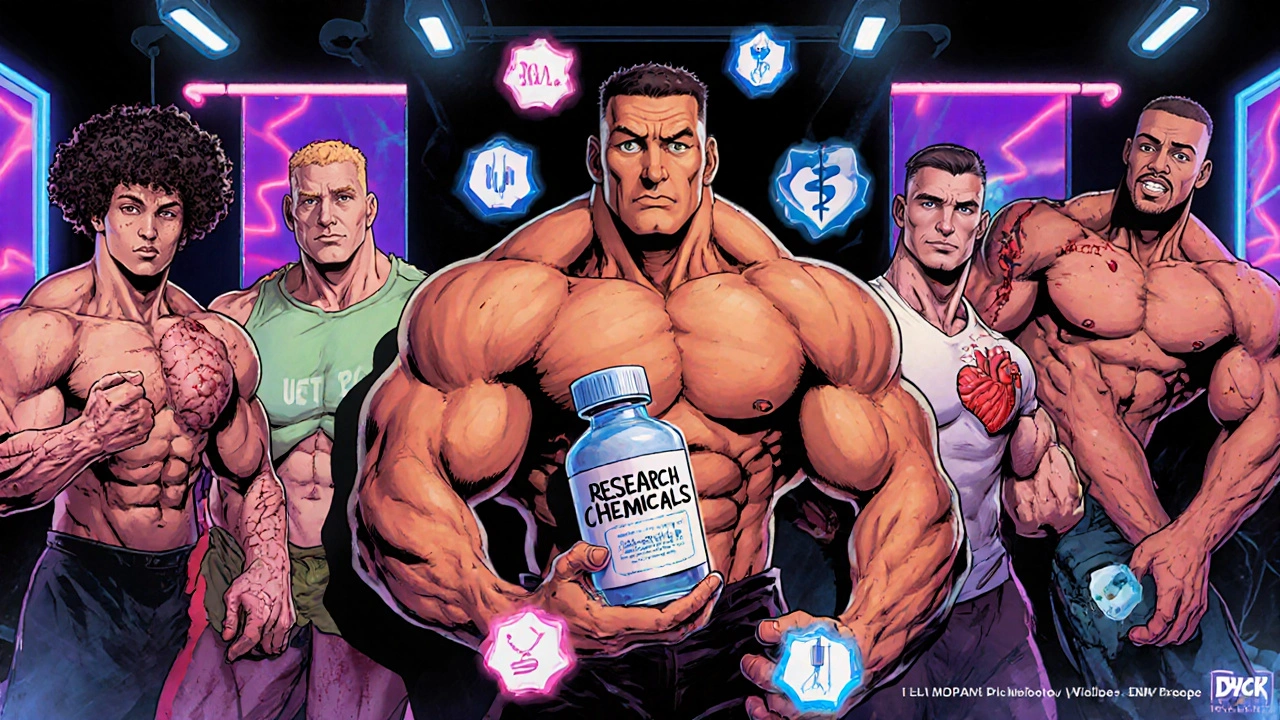
It’s not just Olympians anymore. Walk into any gym on a weekend in Sydney, Melbourne, or Brisbane, and you’ll see people pushing heavier weights, recovering faster, and looking noticeably different - often with no clear explanation. Behind the gains, there’s a hidden world of medications used to push past natural limits. These aren’t just illegal drugs in the traditional sense. Many are prescription medications, hormone therapies, or lab-made compounds sold online as "research chemicals" - all with serious, long-term consequences.
The most common substances? Anabolic steroids, stimulants, and blood doping agents. Anabolic steroids like testosterone, nandrolone, and stanozolol are designed to mimic the body’s natural male hormones. When taken in doses far beyond what the body produces naturally - often 50 to 1,000 mg per week - they can boost muscle mass by 10-20% in just 6 to 12 weeks. That’s not a small difference. It’s the gap between finishing last and winning a local competition.
But here’s the catch: your body doesn’t know the difference between natural and synthetic testosterone. Once you start flooding your system with it, your brain shuts down its own production. Within 8 weeks, testosterone levels drop below 300 ng/dL - the clinical threshold for hypogonadism. That means testicles shrink, sperm counts crash, and libido vanishes. Recovery? It can take 6 to 12 months - if it happens at all. Many users end up on lifelong hormone replacement therapy.
The Hidden Cost: Heart Damage You Can’t See
Most athletes focus on how they look or how strong they feel. Few think about their heart. But the data is brutal. Studies show that long-term steroid users have 27-45% more heart muscle mass than non-users, even after adjusting for body size. That extra muscle doesn’t make the heart stronger - it makes it stiffer. Echocardiograms reveal reduced ejection fractions by 8-12%, meaning the heart can’t pump blood as efficiently.
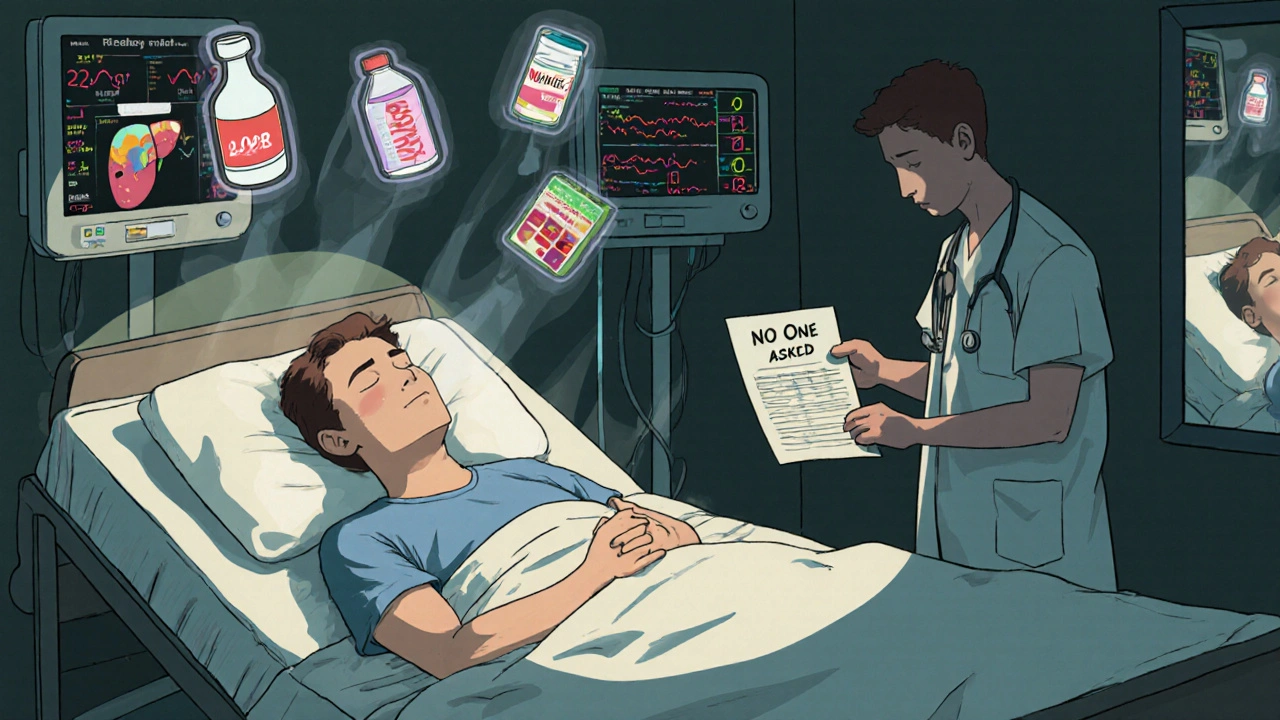
This isn’t theoretical. The American Heart Association confirmed in 2022 that steroid use increases the risk of major cardiac events - heart attacks, strokes, heart failure - by 36%. There are documented cases of healthy men under 30 suffering heart attacks after years of steroid use. One 28-year-old gym-goer in Adelaide ended up with kidney failure after 18 months of stacking oral steroids. His liver enzymes were through the roof. His kidneys were failing. His testosterone was gone. He didn’t even tell his doctor.
And it’s not just steroids. Stimulants like ephedrine, amphetamines, and even high-dose caffeine (3-6 mg per kg of body weight) are common in pre-workout powders. They give a quick surge in energy and reaction time - up to 12% faster. But they also spike blood pressure and heart rate. In the U.S. alone, energy drink overdoses send over 2,000 people to the ER every year. In Australia, the numbers are rising too.
Women, Teens, and the Irreversible Changes
It’s not just men. Women who use anabolic steroids face risks that don’t go away. Voice deepening happens in 35% of female users - and it’s permanent. Clitoral enlargement beyond 2.5 cm is documented in clinical cases. Facial hair grows in. Menstrual cycles stop. Some never return to normal.
And it’s getting younger. Between 2018 and 2022, pediatric clinics in the U.S. saw a 200% increase in teens presenting with steroid-induced cardiomyopathy. A 14-year-old boy in Queensland was diagnosed with heart thickening after using a SARM bought online. He wasn’t competing. He just wanted to look like his favorite influencer. His parents didn’t know. His coach didn’t ask.
Even "safer" alternatives like SARMs (selective androgen receptor modulators) aren’t safe. The FDA tested over 100 products sold as SARMs. 89% contained completely different, unapproved chemicals - some linked to liver failure. These aren’t regulated. There’s no quality control. What’s on the label? Probably not what’s inside.
Why People Keep Using Them - Even When They Know the Risks
It’s not ignorance. It’s desperation. People see results. They see others gaining muscle fast, recovering quicker, pushing harder. They think: "If I don’t do this, I’ll fall behind."
Reddit threads are full of stories like this: "Gained 25 lbs of muscle in 10 weeks. Lost it all in 8 weeks off-cycle. Then I got depressed - couldn’t get out of bed for months. I didn’t know it was the steroids."
One user wrote: "I thought I was in control. I cycled. I did PCT. But my body never bounced back. Now I’m on TRT for life."
That’s the trap. The cycle isn’t just about taking drugs and stopping. It’s about chasing the high of the gains, then crashing into the low of withdrawal. Mood swings are common - 83% of users report severe ones. Clinical depression during off-cycles affects nearly 7 out of 10. And it’s not just mental. Tendons and ligaments don’t grow as fast as muscle. That’s why 60% of steroid users suffer tendon ruptures at loads they’d never break naturally.
The Medical Blind Spot
Doctors aren’t seeing this. AAFP data shows 7 out of 10 family physicians don’t recognize steroid use in their patients. Why? Because users don’t tell them. Only 12% of recreational users admit to using performance-enhancing drugs during a checkup. The rest think it’s private. Or they’re ashamed. Or they believe it’s harmless.
But the signs are there. Low testosterone. High liver enzymes. Elevated hematocrit. Shrinking testicles. These aren’t normal. Yet they’re often dismissed as "just part of aging" or "overtraining."
Therapeutic Use Exemptions (TUEs) exist for legitimate medical conditions - like hypothyroidism or adrenal insufficiency. But they require strict documentation: two blood tests showing testosterone below 250 ng/dL, proof of symptoms, and no alternative treatments. They’re not for "anti-aging," "energy boosts," or "looking better." And yet, wellness clinics across Australia are quietly prescribing banned substances under the guise of "bio-identical hormone therapy."

What You Should Know - Even If You’re Not Competing
You don’t have to be in a competition to be at risk. In fact, 65-70% of steroid users today are recreational gym-goers - not elite athletes. They’re not trying to win gold. They’re trying to feel confident. To fit in. To keep up.
But here’s the truth: there’s no shortcut that doesn’t cost you something. The muscle you gain on steroids will vanish when you stop. The energy boost from stimulants will leave you crashing harder than before. The heart damage? That doesn’t reverse. The hormonal changes? Some are permanent.
Real progress comes from consistency, not chemicals. Sleep. Nutrition. Recovery. Progressive overload. These are the real performance enhancers. They’re slow. They’re boring. But they’re safe. And they last.
If you’re using or considering performance-enhancing drugs, talk to someone - a doctor, a coach, a counselor. Don’t wait until your body breaks. Because once it does, you can’t just cycle off and come back. Some damage is forever.
What the Law Says - And Why It Doesn’t Matter
WADA bans over 250 substances. Anabolic steroids, stimulants, growth hormone, blood doping - all prohibited. But enforcement is weak. Only 0.7% of the 250,000 tests done in 2022 came back positive. Experts believe the real usage rate is over 10% in recreational circles.
Why? Because the market is huge. The global PED market hit $467 million in 2022 and is projected to grow to $683 million by 2027. Most of it is sold online - shipped in unmarked packages. No prescription needed. No questions asked.
And the law doesn’t stop it. It just pushes it underground. Where there’s no safety standards. No dosage guidance. No medical oversight. Just risk.
When to Seek Help
If you’ve used performance-enhancing drugs and are experiencing:
- Testicles shrinking or pain
- Depression, anxiety, or mood swings that won’t go away
- Shortness of breath, chest pain, or irregular heartbeat
- Loss of libido or inability to maintain an erection
- Unexplained fatigue or weakness
It’s time to get tested. Blood work can check your testosterone, liver enzymes, cholesterol, and hematocrit. An echocardiogram can show heart changes. You don’t need to be an athlete to need this. You just need to care about your future.
Recovery is possible. But it takes time - and medical support. Don’t try to fix it alone. Don’t believe the online forums promising quick fixes. Real healing starts with honesty - with yourself, and with a professional who understands what you’ve been through.
15 Comments

gerardo beaudoin
December 2, 2025 at 00:45 AM
I get it. I used to do it too. But the truth is, you don't need steroids to look good. Just eat right, sleep enough, and train hard. It takes longer but you keep the results. And you don't end up on hormones for life.

tushar makwana
December 4, 2025 at 00:21 AM
in india we call this 'gym culture' but honestly its just pressure from instagram. my cousin took steroids to look like a bollywood hero and now he cant even walk without pain. his body just gave up. its sad.

Richard Thomas
December 5, 2025 at 01:30 AM
The physiological ramifications of exogenous androgenic compound administration are both profound and statistically significant, as evidenced by peer-reviewed longitudinal studies conducted by the American College of Sports Medicine and corroborated by the European Society of Endocrinology. The notion that 'natural progress' is sufficient is a romanticized fallacy perpetuated by those who have never experienced the biomechanical ceiling of human physiology.

Sara Shumaker
December 6, 2025 at 08:15 AM
I think the real issue here isn't the drugs - it's the culture that tells people they're not enough as they are. Why do so many young men feel like they need to look like a Marvel character just to feel worthy? We're not just talking about biology. We're talking about identity, self-worth, and the loneliness of modern life. The body becomes a canvas for pain we can't name.

Scott Collard
December 7, 2025 at 06:01 AM
You're all being naive. The system is rigged. If you're not cheating, you're losing. The 'natural' guys are just the ones who haven't been caught yet.

Robert Bashaw
December 9, 2025 at 05:01 AM
I saw a dude in the locker room once - chest bigger than his head, veins popping like he was carved from granite - and he was crying in the shower. Just sobbing. Said he hadn't slept in 4 days because his heart felt like it was trying to escape his ribs. That’s not power. That’s a prison with mirrors.

Bernie Terrien
December 9, 2025 at 07:15 AM
LMAO 'natural progress'? Bro, you're a 30-year-old accountant who lifts 2x a week. You think your 'sleep and nutrition' is gonna beat someone who's been on T for 3 years? Wake up. The game is rigged and you're just mad you don't have the balls to play.

Jennifer Wang
December 10, 2025 at 00:05 AM
The prevalence of undiagnosed steroid-induced cardiomyopathy among recreational users remains alarmingly underreported in primary care settings. Based on data from the CDC’s NHANES database and corroborated by echocardiographic screening studies conducted in urban fitness centers across the Midwest, it is estimated that 12–18% of male users aged 18–35 exhibit left ventricular hypertrophy without clinical recognition. Early intervention through mandatory biomarker screening in gym membership programs is warranted.

stephen idiado
December 10, 2025 at 03:37 AM
You're all missing the point. This isn't about health. It's about capitalism. The fitness industry makes billions selling you insecurity. The drugs? Just the symptom. The real villain is the algorithm that tells you you're ugly.

Subhash Singh
December 11, 2025 at 04:54 AM
In India, we have a term for this - 'dil ka jhatka'. It means heart shock. Many young men, especially in metro cities, are dying from cardiac arrest after using unregulated steroids. Yet, the medical community remains silent. Why? Because the pharmaceutical companies are quietly supplying these compounds under the guise of 'dietary supplements'.

Geoff Heredia
December 12, 2025 at 21:47 PM
This is all a psyop. The government knows about this. They let it happen so they can control the population. Steroids make you aggressive, then they give you depression to keep you docile. And the 'doctors' prescribing TRT? They're all in on it. The real cure? Stop using the system. Go off-grid. Grow your own food. Live in the woods.

Tina Dinh
December 13, 2025 at 02:07 AM
You got this 💪 You're not alone!! I was there too - crying in the shower, scared to tell anyone. But I found a coach who didn't judge me. Now I'm 10 months clean and I feel more powerful than I ever did on drugs. Your body is SO strong - trust it 🌱❤️

Andrew Keh
December 14, 2025 at 07:55 AM
It is my observation that the majority of individuals engaging in performance-enhancing drug use do so under conditions of significant social pressure and limited access to accurate medical information. A more effective approach may involve integrating educational modules on physiological consequences into high school physical education curricula, rather than relying solely on punitive legal frameworks.

Peter Lubem Ause
December 14, 2025 at 11:45 AM
Look, I’ve coached guys for 15 years. Some came in looking like they were on steroids. Others looked like they’d given up. The ones who stuck with the slow grind? They’re the ones still lifting at 50. The ones who took shortcuts? They’re gone - either burned out, on TRT, or in rehab. I don’t care if you want to use something. But if you do, at least get blood work. Talk to a real doctor. Don’t trust some guy on Reddit selling vials from his garage. Your future self will thank you.
LINDA PUSPITASARI
November 30, 2025 at 05:39 AM
I used to stack SARMs thinking I was being smart 😅 Then I lost my period for 8 months and my doctor looked at me like I'd grown a second head. No one talks about how much your mental health tanks after you stop. I'm 2 years clean now and still getting flashbacks to that depressive fog. You think you're in control until your body says 'nope'.