Middle Ear Bone Growth: Causes, Symptoms, and What You Need to Know
When the tiny bones in your middle ear start growing abnormally, it’s called otosclerosis, a condition where abnormal bone growth around the stapes bone blocks sound from reaching the inner ear. Also known as middle ear bone growth, it’s one of the most common causes of hearing loss in young adults—especially women between 20 and 40. Unlike hearing loss from aging or noise, otosclerosis happens because bone tissue in the ear starts replacing normal tissue, locking the stapes in place. This small bone, shaped like a stirrup, normally vibrates to send sound signals to the cochlea. When it gets stuck, sounds get muffled—like listening through cotton.
It’s not just about volume. People with otosclerosis often hear better in noisy rooms than quiet ones, a weird quirk called paracusis of Willis, a phenomenon where background noise helps focus speech by masking internal ear distortions. Tinnitus, a ringing or buzzing in the ear, is common too. Many don’t realize it’s not just aging until they notice their voice sounds louder to them than to others. It’s a silent, slow thief of hearing—often mistaken for earwax or stress.
Genetics play a big role. If a parent or sibling has otosclerosis, your risk jumps significantly. It’s also more common in people of European descent and can flare up during pregnancy or hormonal shifts. While it’s not dangerous to your overall health, untreated otosclerosis can lead to permanent hearing damage. The good news? It’s diagnosable with a simple hearing test called an audiogram, and imaging like a CT scan can confirm bone changes.
Two main paths exist for treatment: hearing aids or surgery. Hearing aids amplify sound and work well for many, especially if the hearing loss is mild. But if the bone growth is advanced, a procedure called a stapedectomy, a surgical replacement of the stapes with a tiny prosthetic to restore vibration can restore hearing in over 90% of cases. It’s outpatient, low-risk, and often done under local anesthesia. Recovery is quick, and most people notice improved hearing within days.
There’s no magic pill to stop the bone growth, but some doctors prescribe sodium fluoride to slow progression—though evidence is mixed. Avoiding loud noise and quitting smoking may help reduce stress on the ear. What doesn’t work? Ear candles, herbal drops, or unproven supplements. Stick to science-backed options.
What you’ll find below are real, practical posts that break down exactly how otosclerosis is diagnosed, what the surgery really involves, how hearing aids compare to implants, and why some people still struggle even after treatment. These aren’t theory pieces—they’re based on patient experiences, clinical data, and what actually works when your hearing is slipping away.
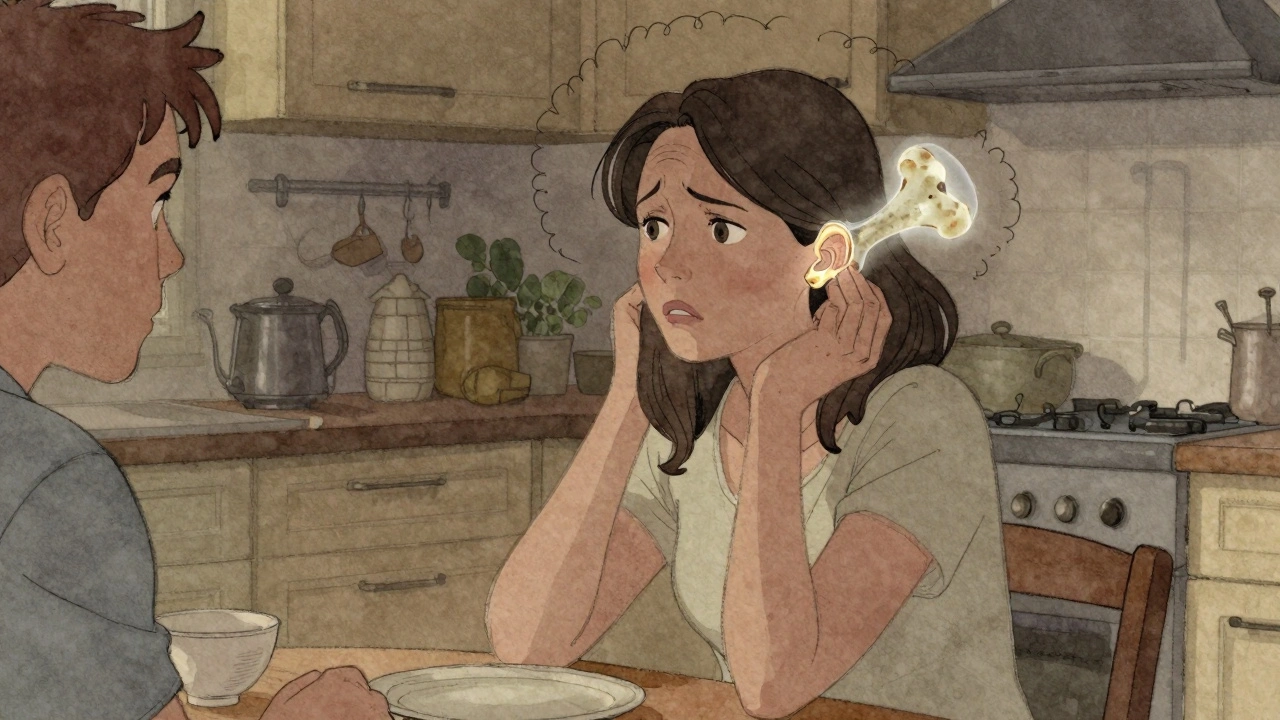
Otosclerosis: What Causes Abnormal Bone Growth in the Middle Ear and How It Affects Your Hearing
Otosclerosis is a common cause of conductive hearing loss in adults under 50, caused by abnormal bone growth in the middle ear. Learn how it affects hearing, who's at risk, and what treatments work best.
View More