Conductive Hearing Loss: Causes, Fixes, and What You Need to Know
When sound can't travel properly through your outer or middle ear, you're dealing with conductive hearing loss, a type of hearing impairment caused by physical blockages or damage in the ear canal, eardrum, or middle ear bones. Also known as mechanical hearing loss, it’s not about damaged nerves—it’s about sound getting stuck before it even reaches the inner ear. This isn’t rare. Millions deal with it every year, often without realizing it’s treatable.
Ear wax blockage, a common and easily fixed cause of conductive hearing loss is behind many sudden drops in hearing. People think it’s just muffled sound, but it’s often a full block. So is otitis media, fluid buildup behind the eardrum, especially in kids but also in adults after infections. Even a simple ear infection can cause temporary hearing loss that feels like your ears are underwater. Then there’s the ossicular chain, the tiny bones in the middle ear that can stiffen or break from trauma or disease. If one of them stops moving right, sound doesn’t pass through.
Unlike sensorineural hearing loss—which comes from nerve damage and often needs hearing aids for life—conductive hearing loss can often be fixed. Doctors can clear wax, drain fluid, repair a perforated eardrum, or even replace damaged bones. In many cases, hearing returns to normal after treatment. But if it’s chronic or the damage is permanent, hearing aids, especially bone-conduction or air-conduction models designed for conductive loss can make a huge difference. They don’t just make things louder—they restore clarity by bypassing the blocked area.
You might notice it first when people sound muffled, you keep asking them to repeat themselves, or you hear your own voice louder than usual. Sometimes it’s just one ear. It’s easy to ignore—until you can’t hear the doorbell or your phone ringing. But here’s the thing: if you’ve had sudden hearing loss, dizziness, ear pain, or drainage, don’t wait. It could be something simple, or it could need quick action.
The posts below cover everything from how ear infections lead to hearing trouble, to what really works when hearing aids are needed, to the risks of ignoring symptoms that seem minor. You’ll find real advice on when to see a doctor, what treatments actually help, and how to tell if your hearing loss is temporary or something more serious. No fluff. Just what you need to protect your hearing before it gets worse.
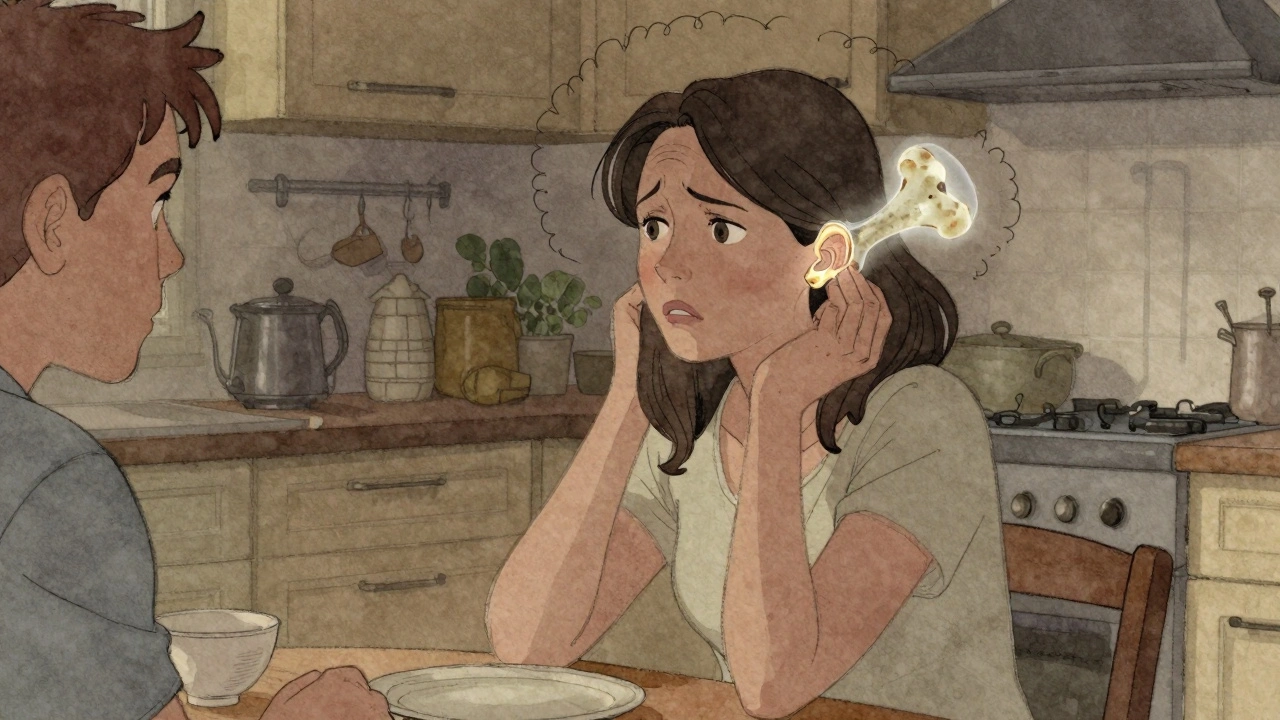
Otosclerosis: What Causes Abnormal Bone Growth in the Middle Ear and How It Affects Your Hearing
Otosclerosis is a common cause of conductive hearing loss in adults under 50, caused by abnormal bone growth in the middle ear. Learn how it affects hearing, who's at risk, and what treatments work best.
View More